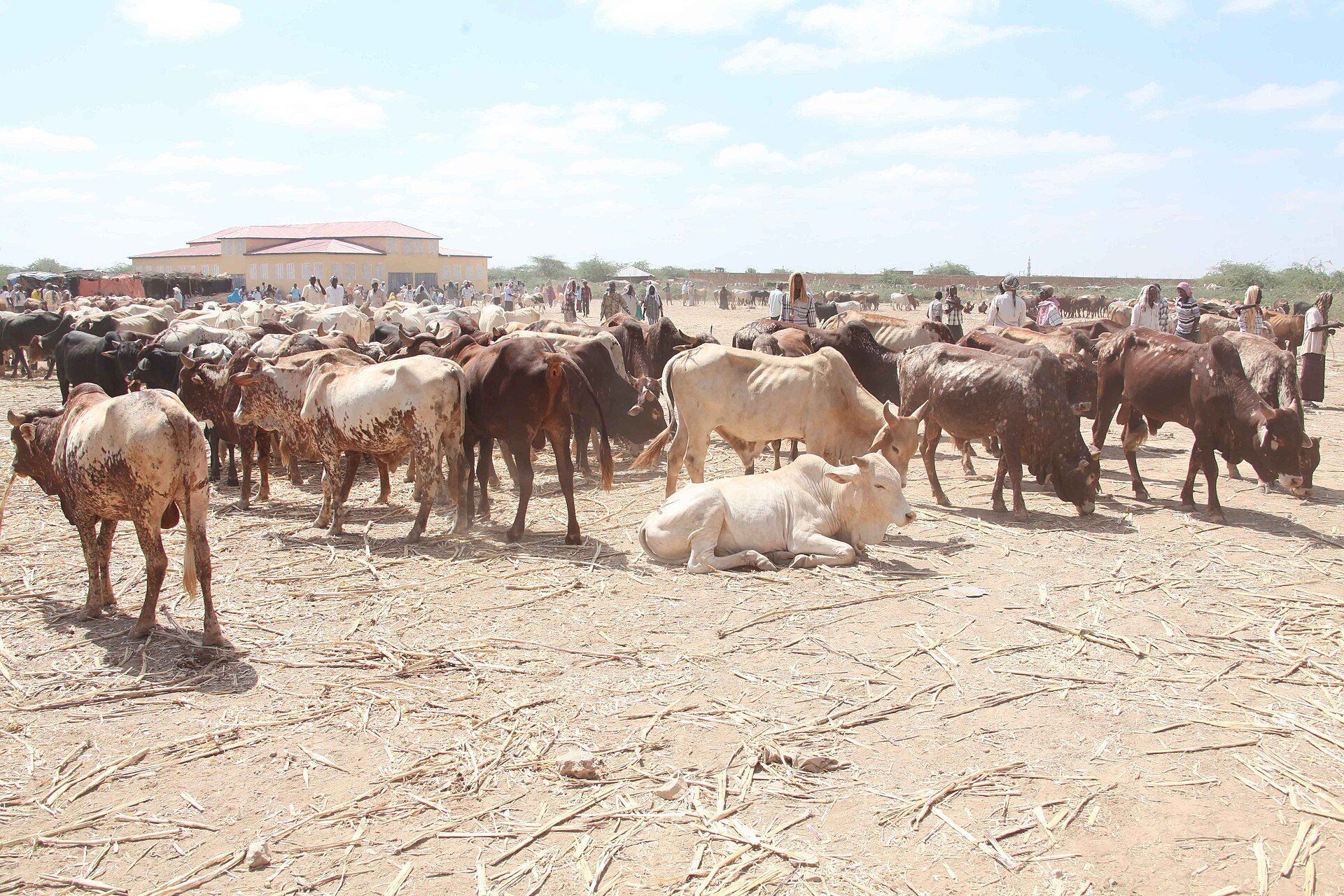
On Saturday, October 24, Hirshabelle’s House re-elected its president, 81 votes to 13, as the state’s own vice president said he would not leave office and called the vote unconstitutional. The clan behind that revolt, the Hawadle, had by then been announced to have made peace with Al-Shabaab. The two stories are one story. If some Hawadle elders did sign at Mahaas on October 3, they did it at a moment when the state was pressing ahead with a vote they had rejected.
What Al-Shabaab gets for that is easy to misread. It is not the land. Mahaas has been Al-Shabaab’s for more than a year. What the pact buys is something the group could not take by force: the removal of the ground force that helped drive it out of much of Hiiraan in 2022, and the proof, to every other clan watching, that the state’s allies can be talked out of the fight. The first report in this series, here, set out what was announced and what nobody has confirmed. This one asks what follows if it holds, and why a clan that took up arms on its own would sign.
Why now
The Macawisley rose without being asked. They began as farmers and herders resisting Al-Shabaab’s taxes and recruitment, and the Hawadle fighting began after the May 2022 killing of an elder. But they did not stay alone. The army came in, with US and Turkish support, and the EU asylum agency credits the 2022 gains to the army “and allied Macawisley clan militia” together. President Hassan Sheikh Mohamud built his campaign on the uprising, and in September 2023 he went to Mahaas to seek the support of the same elders. By 2025 the fighters relied on promised state pay and on army and air support. When that thinned, they were exposed.
Mahaas fell on July 26 or 27, 2025, after government troops and the Macawisley pulled out, in The Somali Digest’s account overnight and without warning the militia. Garowe Online reported in November 2025 that Macawisley fighters in Middle Shabelle were promised $100 a month and paid for two months. Then came the political insult. Hawadle leaders say they were led to expect the Hirshabelle presidency, and on September 10 the president backed Ali Guudlaawe, an Abgaal, for a second term. The pact was announced on the day the election results came out.
Al-Shabaab’s price was low. Crisis Group, an international conflict-research organisation, says that in 2025 it promised no reprisals and let militia members keep their weapons, which broke its earlier practice. The text read for this series asks the clan to accept Islamic law, stay out of the government’s politics and elections, and keep the Macawisley from being used against the group. It does not name the government or the African Union as targets, and no source reports a handover of weapons. Against that stands fear: two Macawisley men were reportedly killed, one shot and one beheaded, between Tardo and Moqokori in July 2025, in an AllAfrica report that carries no byline or date on the page and rests on unnamed sources.
WardheerNews and Horn Review both read the pact as a product of exhaustion and local security fears, and not as an alliance. This is The Field’s reading, and it is an inference. The elders did not give up a fight they were winning. They gave up a fight in which the state had already left, and Al-Shabaab was offering to leave them their guns. That does not show the Macawisley as a force have signed anything. The reports place former fighters in the room, name no commander, and describe a clause aimed at the militia, not signed by it.
The map before the pact
The 2022 offensive started in Hiiraan and spread through Middle Shabelle and Galgaduud. By 2025 it was being reversed. Adan Yabaal, in Middle Shabelle, fell in April 2025. Moqokori, in Hiiraan, was retaken by Al-Shabaab on July 7, 2025, after about two months of fighting with suicide car bombs, according to the Long War Journal. Tardo fell on July 14, 2025, without a shot, as government forces withdrew and the Macawisley were displaced, the same source says. Mahaas fell on July 26 or 27. The Associated Press, carried by WSLS, quoted an elder saying government troops and the Macawisley pulled out shortly before Al-Shabaab entered. One outlet dates the fall to July 17, and this report uses the dates from AP and The Somali Digest. Teedaan, in eastern Hiiraan, fell on August 2, 2026 after about 24 hours of fighting, when government forces and local militias left their positions, according to AFP via Arab News. It sits on a road linking Hiiraan to Galgaduud and Middle Shabelle, and AFP said control of it could let Al-Shabaab tax vehicles, which it presented as a possibility.
The European Union Agency for Asylum’s June 2026 compilation puts Mahaas and Moqokori under federal-aligned control on March 31, 2025 and under Al-Shabaab by March 31, 2026. So when people say the pact “gives” Al-Shabaab Hawadle territory, they are mostly describing land it already holds. What remains in play is Beledweyne, the regional capital, and the roads around it. By September 2025, according to UN reporting cited by the agency, Al-Shabaab had effectively cut off government forces and allied militia stationed there, and no source found states who controls the city in 2026. Bulo Burto and Jalalaqsi were held in July 2025 with Djiboutian troops serving with the African Union but cut off by road, according to the Long War Journal, and there is no 2026 source on their status. The Mahaas to Mataban stretch is now contested. FTL Somalia’s October 11 report says Al-Shabaab has taken Hees and cut the army’s supply road between Mataban and Beledweyne, though the only account of the Hees fighting found is Al-Shabaab’s own claim that it overran the base.
What Al-Shabaab gains
The first gain is breathing room. Horn Review’s Samiya Mohammed argues that if clan forces stand down, Al-Shabaab’s supply lines and rear come under less pressure and its fighters are freed for other fronts. The author adds that the group does not need every clan, only enough that stop resisting, and expects Hiiraan to move further toward de facto Al-Shabaab administration. The author does not think the group can take Beledweyne now, and says the city and a few garrison towns may stay under government or mixed control while the territory between them becomes harder to hold.
The second gain is money and authority. Kaab TV says the group could use the arrangement to widen its governance and taxation, and could argue the state cannot protect the areas it claims. The third is a template. Crisis Group has long described the group’s method: it fights clans that resist and bargains with those that stop, and its 2026 briefing says it promised no retribution in 2025 and let militia members keep their weapons. Jethro Norman, a researcher at the Danish Institute for International Studies, told AFP the group phoned clan elders before retaking areas and offered reconciliation. A numbered, signed-looking statement with videos of elders is worth more to Al-Shabaab than one village changing hands. It tells other clans what the group will offer, and tells Mogadishu its allies have a choice. The group has done this on a smaller scale before. On April 5, 2023, according to ACLED, a project that tracks political violence, it claimed a deal with the Hawadle Galible Hassan Agoon sub-clan and was reported to have signed similar deals with at least seven other Hawadle subdivisions in one village. What is new is the scale and the staging.
The fourth gain is the one that matters most, and it is The Field’s inference. The only operational clause reported is the Macawisley clause, in which the elders commit not to let the militia recruit, operate or shelter in their areas. A clause like that is not a surrender by the clan. It is a demand that the clan switch off the force that did much of the ground fighting against Al-Shabaab in 2022, in exchange for peace on the group’s terms. The country between Mahaas, Teedaan and Moqokori would then join Al-Shabaab’s areas in eastern Hiiraan, Galgaduud and the Middle Shabelle interior with fewer armed obstacles. The Critical Threats Project, a US research group, said when Teedaan fell that it put Al-Shabaab closer to Hiiraan’s population centres, but that was about Teedaan, not this pact, and no analyst found has made the corridor argument for the pact. It is a hypothesis.
The gains are limited, and the evidence for them is thin. The agreement rests on Al-Shabaab’s own media. Five days after it, residents and Al-Shabaab fighters were shooting at each other in Tardo, and the army moved on Hees on October 9. A pact that holds in Mahaas and fails in Tardo is worth much less than the announcement suggests.
What Mogadishu loses
The Macawisley were the ground force of the 2022 offensive, and the government never settled what they were. Crisis Group says politicians and businesspeople were paid to raise militias and often delivered a fraction. The Garowe report on unpaid fighters concerns Middle Shabelle, not Hiiraan, and gives “six months” in one place and “nine months” in another for the time unpaid without reconciling them. Hirshabelle’s interior minister is reported to have said around September 2025 that Mogadishu had deliberately neglected the Macawisley. He now says the Mahaas elders are not legitimate. Both statements are attributed to the same man, about a year apart. AFP’s reporting adds that drivers described Macawisley checkpoints as extortionate, and one said movement had been easier under Al-Shabaab, which taxed but did not shoot. That is one pseudonymous driver and is not generalised here.
The weight on the army is heavy. It has about 32,000 soldiers on paper and around 19,000 that can be deployed, according to the agency, as reported by Military Africa. A defence official told Crisis Group that of 44,000 on the payroll, fewer than 20,000 were active, a figure from one unnamed official. The African Union mission, AUSSOM, is shrinking: at a July 31 summit, troop contributors agreed to bring the end date forward by 12 to 18 months, according to the Critical Threats Project, and in early July the United States said it would not support renewing the UN logistics office for 2027. On August 8, Ethiopian troops handed their base at Buurhakaba to the army.
The federal government’s options are three, as The Field reads them. It can pay and formally integrate the militias it has left. It can strike a political deal with the Hawadle on Hirshabelle’s presidency, the grievance that Hawadle leaders say pushed them toward the table, though the House re-elected Guudlaawe on October 24 over the vice president’s objection, as set out in the report on the vote. Or it can use force, against Al-Shabaab and against the elders. The Hirshabelle minister has already threatened the elders with the law, and the army moved into Hees on October 9 and met Al-Shabaab, and began operations in rural Mahaas, FTL Somalia reported on October 11.
What it means for the Hawadle, and what would settle it
The Hawadle are the ones who pay if the guess is wrong. The European agency, citing the UN refugee agency, counts at least 22,800 people displaced from Mahaas in July 2025 and 33,146 newly displaced across Hiiraan between April 2025 and February 2026. ACLED recorded 352 incidents and 1,139 deaths in Hiiraan, all actors, from April 2025 to March 2026. The Field found no public tally of Macawisley dead, and Tardo’s toll on October 8 is still in dispute. There is also risk from the other side. Crisis Group’s March 2023 briefing says Salebaan elders in Galmudug made a deal with Al-Shabaab in late December 2022, withdrawing support for the government in return for hostages and seized property, and that a court later sentenced three of them to five years. That is one source, and the ruling itself was not found. If the Hawadle are split, as the first report showed, the cost of signing falls on whoever signed.
The question that will be asked is whether the Macawisley could turn on the government. In the translation read, the clan will stop the Macawisley from being used against Al-Shabaab, pledges support for “jihad,” reportedly will not allow security posts, and will stay out of government elections. No outlet read reports Hawadle fighters joining Al-Shabaab in an attack on the government, or a Macawisley commander endorsing the pact. That is the most important unknown. In The Field’s view, it is also why the pact can hurt Mogadishu even if it proves hollow: if other clans and fighters believe it, the damage is done before anyone confirms it.
Several things would settle it. A named Hawadle signatory, or a refusal by the Ugaas or by Macawisley commanders, would end the guessing about who signed. Whether Al-Shabaab keeps its stated terms, especially no reprisals and no disarming, in the villages around Mahaas and Tardo would show how it treats the deal. Who controls Tardo, and whether the casualty figures converge, matters, as does the status of Beledweyne, Jalalaqsi and Bulo Burto and the Djiboutian troops in them. The outcome of the Beledweyne elders’ forum and any federal offer on pay, integration or the Hirshabelle presidency would change the calculation. And it would matter whether other clans follow: Horn Review says they may, and no outlet has reported a second pact.

Comments
Every comment is read by a person before it appears, so yours will not show straight away. We publish comments that are civil and on the subject. To report a mistake in the piece, use the corrections page, so it is fixed in the piece itself.