In October 2025 Gilles Carbonnier, the vice-president of the Red Cross, told AFP that Africa has “more than 50 active armed conflict situations”, about 40% of the world’s total, and that the number has risen 45% since 2020. In February 2025 the Red Cross president had put the world total at more than 120, so the 40% is consistent.
Two cautions first. These are the Red Cross’s own count of “conflict situations”, and I could not find how it counts them or a published list. A count of conflicts is also not a count of deaths. The 45% has no stated measure behind it. Still, the direction is not in doubt. The Africa Center for Strategic Studies, working from data from ACLED, a group that tracks political violence worldwide, counts 23,968 deaths linked to militant Islamist groups in Africa in 2025, up 24% on the year before and with the highest number of violent events it has recorded. About 78% of those deaths were in two places: the Sahel (9,826) and Somalia (8,813).
That concentration matters. If youth, minerals or foreign meddling explained Africa’s wars, you would expect violence to follow them across the continent. It does not. So I tested each explanation against the evidence.
Minerals: real, but local
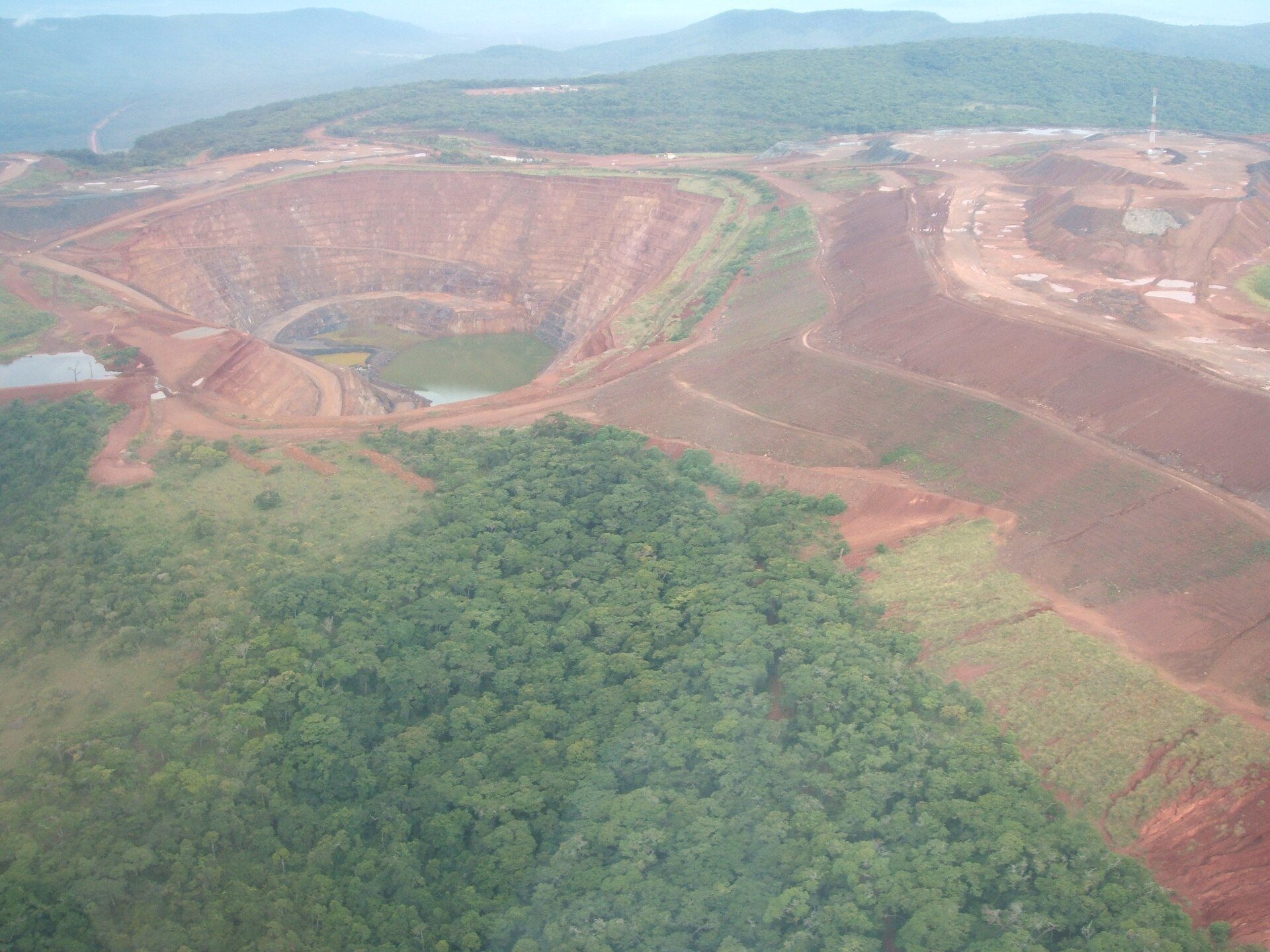
The Overseas Development Institute (ODI), a London think tank, calculates that Africa holds under 4% of the world’s reserves across the main critical minerals, though that estimate is disputed. Africa does dominate production of a few: about 70% of cobalt, mostly from Congo, and about 82% of platinum. But ODI says Congo earns only about $8 billion a year, despite supplying about 70% of the cobalt, while world iron ore and copper output are each worth more than $250 billion. The riches in the ground do not turn into riches for the people above it.
The best evidence that minerals fuel war is narrower than the slogan. Berman, Couttenier, Rohner and Thoenig studied mines across the continent and found that when mineral prices rose, violence rose in the areas around the mines, not across whole countries. When a rebel group captured a rich mine, the violence it caused roughly tripled the following year. Where governments were less corrupt, higher prices were less likely to produce violence.
Congo shows how it works. UN experts said in July 2025 that Rwanda gave “critical” support to the M23 rebels and that coltan, an ore used in phones and electronics, from a mine under M23 control was smuggled into Rwanda and exported mixed with Rwandan output. Rwanda denies it. So minerals matter, but as a source of cash for armed groups at particular mines, not as a reason Africa as a whole is at war.
Youth: the unemployment story does not hold, the numbers story partly does
The idea of angry unemployed young Africans is common. The ILO’s figures do not match it. In 2023 youth unemployment in sub-Saharan Africa was 8.9%, below the world figure of 13%. The ILO says more than one in three young people in North Africa struggle to find work, and yet the Sahel and Somalia, not North Africa, account for most of the deaths counted above.
What sub-Saharan Africa has is not joblessness but bad jobs. The ILO says 71.7% of working young adults aged 25 to 29 were in insecure work, meaning odd jobs, unpaid family work or temporary jobs, and 21.9% of young people were neither working nor studying. Its youth labour force is projected to grow by about 73 million by 2050.
There is a research link between numbers and violence. Flückiger and Ludwig found that a larger group of 15 to 19-year-olds raised the risk of small-scale conflict in sub-Saharan Africa. They found no such effect for ages 10 to 14 or 20 to 24. That is a finding about the size of an age group, not about unemployment, and it says nothing about why one country with many young people fights while its neighbour does not.
The West and the old colonial powers: the real story is more uncomfortable than the slogan
This is the claim most often made, and the one that needs the most care.
Colonial borders are a well-supported cause. Michalopoulos and Papaioannou found that violence is more frequent, more severe and longer-lasting in the historical homelands of ethnic groups split by colonial borders. Groups split by the borders are also more likely to face discrimination and to take part in ethnic civil wars.
“Libya’s weapons caused the Sahel” is weaker than people say. Conflict Armament Research concluded in 2016 that the arms in the Sahel were not exclusively, or even mainly, diverted from Libyan sources. It said equipment captured from the Malian army in 2012 and 2014 was probably a bigger source. That study is about Mali and is ten years old, so I would not stretch it further.
Western security aid is the harder question. The Stimson Center reports that the US gave more than $3.3 billion in military aid to the Sahel over two decades and trained at least 86,000 people from six countries up to 2020. After Niger’s coup in July 2023, it counted five Sahel coups since 2020, and says each involved or implicated officers who had received US training. It adds that terrorism-related activity in the region rose by more than 2,000% over the past decade and a half. The money did not buy security, and some of what it bought was the men who later seized power.
New outside backers matter too. Amnesty identified Chinese-made weapons used in Sudan’s war by the Rapid Support Forces (RSF) that it says the UAE “almost certainly” sent on to Sudan in breach of the UN arms embargo. The UAE has denied supplying the RSF. In Mali, ACLED found that Russia’s Wagner group’s involvement in violence more than tripled in 2023 compared with 2022, including killings of hundreds of civilians.
The clue everyone misses: these wars are cheap
Figures from SIPRI, the Stockholm peace research institute, show that Africa received 4.3% of the world’s recorded arms imports in 2021 to 2025, and sub-Saharan Africa only 2.2%. Africa’s total imports fell by 41%, mostly because Algeria bought far less, while sub-Saharan imports rose 13%. Africa has about four in ten of the world’s conflicts, as the Red Cross counts them, and about four in a hundred of its arms purchases. The wars are not being fought mainly with big, imported weapons systems. They run on cheap guns, captured stocks and, in places, drones carrying explosives.
That points to a different question. If the wars are cheap, who is paying and how?
Somalia gives one answer. A UN panel put the federal government’s revenue at about $250 million a year. The US Treasury estimated al-Shabaab’s income at about $100 million, which the Africa Center notes is roughly 40% of the government’s. The group raises it through a 2.5% annual levy on assets, road tolls, taxes on shipping and protection payments. That is enough, according to the UN panel, to support 5,000 to 10,000 fighters. This is a war that pays for itself, a tax system run at gunpoint.
Sudan shows the other half: where the money goes. Swissaid reports that in 2024 the UAE imported 748 tonnes of gold from Africa, up 18% and about 54% of its total gold imports. Togo, which mines almost no gold, supplied 52 tonnes, worth about $4 billion. Sudan sent 29 tonnes directly, and Swissaid says Chad and Libya are exit points for gold controlled by the RSF. Swissaid notes that the UAE’s 2024 figures were later removed from the UN’s trade database. The release carries no UAE statement, and I have not found a response.
The same logic runs through the Imo kidnapping I wrote about: families told reporters they paid the kidnappers, and no one has said who took the 20 graduates. When you can raise money from taxing roads, selling gold or collecting ransoms, you do not need a big arsenal or a big donor. You need a market that does not ask where the money came from.
What the evidence supports
The evidence for each claim is uneven. Minerals fuel violence, but locally, in the areas around mines and with the price of what comes out of them. Youth matters in part: large numbers of teenagers raise the risk, but unemployment as such does not fit the figures. Colonial borders are the best-supported cause.
The West’s role is mixed. The Libya story is weaker than commonly told, and Western security aid has a poor record and has helped train coup leaders, but gold buyers in the Gulf and Russian forces also play a large part in today’s wars. African governments are missing from the usual story. Berman and colleagues found that higher mineral prices led to less violence where governments were less corrupt, and the coups in the Sahel were carried out by African officers.
What I do not know
I cannot say how much of Africa’s conflict is funded by gold, minerals, taxes or ransom, because no one counts it all. I do not know how the Red Cross counts conflicts. The Swissaid figures are trade data that the UAE has not answered, and the gold’s origin is often not documented. I have not tested the claim about the French withdrawal from the Sahel, where I did not find a study comparing violence before and after. Some of these studies are ten years old.
What should change
Start with the money. Gold buyers and refiners, in Dubai and elsewhere, should have to prove where their gold came from, and publish it. Governments accused of fuelling wars, including Rwanda and the UAE, should answer the specific evidence, such as the UN experts’ findings on coltan and the arms Amnesty traced, and not only deny it.
Western governments should attach conditions to security aid and stop it when officers they trained take power by force. In the Sahel, more than $3 billion in US aid over two decades went alongside five coups.
The numbers themselves also need work. The Red Cross and others should publish how they count conflicts, so the 40% can be checked. And help for young people should aim at the quality of jobs, not only the number, because the figures point to insecure work, not joblessness, as the problem.
Comments
Every comment is read by a person before it appears, so yours will not show straight away. We publish comments that are civil and on the subject. To report a mistake in the piece, use the corrections page, so it is fixed in the piece itself.