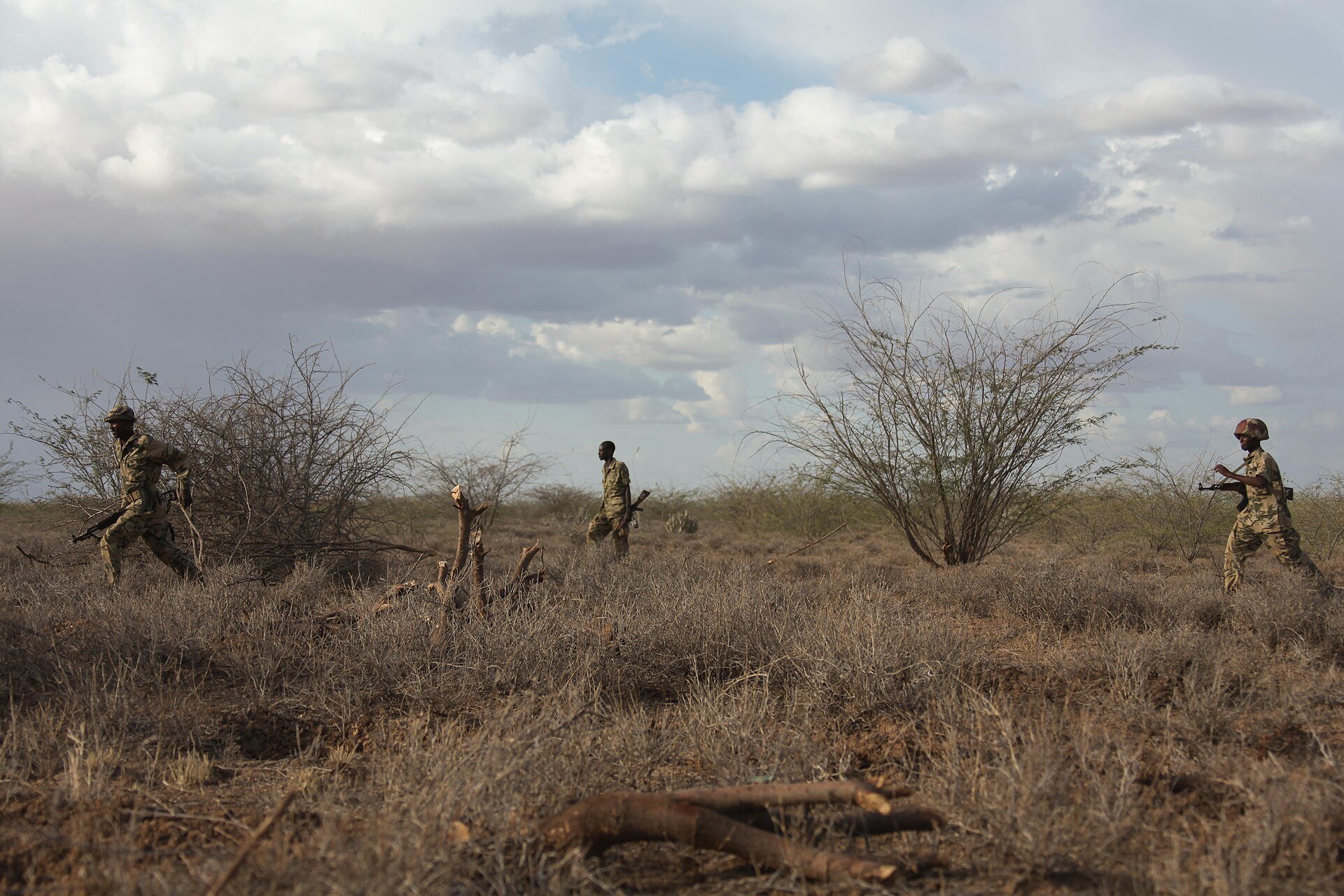
On Thursday, October 8, in the village of Tardo in Hiiraan’s Jalalaqsi district, an Al-Shabaab fighter reportedly tried to take a rifle from a herder. The herder refused. Neighbours came to help him, and the shooting lasted several hours, according to local administrator Osman Dheere, who spoke to Kaab TV.
Nobody agrees on how many people died. Dheere told The Somali Digest at least seven were killed and nine wounded. A Somali-language report counted five dead. Another, calling its own figure preliminary, said eleven civilians were killed. Families fled 40 to 80 kilometres.
Five days earlier, on Saturday, October 3, Al-Shabaab had announced that it had made peace with the Hawadle clan. Those two facts sit badly together, and The Field does not yet know what to make of them. What it can do is set out what has been announced, by whom, with what proof, and who has said it is not true. This is the first of two reports. The second, on what follows if the deal is real, is published alongside it.
What is claimed
Al-Shabaab says it signed an agreement with Hawadle elders at a meeting in Mahaas (Maxaas in Somali), in Hiiraan region. Somali Guardian reported that dozens of elders and Al-Shabaab officials attended, and that Al-Shabaab’s Al Furqan media posted videos of the meeting on Facebook. The Somali Digest adds that former members of the Macawisley, the local clan militia that rose against Al-Shabaab in 2022, were in the room. Al-Shabaab says the deal ends four years of war with the Hawadle and that the clan supports Islamic law in its areas.
Much is missing. No Hawadle signatory has been named. Al-Shabaab named three of its own representatives, according to Horn Observer: Hussein Ali Fidow, Hassan Yacqub Ali and Mohamed Abu Abdalla. No elder is named in any report The Field could find. The only evidence is Al-Shabaab’s own. FTL Somalia said the video could not be independently authenticated, and every outlet read depends on Al-Shabaab’s media for the meeting and for the terms.
Nobody on the Hawadle side has published an account of their own. As of October 5, The Somali Digest reported that Villa Somalia, the Hirshabelle administration and the Hawadle traditional leadership had not confirmed the terms. How many Hawadle the elders speak for is also unknown. Horn Review calls the other party “sections of the Hawadle clan.” Kaab TV says “some Xawaadle groups.” WardheerNews says it is unclear whether the Mahaas elders represent the wider clan, while some headlines say “the Hawadle clan.” This series uses the narrower wording. A pact with some Hawadle elders at Mahaas is what has been reported. A pact with the Hawadle is what Al-Shabaab says.
What the statement says
The statement was read out at the meeting by a man named in the text as Nabadoon Cabdishakuur Muuse Cilmi Ugaas. The Field could not find anyone who has identified him. Horn Observer says the statement has 16 points. The Field read a Somali-language mirror of the full text that circulates on Al-Shabaab-friendly channels, and is not linking to it. The points were read in translation, and three of them have not yet been checked by a second Somali reader, as noted below.
In summary, the clan says past disputes with Al-Shabaab are settled and accepts Islamic law in its areas. It pledges support for “jihad” and the mujahideen and to protect their lives and property, and a defensive role against unnamed “enemies” (both points still to be checked). It will not take part in the politics or administration of the government, which the text calls “apostate.” It will stop local militias, named as Macawisley, from being organised or used against Al-Shabaab. It will not allow security posts in its areas, a point also to be checked, since another translation reads it as a ban on outside militias. It will not take part in government elections and will warn people against them. It will help rebuild damaged areas and bring displaced people home, and it calls on young men who joined the “apostate” side to repent.
Two things stand out. First, the text does not say the clan will fight the government or the African Union by name. The government appears only as “the apostate group,” and the African Union is not mentioned. Horn Review, in an opinion piece on October 5, reads the communiqué as committing the signatories to “support operations” against federal and AU forces. The Field does not find that reading in the Horn Observer account or in the text it read. The pledges of support and of a defensive role are the closest, and if a Somali reader finds that the Somali says more than the translation, this report will be corrected.
Second, the date. The text carries the date 28/03/1448 on the Islamic calendar and says the talks lasted about two weeks. Converted with a standard calendar table, that falls on about September 10, 2026, not October 3. That is the day, according to The Somali Digest, that President Hassan Sheikh Mohamud backed Hirshabelle’s president for a second term. Either the text was finished three weeks before it was announced, or the date was mistyped, and The Field cannot tell which. FTL Somalia’s editorial note says announcing the deal on the day the election results came out was “not necessarily a coincidence.” That is FTL’s judgment, and The Field cannot confirm it.
Who said it is not true, and who speaks for the Hawadle
The first official answer to come to light was not from Mogadishu. Hirshabelle’s interior minister, Abdirahman Dahir Gure, known as Karoore, said around September 2025, according to an AllAfrica report, that Mogadishu had deliberately neglected the Macawisley. An earlier version of this report also attributed to The Somali Digest an October 7 statement from him calling the Mahaas elders unrecognised and the videos propaganda. A check on October 25 could not find it in the Digest, so it has been withdrawn until it can be sourced. In Tardo, Dheere doubted the deal and asked whether the videos might have been made or altered with AI, but offered no evidence. Prime Minister Hamza Abdi Barre told Dawan on about October 2 that the government has held no talks with Al-Shabaab. That was a general denial, and it came before the announcement. The Field found no federal statement on the Mahaas agreement through October 25, and the president’s October 25 address did not mention it.
The army has since moved. On October 9, federal troops and Al-Shabaab fought around Hees, in Mahaas district. Al-Shabaab said it overran the army base and killed two soldiers, which the army neither confirmed nor denied, according to The Somali Digest. FTL Somalia reported on October 11 that the army had begun operations in rural Mahaas, citing military officials who gave no figures or locations. Its background section says Al-Shabaab has captured Hees and cut the army’s supply road between Mataban and Beledweyne, a claim The Somali Digest, which reported only Al-Shabaab’s own account, did not make. Kaab TV reported on October 10 that the army’s 27th Division had reportedly retaken Hees, citing unnamed officers and residents. The two accounts conflict and neither has been independently confirmed.
The Hawadle are not one voice, and this matters for everything that follows. Before the Hirshabelle vote, a Hawadle delegation led by the clan’s Ugaas, or traditional head, Yusuf Ugaas Hassan, reportedly agreed to back the federal government in return for consideration of a Hawadle candidate after Ali Guudlaawe’s term, The Somali Digest reported. On September 10, Hassan Sheikh backed Guudlaawe, an Abgaal, for a second term. Hirshabelle’s vice president, Yusuf Ahmed Hagar, known as Dabageed, a Hawadle, accused the president of breaking the understanding. A rival Hawadle political council in Mogadishu, chaired by former Hirshabelle president Ali Abdullahi Osoble, endorsed Guudlaawe on September 15. WardheerNews reports that this council backs the election. It also reports that Maxaas elders are the ones said to have reached the understanding, that it is unclear whether they speak for the wider community, and it says the pact should not automatically be read as a Hawadle alliance with Al-Shabaab and may instead reflect local security concerns, political frustration and war fatigue. The House then re-elected Guudlaawe on October 24, as set out in the report on the vote. Dabageed said on October 23 or 24, depending on the outlet, that he would stay in office until a political agreement is reached, and backed a forum of Hiiraan elders in Beledweyne, so the dispute behind the pact is not closed.
The Ugaas arrived in Beledweyne on September 14 to unify the clan’s position, The Somali Digest reported, and on October 3 the cleric Sheikh Ali Mohamud Hassan, known as Ali Wajis, said on television that the Ugaas had taken up work that was not his and that a traditional leader’s place was to preserve custom and advise the government. The Digest also reports that on polling day, September 30, hundreds protested in Beledweyne and Hawadle elders kept regional officials and their aircraft out of the airports they control in Hiiraan. Somali Guardian says the Hawadle boycotted the vote. Where the Ugaas stands on the Mahaas deal could not be found, and neither could a Hawadle MP, minister or Macawisley commander who has spoken about it.
Not the first time, and not what it would have been in 2022
A smaller version has happened before. On April 5, 2023, according to ACLED, a project that tracks political violence, Al-Shabaab claimed a deal with the Hawadle Galible Hassan Agoon sub-clan at Buqda Caqable, in Bulo Burto district. ACLED wrote that the sub-clan would not be part of the offensive in Hiiraan, and that Al-Shabaab had reportedly signed similar deals that year with at least seven other Hawadle subdivisions in the same village. That claim also came from Al-Shabaab, and ACLED treated it as such. Crisis Group, an international conflict-research organisation, describes the pattern more widely. Its June 2026 briefing says that in 2025 Al-Shabaab reached non-aggression pacts with some of the Macawisley it had fought, promised no reprisals to people who backed away from the government and let militia members keep their weapons, which broke its earlier practice of disarming them. So a Hawadle sub-group stepping aside is not new. A pact announced for the clan across Mahaas, with videos and a numbered statement, is.
A few years ago it would have been unlikely. The Hawadle uprising began with a killing. On May 27, 2022, Al-Shabaab assassinated a Hawadle elder, accusing him of apostasy for taking part in elections, though Hawadle leaders said he did not vote. Hawadle militias attacked an Al-Shabaab base on June 1, according to analysis carried by Hiiraan Online from the Critical Threats Project. On August 8, Al-Shabaab destroyed water wells and burned homes in several Hawadle villages. On September 2, a convoy was ambushed and 21 civilians were killed; Al-Shabaab said the convoy targeted local militia, and Somali officials denied that. The European Union Agency for Asylum, using ACLED data, counted 93 incidents between Al-Shabaab and Hawadle sub-clan militias between April 1, 2025 and March 31, 2026 alone. The Field has not found a public tally of elders killed on either side, and will not invent one.
What could not be confirmed
Who attended the meeting, beyond Al-Shabaab’s own account, is unconfirmed, as is whether the Hawadle Ugaas supports or rejects it. Which sub-lineages were present is unknown, and public sources conflict: the UN refugee agency’s table lists only the Samatalis branch, the EU asylum agency names the Agoon and Ali Madahweyne, and ACLED names the Galible Hassan Agoon. Al-Shabaab’s own label for the other party, “Sheekh Maxamed,” could not be matched to a known lineage. Whether the date on the statement is a mistake is open. Whether the Tardo fighting is connected to the pact is unknown: Kaab TV and Allbanaadir describe residents against Al-Shabaab, while Hiiraan Online describes Al-Shabaab against local Macaawiisley fighters, on the same administrator’s account, and says the casualty figures could not be independently verified. Whether the army’s move into Hees is a response to the pact or a separate operation is also unknown.
Comments
Every comment is read by a person before it appears, so yours will not show straight away. We publish comments that are civil and on the subject. To report a mistake in the piece, use the corrections page, so it is fixed in the piece itself.