
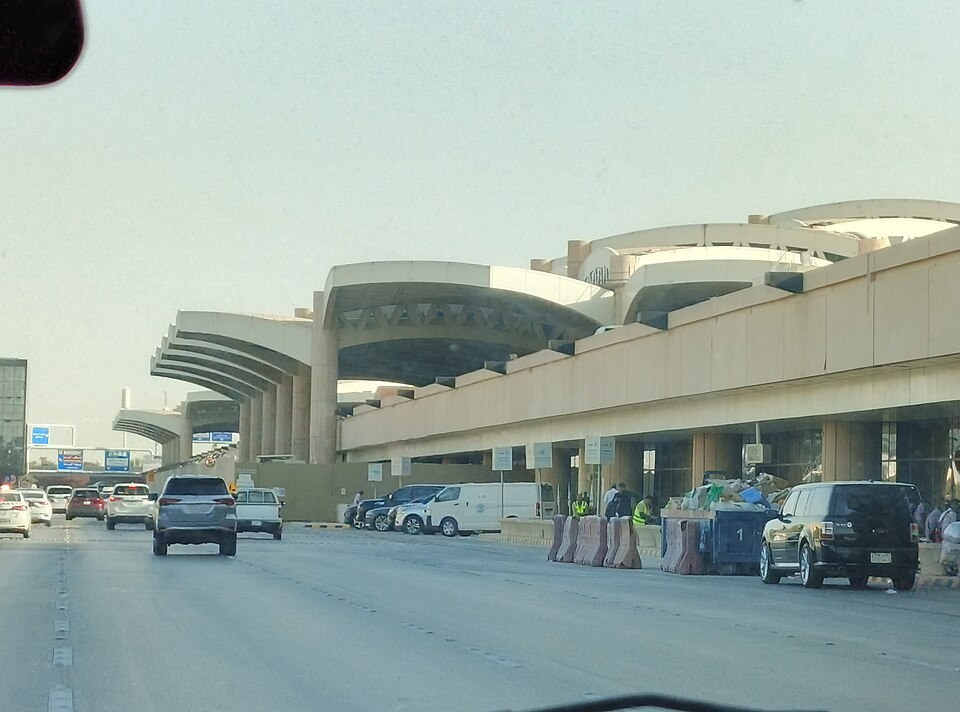
On Saturday, October 10, a missile hit the main airport in Saudi Arabia’s capital, killing at least 12 people, including an American, and wounding more than 300. Asked whether the United States would join Saudi Arabia’s war on the Houthis, the Yemeni armed group that says it fired it, President Donald Trump told reporters: “We may. We’re going to look at it.” He added: “We move very quickly.” On Monday Brent crude, the international benchmark price of oil, was above $100 a barrel, at about $103 to $106 in different reports, and the airport was still shut.
My argument is that Washington is about to answer the wrong question. The question in the news is whether to bomb Yemen. The better one is how to stop a weapon that is cheap to repeat from closing the front door of a country the world’s oil market leans on. I recommend four moves. Fix the arithmetic of defence, agree a truce on civilian airports, keep any American force narrow and time-limited, and have oil-importing countries plan now for the Red Sea port of Yanbu. The evidence follows.
Why one airport matters
King Khalid International Airport handled more than 37 million passengers and 269,000 flights to 113 destinations in 2024, the Saudi Press Agency reported. It is the gate to a country staking its future on being open. One tourism site lists Saudi Arabia’s plans: Expo 2030 in Riyadh, the 2034 World Cup, and a new King Salman International Airport that would take in King Khalid’s terminals.
This week the cost shows. The World Petroleum Congress, an oil industry gathering, is going ahead in Riyadh, but Italy’s energy minister will join by video, Lufthansa has suspended flights through October 16, and Britain, France and Germany have told their citizens to avoid the city, the New Arab reports. The kingdom’s big investor conference is due October 26 to 29, with the heads of JPMorgan and Citi on the expected list. My reading: the Houthis have found a cheap way to press on the whole plan by showing the front door can be shut.
The week
Missiles and drones have hit the airport on four days since October 6. The first strike also hit Abha’s airport, and CBS News reports three killed across the two. On Saturday the Saudi civil aviation authority listed 12 dead from eight countries, including the United States, and Al Jazeera calls it the deadliest attack on the kingdom in more than a decade. Later reports raised the toll to 13 or 14 and the wounded to as many as 320. On Monday the coalition said it destroyed three more ballistic missiles, one aimed at Riyadh and two at an air base at Khamis Mushait. A ballistic missile is one fired high into the air that falls onto its target. CBS counts at least 20 dead at Saudi airports this week, and no official list matches every outlet’s numbers. The airport is closed until at least October 17.
The arithmetic that is losing
Two regional officials told the Associated Press, without giving their names, that an early inquiry found the Houthis sent drones first to clear a path for cruise and ballistic missiles that flew more than 1,000 km, and that there was no early warning. A cruise missile is a small jet-powered weapon that flies low. I cannot check what anonymous officials say.
What I can check is the price tag. A Patriot interceptor, the missile that shoots other missiles down, costs about $4 million, while the drones it is used against cost at most tens of thousands of euros, Bruegel’s analysts write. A THAAD interceptor costs $12 million to $15 million, and Patriots take more than two years to build, with about 600 made a year, the Observer Research Foundation’s Samriddhi Vij reports. I could not find reliable prices for the Houthis’ own weapons, so those figures are for Iranian-designed drones, the best public benchmark. Analysts told Al Jazeera that Saudi defences were built mainly with Iran in mind and that Patriot and THAAD stocks were reportedly used up fast in the war with Iran.
How the war came back
The Houthis took Sanaa in 2014, and a Saudi-led coalition began bombing them in 2015. A UN-brokered truce held from April 2022, and a UN roadmap was agreed in December 2023. Annelle Sheline of the Arab Center Washington DC dates the end of that calm to July 13, 2026, when the runway at Sanaa airport was bombed as a plane carrying a Houthi delegation from Iran tried to land. Yemen’s government says it did it and the Houthis blame Saudi Arabia, and I found no neutral account that settles it. A week later the Houthis announced a blockade of Saudi oil exports through the Bab al-Mandab, the narrow strait at the bottom of the Red Sea. On September 10 they took the Red Sea coast and several islands in the strait. In early October Yemen’s government announced an offensive to retake Sanaa, and the coalition said about 100 of its fighter jets had joined in, which Ynet could not verify. The first airport strike followed the next day.
The Houthis call the airport attacks payback for Saudi strikes on civilian sites in Yemen, which I could not verify. They say Saudi strikes on Sanaa overnight killed one person and wounded 12, and Saudi Arabia has not confirmed them. As of early October the UN said the fighting had killed more than 800 people and displaced more than 145,000, Ynet reports. Al Jazeera, citing the UN, puts the civilian toll since August at 46 dead and more than 130 injured, as the UN envoy, Hans Grundberg, told the Security Council on October 9 that civilians bear the brunt. Grundberg also called the airport strikes a grave escalation and urged the Houthis to stop. The rules of war forbid deliberate attacks on civilians and civilian sites, and bind Saudi Arabia in Yemen as much as the Houthis in Riyadh.
What it means for the world’s oil
The war with Iran began on February 28, and Brent was about $72 before it and peaked near $119. Much Saudi oil used to leave through the Strait of Hormuz, the narrow sea passage at the mouth of the Gulf, which has been disrupted since March. So the kingdom leans on an East-West pipeline, about 1,200 km long, from the oilfields near Abqaiq to the Red Sea port of Yanbu. Reuters data cited by Al Jazeera says it recently carried 4 to 5 million barrels a day, about 4 to 5 percent of the world’s supply. Drones hit it on September 11. Iraq’s prime minister’s office says they were launched from Iraq, and no group has claimed it. Reports on how fast it recovered range from 3.5 million barrels a day to 5.8 million.
Oilprice.com reports that the Houthis claimed strikes on facilities of Aramco, the Saudi state oil company, there on the night of September 18 to 19, and that Saudi Arabia said they hit civilian infrastructure at the port, with no damage reported. The market has so far treated the airport strikes as a warning, not a loss of supply. Commerzbank warned of a “dangerous escalation that could draw in the US,” and one analysis site sets out a scenario in which Brent reaches about $112 if the US joins the fighting or a strike hits Saudi export facilities. That is a scenario, not a forecast. The world’s exposure is not the airport. It is the single bypass from Yanbu to the Red Sea, and the way a US decision could turn a risk into a shortage.
What Washington has already tried
The New York Times reported in September, as the Boston Globe carried it, that after a call from Crown Prince Mohammed bin Salman Trump told the Pentagon to prepare airstrikes, then pulled back as bombs were being loaded onto aircraft. That rests on anonymous officials. The same report says that in spring 2025 the US bombed the Houthis for more than 50 days and struck over 1,000 targets, at a cost of about $1 billion in munitions in the first month, before a ceasefire, and that the Houthis have since rebuilt much of their strength. Unnamed diplomats and commanders doubted a limited campaign would make them negotiate. The Houthis have not attacked American ships in this round, and Trump has said they agreed not to. A Houthi official, Mohammed al-Bukhaiti, has warned of a “swift and painful response” against American interests if the US joins in.
What should change
First, fix the arithmetic. Saudi Arabia, the United States and their partners should stop paying millions to shoot down weapons that cost thousands. Vij sets out the cheaper layers: interceptor drones of Ukrainian design that cost $800 to $3,000, which Ukrainian operators say hit 97 percent of incoming Iranian-type drones, and lasers that cost a few dollars a shot but weaken in dust and haze. Those layers do not stop ballistic missiles, so Patriot and THAAD stay for those, backed by radars and early warning. France is already sending soldiers, radars and defences to Yanbu, Gulf News reports. The test: no Saudi civilian airport hit for 30 days, and Riyadh open.
Second, the UN envoy, Oman and Washington should offer a truce on civilian airports. Both sides stop attacking them, Saudi Arabia stops striking civilian sites in Sanaa, and UN monitors check each claim. It could be the first step back toward the December 2023 roadmap. Grundberg has said battlefield gains cannot replace negotiations. It would give the world a count of the dead that does not come from the combatants.
Third, if the US does use force, it should be narrow, short and approved by Congress. It should aim at the launch sites that fired on civilian airports, with a stated end date and one stated purpose. That answers the killings without a war with no end, and avoids a repeat of 2025.
Fourth, the oil importers should plan for Yanbu now. The International Energy Agency, which advises the big oil-importing countries, has urged faster diesel releases, and its board meets on October 15. It should settle in advance how stocks will be released if the port or the pipeline is hit, so a strike causes a managed rise in prices, not a panic.
The strongest objection
The best argument against me is that restraint has already failed. Former Secretary of State Mike Pompeo said at a conference in Abu Dhabi that “we’ve not yet achieved deterrence,” and the UAE’s Anwar Gargash wrote that “we are all targeted.” If a missile can kill 12 people at an airport and nothing follows, the Houthis will try again.
I take that seriously, but the record points the other way on bombing. A 50-day campaign in 2025 did not end the threat, and officials quoted say a limited one would not force talks. A broad campaign could also open another front in the Iran war and put American ships and the Red Sea route at risk, the route the world’s oil needs open. If the Houthis take Saudi export capacity offline, the calculation changes, and I would not argue against a stronger response then.
What we do not know
The death toll is the first gap, because reports disagree and no final list exists. The second is why the defences failed, since the only explanation comes from anonymous officials. Nobody has shown who supplied the weapons that reached Riyadh, and Yemen’s allegation that Iran’s Revolutionary Guards help build them is unverified. I cannot tell how many died in the Saudi strikes on Sanaa, or who ordered the July 13 runway strike. Nobody outside the White House knows whether Trump will strike.
I will update this piece as reports are confirmed or disproved. For the wider picture, see the live Yemen tracker and our neutral background page on the war.
Comments
Every comment is read by a person before it appears, so yours will not show straight away. We publish comments that are civil and on the subject. To report a mistake in the piece, use the corrections page, so it is fixed in the piece itself.