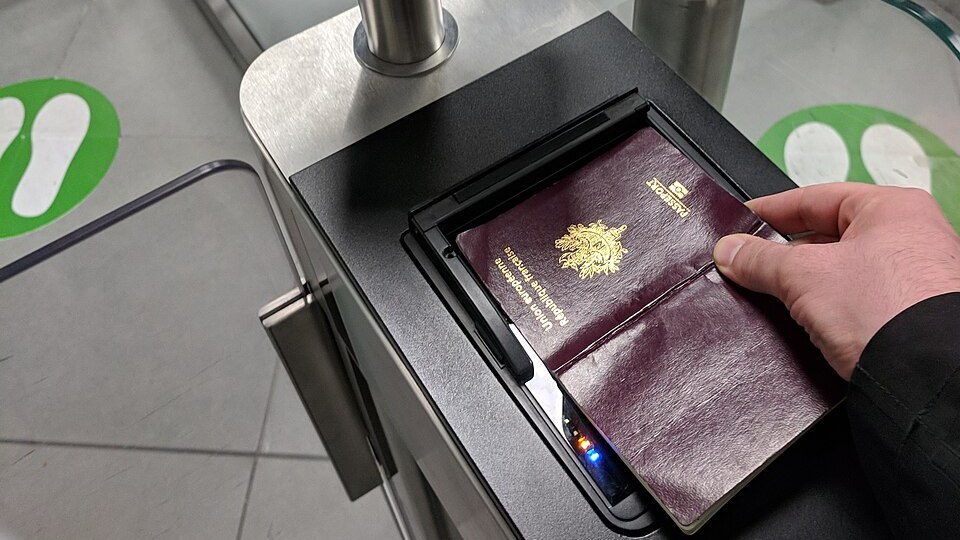
Saturday, August 1, was the first day of Italy’s new border checks. At Rome’s Fiumicino airport, where more than 60 flights a day arrive from Spain in summer, police began spot-checking passengers’ documents from the morning, Il Post reported. The same checks started at Milan’s Linate and Malpensa airports. They were aimed at non-EU nationals, to confirm they had papers to travel within the Schengen area, and were meant to be quick, with further checks only if something looked wrong, according to Open. The government had decided on them the evening before, after more than 70,000 people crossed from Morocco into the Spanish enclave of Ceuta on July 30.
Three days later, the reason for them had already weakened. On August 4 the EU’s migration commissioner, Magnus Brunner, said no migrant from Ceuta had entered the Schengen area, and the Commission said there was no longer any risk of further movements to other EU countries, Eunews reported. Italy kept checking. It extended the checks at least four times, and they ran for nearly three months, until Italy and Spain agreed this week to stop. This analysis asks what Italy learned from them, and its answer is: very little that anyone has been willing to publish.
The only figures released, from the first month, show hundreds of thousands of passengers screened and nothing tied to Ceuta. The evidence fits a political signal better than the security reason given. And the emergency rules Brussels is now drafting should make governments count what such checks find, because nobody else is doing it.
What the checks found
Italy used a provision of the Schengen Borders Code that allows internal border controls in cases of a serious threat to public order or internal security, Il Post reports. Schengen is the group of European countries that have abolished routine border checks between them, so the move was widely called a suspension of it. Foreign Minister Antonio Tajani cited terrorism prevention and countering irregular migration. When Italy extended the checks by 15 days at the end of August, Interior Minister Matteo Piantedosi said a border security committee had found the Ceuta situation unchanged.
For August 1 to 31, Il Post reported, the interior ministry said it had monitored about 500,000 people by cross-checking flight and ferry passenger lists against security databases, and separately identified 180,000 people on arrival from Spain. Il Post does not say whether the two groups overlap. Italy refused entry to 31 people, mostly South Americans who had transited through Spain without a valid visa or documents, and eight of the 31 were Moroccans. It arrested six. The ministry did not say whether any of them had come through Ceuta, and Il Post calls it close to impossible that the eight Moroccans had, given the controls there. The paper also notes that most of those who reached Ceuta went back to Morocco within a day, that Italy shares no border with Spain, and that the Spanish government and the Commission both say none of the Ceuta arrivals reached mainland Spain.
Some of the 31 refused and six arrested may be exactly who the checks were meant to catch. We cannot tell, because Il Post’s report does not give the offences, and we do not suggest the numbers prove the checks pointless. What they do not show is any connection to the event that justified the checks. A reader asking what Italy gained has only the ministry’s own statement of what it found.
There was a cost on the other side of the ledger. Spain answered with reciprocal checks from August 8, and between August 8 and 22, Il Post reports, it checked 1,066 flights and identified 12,337 people. That is a smaller operation than Italy’s, but it was a real one, run in retaliation for a measure whose purpose was disputed. Spain extended its checks to September 22, to October 8 and then to October 22, according to Euronews, Brussels Signal and Agenzia Nova. Italy’s last extension, of seven days on October 16, was meant to line up with Spain’s expiry, Open and Agenzia Nova reported. In the end the checks stopped as a trade between two governments that decided together it was time, not because anyone established that they had worked or failed.
Why Italy did it
Two explanations compete, and the evidence favours one. The official explanation is security: Prime Minister Giorgia Meloni called the checks an extraordinary measure to safeguard national security, Al Jazeera reported. The other is that they were aimed at Spain’s migration policy and at Italian voters. Three things point that way.
First, the quarrel was not only about Ceuta. Twenty-two member states signed a joint letter accusing Spain of “pull factors” (conditions said to attract migrants) that destabilise the bloc’s borders, Al Jazeera says, and Brussels Signal reports that Italy and Denmark initiated it and that Tajani linked the suspension to Spain’s decree regularising undocumented migrants, which Spain disputes. Second, the stated threat and the geography fit poorly. Experts told Al Jazeera there was little prospect of asylum seekers travelling from Ceuta to Italy, and rights groups called the move political theatre. Third, there is Italian politics. Brussels Signal quotes a French member of the European Parliament, Sandro Gozi, saying the checks were driven by polls favouring Roberto Vannacci, whose party competes with Meloni from the right, and an analyst at the Centre for European Policy Studies saying the move was political, not practical.
Those are critics’ views, and Italy’s government cites security. We cannot see inside any minister’s motives. But the August results are at least consistent with a political signal, and show no security payoff: a great deal of visible activity and no reported finding about the threat it named.
What Brussels took from it
The Commission read the episode differently, and its reading is shaping new rules. On September 29 it presented a five-point plan to prevent and respond to sudden mass arrivals, Eunews reports. It includes a new European framework for emergency response at the EU’s outer border, a stronger Frontex (the EU border agency), social-media monitoring and faster returns. Brunner said Ceuta had been a test for the European Union and that he believed the EU had passed it, crediting cooperation with Morocco, in part, for the fact that no one entered the Schengen area.
Both things can be true. No one entered the Schengen area from Ceuta, and Italy went on screening Spain’s passengers for nearly three months anyway. In the account Eunews gives, the Commission treats the first fact as the result and does not mention the second. Brussels Signal reported in October that the Commission had delivered no assessment of either country’s controls. Nothing we found in the plan sets any expectation that a government which reintroduces internal checks in response to an outside crisis must later say what the checks found. The plan strengthens the response at the outer border, which is where the problem was. The internal checks, which caused the quarrel, are left to the existing rules.
Could it have gone differently?
The compromise that ended the dispute was available on day one. The measures announced this week, more information-sharing and alternative cooperation, could have been offered when the checks began, without a month of passenger screening and a retaliatory operation in Spain. The Commission’s own record makes the delay harder to excuse. On August 4 it said the risk had passed. Brunner also said he understood Italy’s position, since the situation had still been uncertain when it acted, and that the Commission would verify that the measures were proportionate and time-limited. We found no published verification. Had the Commission published its assessment in August, either the checks would have ended then or Italy would have had to say why not. Spain’s decision to answer with checks of its own doubled the cost, and on Il Post’s figures it meant screening more than 12,000 people in two weeks for little reason beyond reciprocity.
Did the checks deter anyone? We cannot tell, and the evidence cuts against it. The Commission did not name Italian checks as a cause of the outcome, and its August 4 assessment came three days into them. Deterrence of ordinary irregular travel through Spain is a different claim, and Italy has not published figures that would test it. Was the Commission right to say the EU passed the test? About the external border, apparently yes. About Schengen as a whole the answer is mixed: two member states put checks on each other for nearly three months in a dispute in which, by the Commission’s own account, the risk of further movement had passed within days.
So what should change? The Commission should add a reporting duty to the emergency framework: any member state that reintroduces internal checks should publish, within a set time of ending them, how many people were checked, how many were refused, arrested or referred to other authorities, and how many of those were connected to the event that justified the measure. Italy should publish its figures for the full period, not only August, and Spain should do the same. The “alternative cooperation measures” the two governments promised should be described publicly, since a promise to share more information is only useful if people can see what is shared and under what safeguards.
The best case for the checks
The strongest objection is that border checks work partly by being visible, and that a government facing a mass crossing is entitled to show it is acting, with a deterrent effect that no arrest count captures. Italy’s government can say that it screened a large flow of travellers during a period of real alarm and found nothing alarming, which is the result a good check produces. That is a fair argument, and it is the argument for publishing numbers, not for hiding them. If the checks did deter, a longer record would show it. If their main effect was political, the public should be able to see that too.
We do not know what Italy’s checks found in September and October, since we found no published figures. We do not know whether anyone who crossed into Ceuta later reached Italy, or what the promised alternative measures are. We do not know how the member states responded to the Commission’s plan when interior ministers took it up on October 1 and 2, or whether any reporting duty will be added. Euronews describes the checks as both “phased out” and “permanently lifted”; the safest reading is that they will not be extended.
On the first Saturday of August, police at Fiumicino stood at the arrival gates looking at passports. Nearly three months later, the governments have stopped, and still no one has said what the officers found.
Comments
Every comment is read by a person before it appears, so yours will not show straight away. We publish comments that are civil and on the subject. To report a mistake in the piece, use the corrections page, so it is fixed in the piece itself.