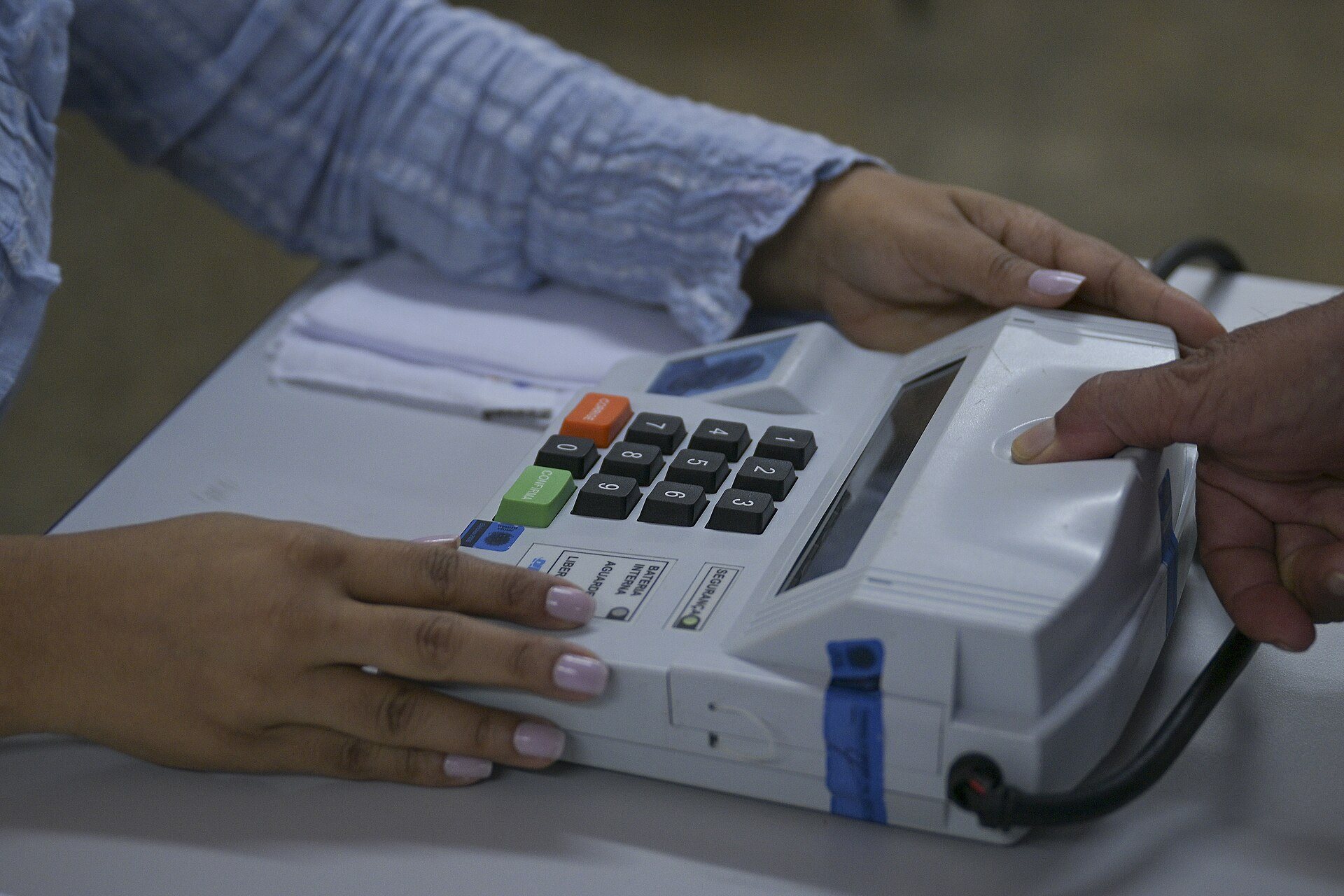
The house in Lago Sul, in Brasília, had been prepared for a victory party. From about 5:30 on Sunday afternoon the campaign’s jingles had played on a loop, and shortly before 9 p.m., when Datafolha projected that Lula had won, a prayer was held there, according to Folha, republished by A Gazeta. Late that night Flávio Bolsonaro sat down with his wife, Fernanda, and São Paulo governor Tarcísio de Freitas beside him and spoke for about two minutes. He did not concede. He said his lawyers would act and that he would ask for the election to be annulled, O Liberal reported.
His grievance was a ruling that, by his account, came at one minute past five. Supreme Court Justice Cristiano Zanin, a former lawyer of Lula’s, had extended voting by two hours after Lula’s coalition complained about missing buses. Flávio offered no verifiable evidence of fraud, and his own campaign had also asked for more time, because of rain in the south. The count he was disputing put Lula ahead by about 4.4 million votes.
Lula was supposed to lose. He finished second in the first round, roughly 40 of the 46 runoff polls the Rio Times tracked had Flávio ahead, and nearly half of those surveyed in September said the economy had worsened. Then Luiz Inácio Lula da Silva won Brazil’s presidential runoff with about 51.8 percent of valid votes to 48.2 percent for Flávio, with 99.99 percent of ballot boxes counted, according to Bloomberg Línea. It is the first time since Brazil returned to democracy that a candidate who lost the first round has won the second. At 80, Lula becomes the first president elected four times.
So the question is why he won anyway, and whether the two-hour extension that his rival blames explains it. Flávio had topped the first round on October 4 with 47.03 percent to Lula’s 45.16. Our reading is that Lula’s win rested on a larger electorate and a swing in votes between rounds, though the totals cannot show how many of Flávio’s first-round voters switched. The case against him on prices and security was real but did not decide the vote, and the extension cannot explain a margin this large. The win also hands Lula a Congress in which his rival’s party is the largest bloc.
Where the votes came from
The arithmetic is the best evidence available. In the first round Flávio won about 56.1 million votes and Lula about 53.9 million, according to the Consensus Report newsletter. In the runoff count Lula had about 64.2 million and Flávio about 59.8 million. Lula therefore added roughly 10.3 million votes between the rounds and Flávio roughly 3.7 million. Flávio gained too, but Lula gained almost three times as much. Net gains cannot show how many voters changed sides, since some of Flávio’s first-round voters may have moved to Lula while new voters replaced them. What the totals do show is the size of the new electorate.
The two men together drew about 124 million valid votes in the runoff, against about 110 million between them in the first round and about 119 million valid votes in all. Third-party candidates had taken about 9.3 million votes in round one. Even if every one of those voters picked a side, about 4.7 million of the extra votes had to come from people who had not cast a valid vote on October 4. First-round abstention was 21.08 percent, the highest for a first round since 1998, the Rio Times notes, and about six million ballots were blank or null according to first-round tallies. The direction is clear enough: more people voted, and Lula gained far more votes than Flávio did.
The polls missed this, and not for the first time. Al Jazeera’s postmortem on round one asked why Flávio outperformed them, and in the runoff the error ran the other way: most surveys had him ahead and Lula won by 3.5 points. A pre-election analysis in the Consensus Report newsletter had judged that even generous assumptions would leave Lula well short. He closed that gap, and then some. Errors in opposite directions in the two rounds are consistent with a turnout problem on each day, and we can say nothing more specific than that.
Why Lula was in trouble
The case against the incumbent was strong, and it is worth stating plainly because he won despite it. Al Jazeera’s postmortem records record-low unemployment, falling inequality and easing inflation, and yet a September Quaest poll in which nearly half said the economy had worsened over the past year, against 19 percent who said it had improved. Voters still felt squeezed by food prices and household debt, and the government was seen as not delivering enough on public security. The Banco Master banking scandal, which centres on the banker Daniel Vorcaro and touched a Supreme Court justice, hurt as well: a September Datafolha poll found 34 percent linked it more with the left and 27 percent with the right.
None of those weaknesses was fixed in three weeks. On October 15, the Senate president pulled the public-security constitutional amendment from the agenda, the Rio Times reports, and security remains the flank on which Lula is weakest. What Lula did instead was change what the runoff was about. AP, via CBS, says he courted undecided voters with a debt-relief programme for small businesses, free public transport on weekends and a proposal to end the six-day working week, and that he cast Flávio as a threat to democracy. Flávio said he would not reverse the end of the six-day week, which Congress finalised on October 16, the Rio Times notes, and that took a popular benefit out of dispute.
Why Flávio fell short
He had less room to grow. The analyst Rafael Favetti told Reuters, as Al Jazeera reports, that the support Flávio would normally win only in a runoff had already been front-loaded,. He also carried a liability his opponent did not. Flávio admitted accepting about $12 million from Vorcaro to make a film about his father, is under investigation for corruption, money laundering and tax evasion, and has promised to seek an amnesty for his father, who is under house arrest for attempting a coup, AP reports. In a runoff, a scandal about the challenger’s own money is harder to deflect. No survey we found tested whether this moved votes, so it remains our reading. He still added 3.7 million votes.
What the court order did and did not do
The dispute came at the end of the day. Zanin extended voting by two hours at the request of Lula’s coalition, which went to the Supreme Court, and the filing is stamped 4:32 p.m., Migalhas reports. Accounts of when the order became public differ by minutes: Flávio says 5:01, Bloomberg Línea logged it at 5:11, and AP says about three minutes before closing. All agree it reached some stations after they had shut. A second order limited the extension to stations that had not yet closed, CartaCapital says, and the count was paused and resumed after 7 p.m. Flávio’s campaign had separately asked the electoral courts for longer hours in parts of São Paulo, Paraná, Santa Catarina, Minas Gerais and Rio Grande do Sul because of rain, CartaCapital adds.
The bus shortage was real but its cause is disputed. In Salvador, the Bahia electoral court found fewer than half the usual weekday buses running, and its president ordered police to arrest the city’s mobility secretary, Exame reported, though Exame could not confirm an arrest took place. Counts of idle buses ranged from 55 to 252 depending on who counted. The city’s mobility office and the mayor, a Flávio ally, blamed Lula campaign stickers on the buses, and Lula’s coalition said the office had cut the fleet.
Flávio’s campaign coordinator, Rogério Marinho, called it a possible “judicial coup”, and allied congressmen said they would seek Zanin’s impeachment. CartaCapital says none of them offered evidence of fraud. The electoral court’s president, Kassio Nunes Marques, told regional courts to comply, calling it, Bloomberg Línea reports, not a conventional decision. CartaCapital says, citing people close to both men, that he first called Zanin to make his displeasure clear.
For the extension to have decided the result, it would have had to deliver about 4.4 million more votes for Lula than for Flávio, or more, in two hours. That is possible in principle if the extra voters were concentrated in places where buses had been cut, but it is hard to believe. We found no estimate of how many votes were cast in the extra time, and that number exists in the electoral court’s timestamped records. Until it is published, claims in either direction cannot be tested. The count itself also swung: Flávio led for about 40 minutes from 19:45 as results came in from the South and Southeast, Tupi reports, until Lula retook the lead at 20:25.
What the win buys
Less than 51.8 percent suggests. Flávio’s Liberal Party will have 121 of 513 deputies and about 28 of 81 senators in the new Congress, the largest bloc in each chamber, Brasil61 reports, and Reuters says the party and its allies could control more than 280 lower-house seats. A constitutional amendment needs three-fifths of each chamber, 308 deputies and 49 senators, and neither side reaches that alone. Security, Lula’s weakest flank, is exactly where an amendment was pulled from the agenda days ago. The voters he added in round two came for reasons that include prices, benefits and fear of his rival. They did not come for a new legislative majority.
Could it have gone differently?
Lula’s campaign has the clearer counterfactuals, because his weaknesses were visible in round one. The public-security amendment sat in the Senate until its president pulled it on October 15. Had the government moved it months earlier, Lula would have gone into the vote with something to show on his weakest issue, though we cannot say it would have changed votes, and the Senate, not Lula, controls that calendar. The cost-of-living measures arrived in the last three weeks and are costly. Earlier delivery would have given voters time to feel them and would have raised the fiscal bill.
The extension is his campaign’s clearest own goal. Going to the Supreme Court rather than waiting for the electoral court put the decision in one justice’s hands, and an order that reached stations as they were closing is the version of the remedy that is easiest to attack. An earlier request, or a quicker electoral-court ruling, could have given the same relief with much less to argue about. Flávio’s camp has its own what-if: having admitted the Vorcaro money and promised an amnesty for his father, he handed Lula a ready contrast.
Did the polls fail, and is this a mandate? The polls failed twice, in opposite directions, which is consistent with the pollsters misjudging who would turn out. We cannot tell more without their own data. As for a mandate, only a narrow one. Lula won by 3.5 points in a country where one voter in five stayed home in round one, with new voters who came partly for prices and fear of his rival, facing a Congress where the other camp’s party is the largest. At 80 he has been given the right to govern. He has not been given a majority to legislate with.
What should happen, and the best case against
The electoral court should publish, by state and hour, how many ballots were cast after the original closing time. Flávio Bolsonaro should bring any challenge to the courts with evidence, and the courts should rule quickly, because an unanswered claim of a stolen election does its damage in the waiting. The Supreme Court should explain why a justice, not the electoral court, decided the extension. And Lula should put a security package to the centre-right parties early, while his new voters are still counting.
The strongest objection is that the extension helped Lula where he is strongest, and that a court run by justices Lula’s allies trust acted after his own campaign asked. Zanin once worked as Lula’s lawyer, and Flávio’s allies stress it. That is a fair concern, which is why the data matters. Against it, Flávio’s camp also asked for longer hours in rain-hit states, the Bahia electoral court itself found the bus problem, and extending voting for people still queuing has an ordinary case. We cannot tell which view is right until the numbers are out.
We do not know how many people voted in the extra two hours, or where, or whether Flávio’s challenge will reach a court. We have no state-by-state results, exit polls or survey of who switched, so the claim that a surge of new votes carried Lula rests on totals, not on interviews.
The house in Lago Sul was built for a party. Brazil’s next four years will depend on whether the man who spoke there for two minutes, and the 59.8 million who voted for him, accept an answer that the courts can check.
Comments
Every comment is read by a person before it appears, so yours will not show straight away. We publish comments that are civil and on the subject. To report a mistake in the piece, use the corrections page, so it is fixed in the piece itself.