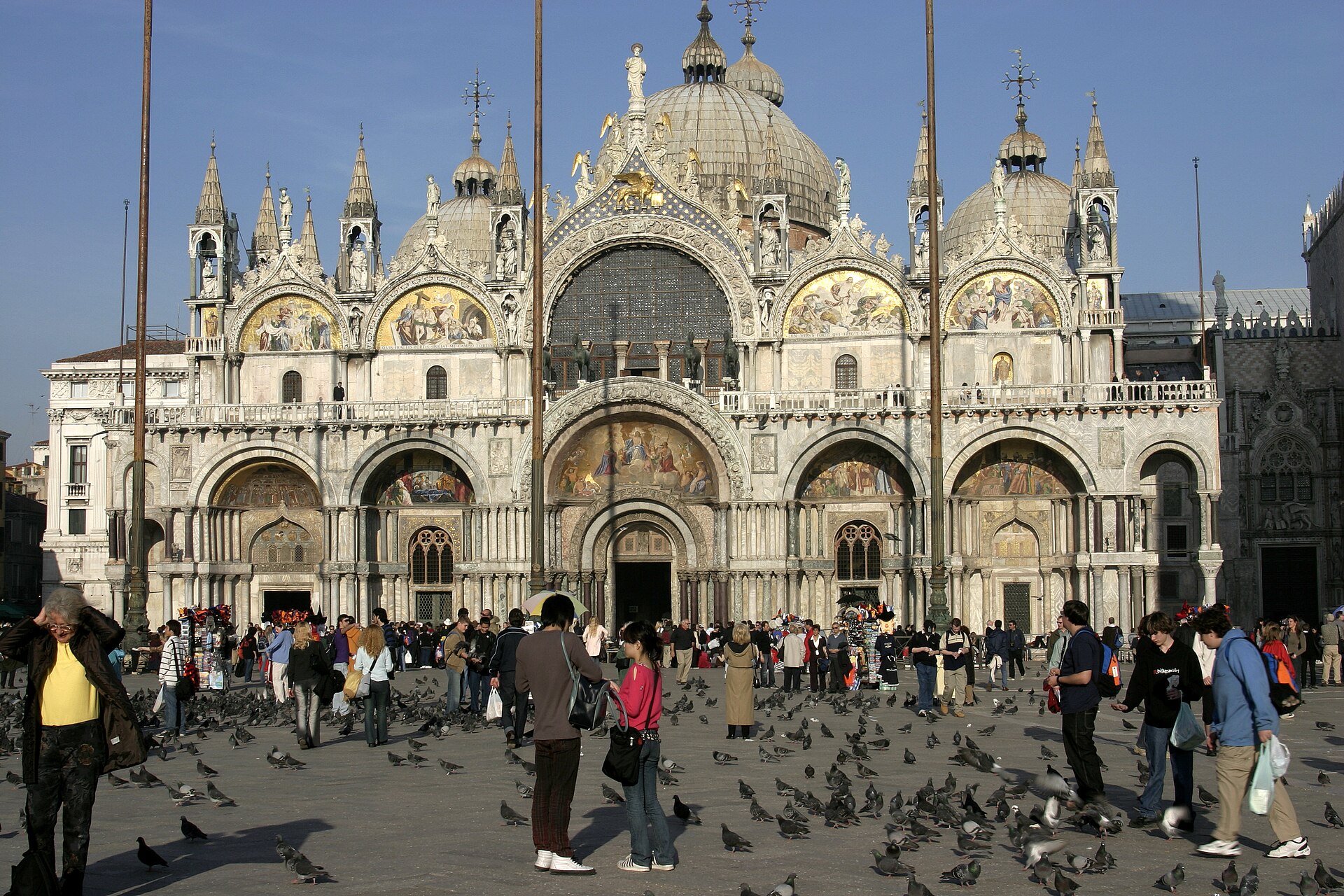
On 1 October, at the entrance to St Mark’s Basilica in Venice, a member of staff asked me to show documentation proving my disability. I was sitting in my powered wheelchair. I have been paralysed from the neck down since a diving accident in 1988. Four weeks later, the body responsible for the Basilica has told The Field in writing what the rule is. Every disabled visitor must show a document. Staff may ask for it again during the visit, at any door, and the rule names no limit. An official Disability Card or “any equivalent document” will do. It has not said what is equivalent.
The day had started on the water. As I boarded a Venice vaporetto, the city’s water bus, a passenger said aloud, “Attenzione, è un invalido”: careful, he is an invalid. I do not say the remark was meant to offend. But the word puts my condition before me. I am a writer from Milan and the author of an autobiography, La Voce del Silenzio.
Later, at the entrance to the Basilica, I was asked for proof. My wife was with me. My disability could not have been plainer: I was in my wheelchair. I was let in, and I say plainly that the Basilica itself was accessible. Then documents were asked for again in connection with the other areas, and I could not follow the route through the Museum, the Loggia dei Cavalli (the balcony with the horses) and the terrace. The terrace was not accessible to me in my chair.
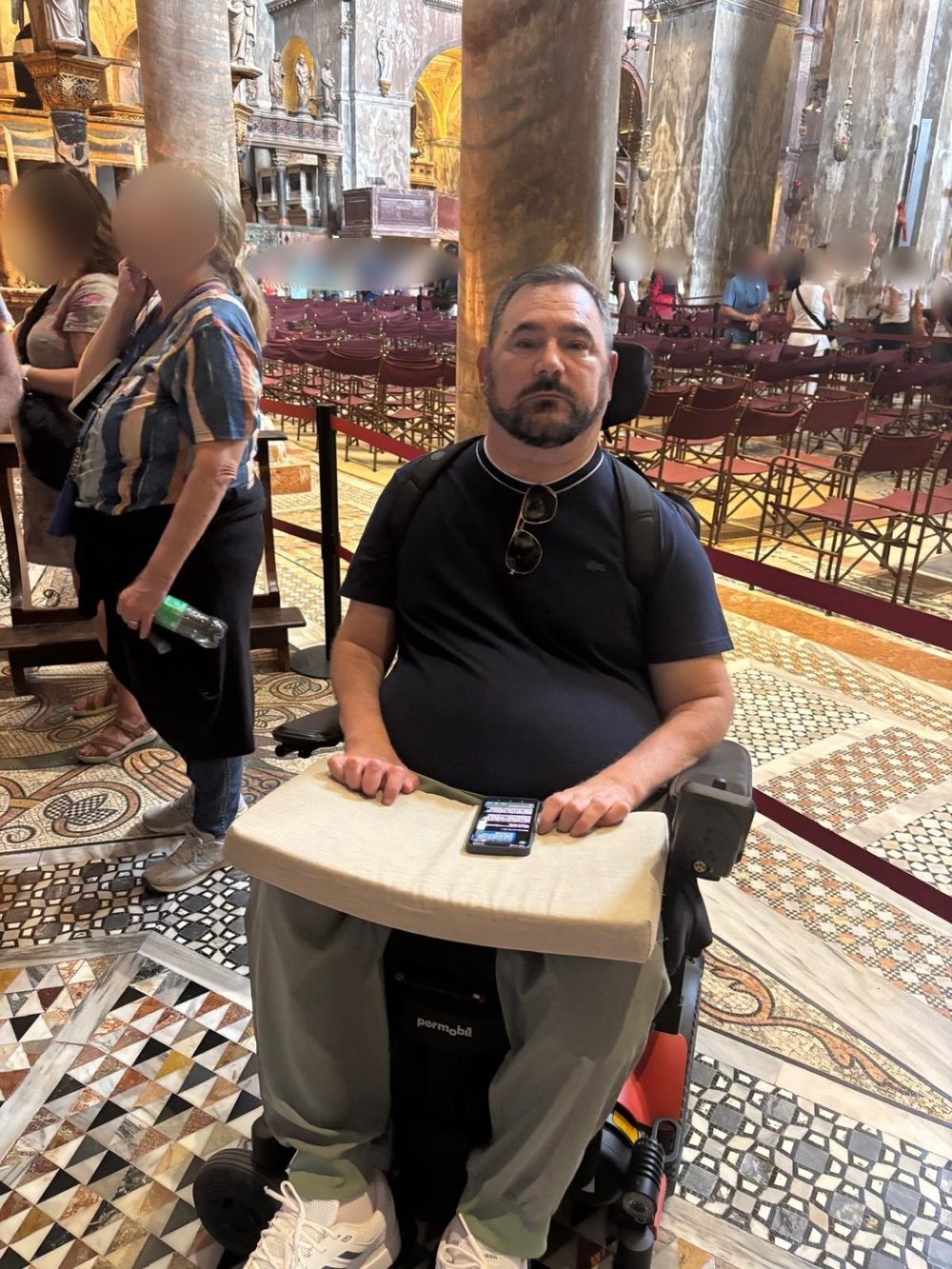
I did not ask for special treatment or a quarrel. My point, in my letter to La Voce di Venezia, was that “entering does not necessarily mean being able to visit.” On the evening of 1 October, three Italian outlets, Nordest24, Veneto Today and La Voce di Venezia published my account. Four weeks on, none has reported a reply from the Basilica. So The Field, which edited this piece, put questions to the Procuratoria di San Marco, the body responsible for the Basilica.
I have no ticket, receipt or recording from the Basilica. I cannot say which ticket I held, what I paid, which document I showed or what anyone said, and I would rather leave those blanks than fill them from memory. I prefer a smaller story that is completely accurate to a stronger one that overstates what happened. So I am not arguing that anyone broke a rule. I am asking whether the rule, as published and applied, is one a disabled visitor can follow.
The Field wrote to the Procuratoria on 27 October with nine questions and gave it until the end of Thursday 29 October, Venice time. Its accreditation office answered on 29 October, before the deadline, with numbered replies in Italian; the words quoted here are The Field’s translation. It said that every disabled visitor, and any companion, must show an attestation, an official certificate, to enter the Basilica, the Pala d’Oro (its gold altarpiece) and the Museum free, naming the Disability Card, which it calls the European Disability Card, “or any equivalent document”. It said staff “reserve the right” to make “all necessary checks, even during the visit”, so the document may be asked for more than once, including at the Pala d’Oro, the Museum and the Loggia dei Cavalli. Entry to the whole complex is free for disabled visitors and their companions, it said, so no refund arises. It added that complaints go to accrediti@procuratoriasanmarco.it.
It did not say what counts as an equivalent document, whether repeat checks have a limit, or whether it will join the government’s Disability Card agreements, and it did not comment on my visit. It pointed The Field to its ticket site for the rules; the page it named loads in a way The Field could not read.
The reply settles the narrow question: the Basilica’s rule allows what I describe, and the request was not invented at the door. It does not say why I was asked again, or what would have happened had I shown nothing.
The reply also undercuts itself on the one point I raised. It says a wheelchair user can visit all the spaces, then adds that for people with total loss of movement the Loggia is “very difficult”, because of steps. I am paralysed from the neck down, and I seem to be the visitor that second sentence describes. So I was asked to prove my disability, more than once, at a door that by the Basilica’s own rule costs a disabled visitor nothing, and by its own letter part of the route was hard for someone like me to reach.
One check next door, “all necessary checks” at the Basilica
The Field looked at how others answer the same question, and the answer is short. The Vatican Museums state their test: a certified disability of at least 67 per cent, shown at one desk in the entrance hall. In Italy’s state museums, the Culture Ministry’s guidance says a holder of Italy’s Disability Card, an official card that proves a person’s disability status, gets the benefit by showing it, with no further formalities. Next to the Basilica, the Doge’s Palace and the other civic museums work under an agreement with the Italian government with the same rule: apart from checking that the person holds the card, staff may not ask for other formalities. The Procuratoria’s letter says the opposite: staff “reserve the right” to make “all necessary checks, even during the visit.” Three institutions have written down one check, made once. The fourth has written down the right to keep asking. The Basilica is run by the Procuratoria di San Marco, not by the state or the city, so these rules may not bind it. The Field found no agreement that names it, and asked.
The Basilica’s accessibility page promises free admission for disabled visitors and their companions. To get it, they show documentation of the disability to the custodian at the entrance doors. The tariff, its price list, uses its own word, “handicapped”, for visitors who qualify, and requires companions to present “the relevant attestation”. Neither says which document counts, or whether a visible disability is enough. The reply settles the second question: everyone must show a document, even in a wheelchair. It only half answers the first, with “any equivalent document”.
The tariff also leaves a gap that matters for the second request: it sells the Museum, the Loggia dei Cavalli and the terrace as a separate ticket, at 14 euros for private visitors, and its free-entry clause does not name those areas; only the reply told The Field they are covered. A page from the city council, the Comune di Venezia, for the area, last updated in July 2019, as The Field saw on 8 October, uses a looser test: free entry for a person with an “evident or certified” disability. It may simply be out of date; the Procuratoria said it does not answer for other bodies’ pages. The same page warns that the balcony with the four horses is not accessible to people with motor disabilities. The Basilica’s own page says only that the Museum is on the upper floor, reached by a lift and a stairlift.
From 5 June 2028 member states must also issue a common European Disability Card that covers museums. That will not settle my complaint: I am Italian, Italy already has a card, and the European rules do not say how often a site may ask to see it.
The desk is where it goes wrong
The strongest argument for the desk is simple: free entry invites abuse, and staff need a rule they can apply on the spot. In August 2023 the Procuratoria dismissed six ticket clerks for allegedly charging full price to visitors entitled to free or reduced entry, including companions of disabled visitors, and keeping the difference, Finestre sull’Arte reported. That case does not explain the checks at the door, but it shows where the reported abuse was: not a visitor with a false paper, but staff at the desk.
Discretion at the desk fails in the other direction too. In April 2019 a visitor from Siena who walks with two crutches wrote to a Venetian newspaper that a clerk at a vaporetto ticket office refused him the reduced disability fare because, the clerk said, the disability symbol meant wheelchair users only. His is one side of the story, and no reply is reported. If true, it is what a rule without a test produces: the clerk invents one.
Put together, the rule is this. I must prove my disability at the door, may be made to prove it again at the next, and am told only that a card or “any equivalent document” will do. The Basilica has not said what is equivalent or whether there is any limit to asking; it leaves the call to its staff. What this guards, by the Basilica’s own account, is free entry. A rule that cannot say what it accepts, or when it stops asking, is not a safeguard. It is a discretion, and I met it at least twice in one day. The Procuratoria calls accessibility close to its heart, and from 10 to 18 October its “Top for All” access initiative put a temporary ramp at the Campanile, the bell tower, for nine days. A ramp for nine days is not a rule for the door. The stranger on the vaporetto needed no paper to decide what I was. The Basilica still leaves it to the desk to decide what I must show. What I asked for is what I told The Field: rules that are “clear before the visit, consistent during the visit, and respectful of the person rather than making the person repeatedly prove the condition around which the access arrangements are built.”
What to watch. Whether the Procuratoria di San Marco publishes a written test for visitors, says what counts as an equivalent document, and joins the government's Disability Card agreements.
Comments
Every comment is read by a person before it appears, so yours will not show straight away. We publish comments that are civil and on the subject. To report a mistake in the piece, use the corrections page, so it is fixed in the piece itself.