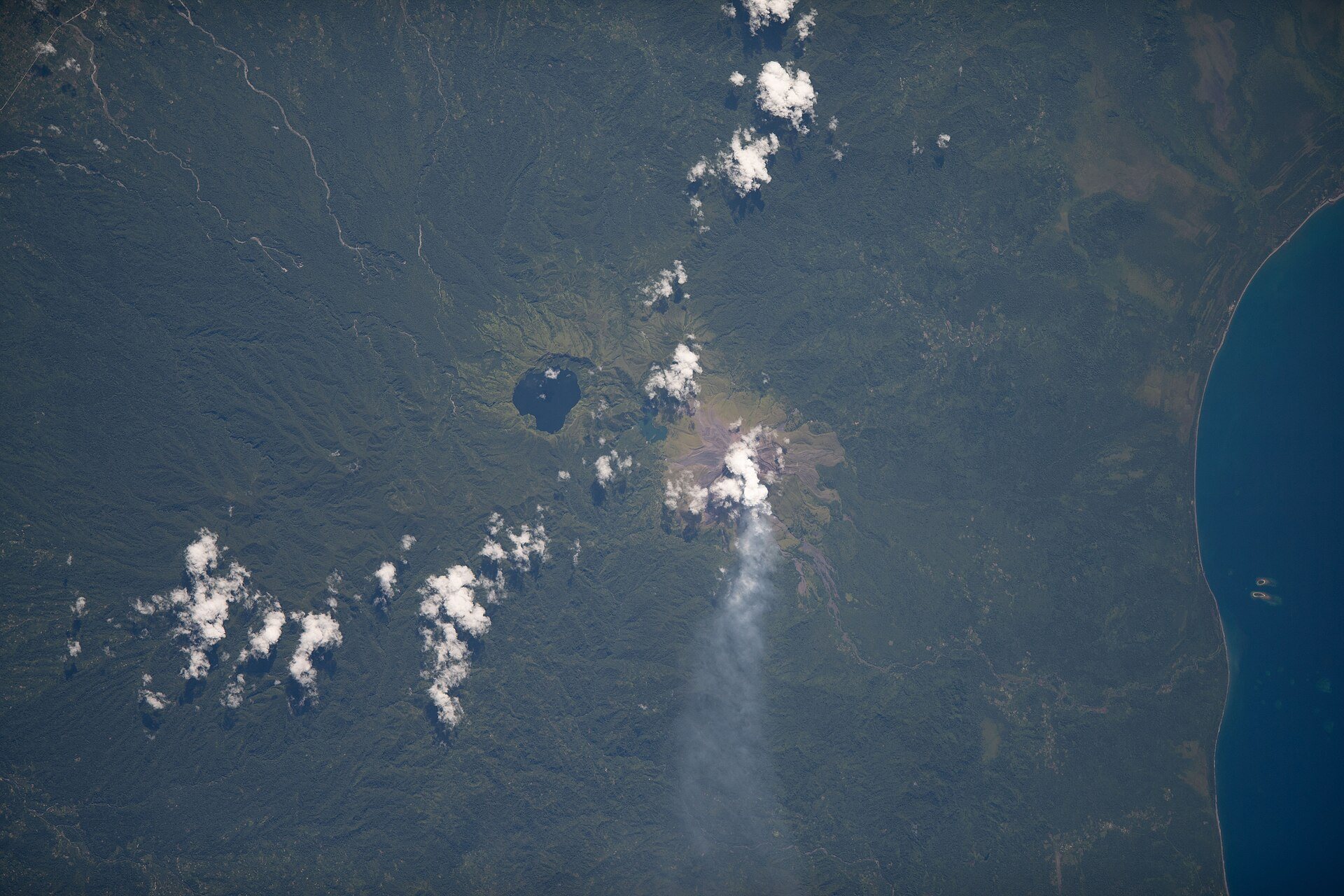
On Thursday, August 27, a delegation from the Autonomous Bougainville Government sat in the gallery of Papua New Guinea’s Parliament and watched members debate the island’s future, RNZ Pacific reported. On the floor, Minister for Bougainville Affairs Manasseh Makiba tabled the result of the 2019 referendum, in which 97.7 percent of Bougainvilleans voted for independence, along with two documents the two governments had endorsed. He told members that even a yes from Parliament would not bring immediate independence. He also acknowledged that the two governments had not agreed on what happens if Parliament rejects the result.
Opposition Leader James Nomane said members had only just received the documents and asked the government to be “very, very clear” about when the vote would be held. Prime Minister James Marape said the government had a plan for either outcome. Parliament then adjourned without a decision. The government wanted 89 of the 118 members to ratify the result, while Bougainville argued for a simple majority of about 60, the National Indigenous Times reported.
So the gallery was watching a vote whose rules it disputed, on a question the two sides had not agreed how to answer if the answer was no. That is the argument of this analysis. Our reading is that the vote was set up so that a no is the likeliest outcome, that the reasons are a procedural dispute, a fear of precedent and a fight over minerals, and that a no would not close the question, because Bougainville has said what it intends next. The most useful thing the two governments could do before the vote is agree what a no means.
Parliament returned to the debate on October 22, PINA reported, and the prime minister’s office says it will vote in November. No date has been announced, although The National reported the vote was expected next month. A day after the debate resumed, a Guardian report carried by PINA said sources in Port Moresby and Bougainville expect Parliament to reject the result. Marape told members, in the words of his office, “We have no choice but to deal with this issue.”
Who set the bar
The referendum was non-binding. Under the 2001 Bougainville Peace Agreement, Parliament must decide the result, but neither the agreement nor the constitution says how, the National Indigenous Times reports. A procedure was adopted only in June. Marape’s government says ratification needs a three-quarters absolute majority of Parliament, which PMN News put at 89 of 118 seats (rounded up from 88.5) and described as widely seen as extremely hard to reach in a fragmented house. The usual bar for a constitutional amendment is two-thirds. The government says the higher figure comes from the constitution’s section on decisions affecting sovereignty or borders.
Who agreed to it is disputed. Marape said both governments had agreed to three-quarters, the National Indigenous Times reported in June. Bougainville’s parliamentary speaker, Simon Pentanu, said the parties never agreed on the voting majority at their meeting in Fiji and that the motion Parliament adopted, which read only that it “accepts the Referendum Results”, was a different question from the one discussed, PMN reported. Bougainville’s vice-president, Ezekiel Masatt, said in a June statement, quoted by the Guardian, that the threshold was crafted by the PNG government to defeat the vote. Marape has defended his own speaker, Job Pomat, who ruled that independence needs three-quarters, and has said that breaking up a country is the most serious decision a parliament can make, according to Asia Pacific Report.
Reports differ on the numbers. PMN’s 89 is three-quarters of 118 seats, but The National has put the House at 111 sitting members with seven seats vacant and said 82 votes are needed, and three-quarters of 111 is about 83, so that does not square. The government’s own formulation, in one National Indigenous Times report, was “two-thirds or possibly three-quarters.” The point does not depend on the precise figure. Whatever it is, it sits far above a simple majority, and the side that wants the result ratified did not accept it.
Why a no looks likely
The reporting points to three reasons. The first is precedent. The Guardian report says Port Moresby is anxious not to set a model for breaking up a vast and culturally diverse archipelago, and the former deputy prime minister, Belden Namah, called it an issue of national sovereignty. This is the argument most members can make in public. The second is minerals. The Guardian report says Port Moresby has long resisted acting on independence partly to avoid losing a resource-rich province, and presents unrealised reserves at the Panguna copper and gold mine, closed since the island’s civil war, put at $60 billion in that report, as Bougainville’s hope of paying for independence. We treat that estimate as a rough indicator of what is at stake, not a measurement.
The third is security, and here the reporting is unsettled. Oliver Nobetau of the Lowy Institute, an Australian think tank, told the Guardian that an attack at Panguna in September had damaged the independence cause and that a no was looking increasingly likely. The Guardian says up to 30 armed men set fire to nearly 40 trucks and other machines belonging to the mine’s new contractor. Other outlets do not corroborate those figures and describe a different cause. The Panguna Landowners Interim Council chair told OCCRP the attackers were unauthorised gold panners angry at being displaced, and the National Indigenous Times reported that police called them civilians from Buin. We do not know who was responsible, and a local dispute over the contractor is a possible reading, not one we can confirm. Nobetau also expected a no to bring social and political tension, not renewed conflict.
Marape’s own party has offered something short of independence. In June, Pangu Pati said it would support a 15-year transition for Bougainville whether Parliament votes yes or no, Asia Pacific Report says. If independence were approved, powers would be handed over in stages. If it were rejected, the referendum result would stay alive and Bougainville would have the same period to meet benchmarks before Parliament reconsidered. They include peace and stability, an end to armed violence and factionalism, and internal revenue covering at least 70 percent of the annual budget over five years. Marape had foreshadowed this on June 2, telling Parliament that “if there is a no, it must be a no with a yes”, NBC PNG reported, and said the matter would not be finally resolved by a single vote.
The revenue benchmark is where the minerals dispute returns. If Bougainville’s route to self-funding is Panguna, and control of Panguna is itself what is contested, the benchmark depends on the thing the vote is about. The two governments did agree on August 5, according to PMN and PINA, to work toward transferring all revenue generated in Bougainville to its government by the end of 2026. We found no published figure for how much of its budget Bougainville funds from its own revenue today, and without it neither Port Moresby’s benchmark nor Bougainville’s claim of readiness can be tested.
Why a no would not end it
Bougainville has not said it will accept one. The Guardian report says President Toroama’s stated position is self-government from September 1, 2027, then independence in 2030, and the National Indigenous Times says the government plans to declare its own sovereignty by 2030 if Parliament delays further. Toroama told the Joint Supervisory Body on August 5 that the question “has been asked, answered, and sealed in ink and blood”, PINA reported. Dr Allan Marat, who chairs a bipartisan parliamentary committee on Bougainville, told the Guardian that Bougainville had met the conditions of the 2001 agreement and urged members to “cut the umbilical cord” tying it to Papua New Guinea. Nobetau suggested Bougainville would likely pursue the self-government route and a three-year plan toward 2030.
Neither source says what Bougainville would do after a no. And the referendum carries weight because 97.7 percent is not a margin that can be waved away. A no under a bar Bougainville says it never agreed would give its leaders a grievance about process on top of the substance.
What could have been done differently
The simplest fix was available at the meeting in Fiji. Bougainville’s speaker says the parties left without agreeing on the voting majority, and the procedure had stayed open for a quarter of a century. Writing the threshold down then, or putting the question to a court, would have turned a fight about the rule into a fight about the result, which is the only fight worth having.
The 15-year offer is the second missed chance. Marape said a no must carry a yes on June 2, but the formal offer came on June 22, after the rule was set, so it reads as a patch on the dispute and not as part of a package. Offered earlier, with agreed benchmarks, it could have made the vote a decision about a pathway instead of a yes or no gate. Bougainville’s leaders have their own lesson. Security incidents at Panguna, whoever is responsible, give Port Moresby an argument about stability, as Nobetau says, and the cause is easier to make without them.
Is the vote simply a formality, then? No: the 2001 agreement made the result subject to Parliament’s decision and left the procedure blank. Can Bougainville declare independence anyway? Its government has set 2027 for self-government and 2030 for independence. Whether any state would recognise a declaration, and what it would do to the peace agreement Bougainville itself relies on, we cannot say, and we found no public position from Australia or other neighbours.
What should happen
The two governments should settle the threshold before the vote, by an independent legal opinion or a court reference, rather than by a majority in the house that does not accept the rule. They should agree in writing what a no means: if, as Pangu says, the referendum stays alive and the 15-year period still applies, both sides should say so before members vote. Makiba’s admission on August 27 that they had no agreement on the pathway should not stand into November. The benchmarks should be written so that a clause on revenue is not also a veto on the mine. And outside partners with a stake in stability, in practice Australia, should ask both sides to publish their positions on what happens after a vote.
The best case for Port Moresby
The strongest objection is that the Papua New Guinea government is right. A decision to split a state should need a super-majority, a government cannot be asked to hand over a province that is not yet able to fund itself, and a 15-year path with benchmarks is more generous than many states would offer. That is a serious argument, and Marape has made it in good faith. But it addresses how high the bar should be, not who sets it. The peace agreement requires Parliament to decide yet sets no procedure, and the party that holds the votes chose the threshold after a meeting at which, by Bougainville’s account, none was agreed. An outcome reached under a rule one side rejects is not likely to be accepted.
We do not know when the vote will be held, the exact number of votes required, or how many members will vote yes. We do not know who was behind the Panguna attack or what Bougainville’s leaders will do after a no, and we do not know whether Australia, which has not said how it would respond, would act before or after a declaration.
In August, the Bougainville delegation watched the debate from the gallery and left without an answer to the one question it came with. In November, Parliament is expected to give one. Whether it is yes or no, the two governments will have to say what it means.
Comments
Every comment is read by a person before it appears, so yours will not show straight away. We publish comments that are civil and on the subject. To report a mistake in the piece, use the corrections page, so it is fixed in the piece itself.