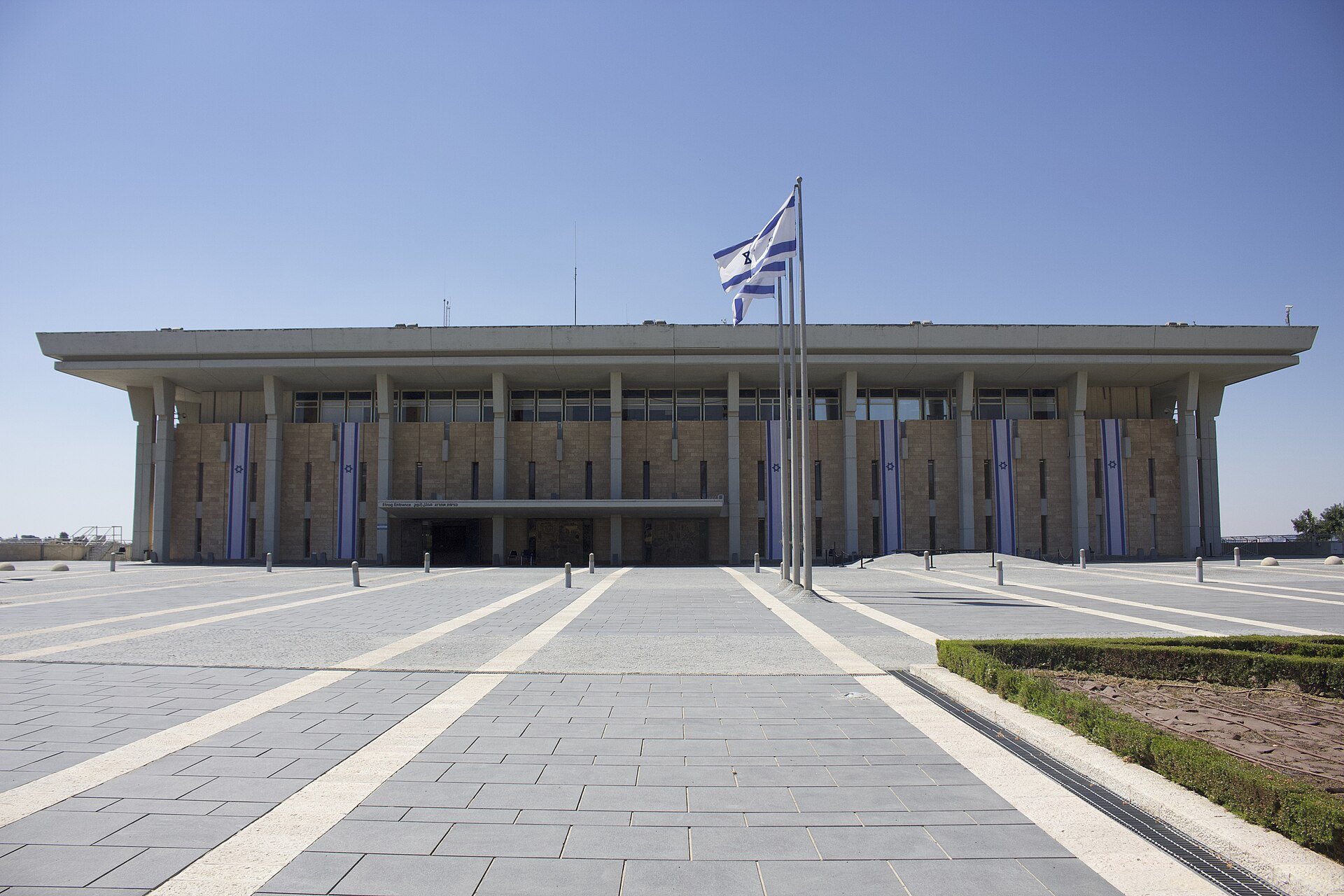
On Thursday, October 1, three Arab politicians arrived at the Supreme Court in Jerusalem: Sami Abou Shahadeh, leader of the Balad party, the veteran lawmaker Ahmad Tibi, and the lawmaker Ofer Cassif, the Times of Israel reported. The election committee had voted to bar the Joint List, to which Tibi belongs, and to bar Abou Shahadeh and Cassif personally. That day the court’s president, Isaac Amit, told Abou Shahadeh that a majority of the judges would bar him. He withdrew his candidacy before the ruling.
The next day, Friday, the nine justices decided the larger question. They ruled unanimously that the Joint List and Ra’am, the two Arab lists, could stand in the election on October 27. The reasons the committee had given, racist incitement or support for armed struggle against Israel, did not apply to either, the court found.
The committee is staffed by the parties themselves, and its vote had been a political one. It had backed motions from right-wing groups including Likud and Otzma Yehudit. Yisrael Beytenu, a member of the opposition’s own non-aggression pact, voted with them to bar the Joint List and Ra’am. Another pact member, the Democrats, voted to bar Abou Shahadeh. After the ruling Yisrael Beytenu said of Balad: “We must outlaw Balad.”
Hold on to that picture, because Israel’s election on Tuesday turns on a strange fact. Both camps spent September trying to remove, or refusing to be seen with, the parties whose seats neither of them can easily do without. Reuters summarised recent polls on October 21: the camp around former army chief Gadi Eisenkot at 52 to 56 of the Knesset’s 120 seats, Prime Minister Benjamin Netanyahu’s camp at 48 to 52, and nearly every poll leaving both short of the 61 needed. The Arab parties, which Al Jazeera puts at about 13 seats combined and a Jerusalem Post average at 14, belong to neither camp.
That is the argument of this analysis. If the polls are roughly right, whoever wins the most seats cannot build a majority without voters the campaign has treated as a problem. Which list finishes first will matter less than how the winner deals with that, openly or quietly, and whether anyone admits the need before the votes are counted or only after.
Why neither side gets to 61
Start with the numbers. Israel’s system is proportional, so parties must join blocs, and Al Jazeera notes no single party has ever won 61 seats alone. The challengers have organised: Eisenkot’s Yashar, the left-wing Democrats, the secular nationalist Yisrael Beytenu and the Together alliance of Naftali Bennett and Yair Lapid signed the pact in late September. Netanyahu’s side is Likud, Itamar Ben-Gvir’s Otzma Yehudit, Bezalel Smotrich’s Religious Zionism, and the ultra-Orthodox parties Shas and United Torah Judaism.
On the polls, Eisenkot’s bloc needs five to nine more seats, and Netanyahu’s needs nine to thirteen. The only seats outside both blocs are the Arab parties’. Votes can also be wasted: a party under 3.25 percent of the vote gets no seats. Benny Gantz, whose Blue and White party was polling far below the line, pulled it out of the race on October 19, but his name stays on the ballot, so some ballots will go to him and count for nothing.
Why is Netanyahu’s side short? The reporting points to three pressures that feed one another. The first is the ultra-Orthodox draft: compulsory military service for ultra-Orthodox men, who have long been exempt. The Supreme Court ruled in 2024 that the old legal basis for blanket exemptions had expired, and in September it struck down a law passed in July that would have frozen enforcement, according to Outlook India’s summary of Reuters reporting. Ksenia Svetlova of the London think tank Chatham House wrote in January that an exemptions bill might become his greatest liability. The reason is arithmetic: Shas and United Torah Judaism are part of his 61, and exemptions and religious funding are their central demands.
The second is accountability for October 7, 2023. Svetlova wrote that Netanyahu was promoting a political investigative committee instead of the state commission of inquiry the law requires, which she described as an attempt to limit the fallout, and we found no report that a state commission has been set up. A September survey by the Institute for National Security Studies found 34 percent satisfied with the government’s handling of the Gaza war, against 61 percent satisfied with the military’s. The third is money. Defence spending has doubled to about 8 percent of annual economic output and public debt is close to 70 percent, according to Outlook’s summary of Reuters, while subsidies and benefits to ultra-Orthodox communities totalled 37.5 billion shekels in 2024, more than the central government spent on hospitals, universities and colleges combined, in Outlook’s reading.
Two of these pressures share a feature. What costs Netanyahu voters, the exemptions and the funding, is the price of keeping the partners who supply his seats. That is our reading, not something any poll has tested, but it implies he cannot shed the problem without losing the bloc. So his camp is stuck below 61, and the missing seats sit with the parties he campaigns against.
What the two camps have promised
Would the opposition then simply turn to the Arab parties? Its leader says no. Eisenkot has said he will not align himself with any Arab party, and gave as his reason their refusal to call Hamas a terrorist organisation, according to Reuters. The Times of Israel adds that most heads of the anti-Netanyahu bloc have said they would not form a government that relies on Arab support. Netanyahu’s coalition has never included an Arab party, and we found no statement from his camp ruling one in or out. His campaign points the other way: Reuters reports it has used doctored images and AI-generated videos showing his rivals embracing Arab leaders. That tactic works only if the Arab parties are presented as unacceptable, so he has his own reason to keep them that way.
The two rejections are not equal, though. Eisenkot’s blocks a formal coalition. It does not block every arrangement. Tibi has said the Joint List is ready to form what he called a “preventive block” supporting a government from the outside, and would vote with an Eisenkot-led government to set up a commission of inquiry into October 7, as Reuters reports. Al Jazeera adds that the list has offered not to oppose an anti-Netanyahu government in confidence votes, the votes that decide whether a government stays in office, without joining it, in return for a path toward Palestinian statehood and action on organised crime. Mansour Abbas, the leader of Ra’am, a moderate Islamist party polled at about five seats, told Reuters his party “can ensure the formation of a new government of change.” The Joint List polls at eight or nine.
A government that survives because Arab lawmakers decline to vote it down is a government that depends on them, even if no Arab minister sits in the cabinet. So Eisenkot’s pledge costs him little today. It will be tested only if the count leaves him short, when the choice is between relying on the Arab parties quietly or giving Netanyahu the time he needs to try again. Al Jazeera lists eight possible outcomes, including a minority government, a Ra’am coalition, a unity government, a rotating premiership and a new election. Reuters says deadlock could mean fresh elections in 2027 with Netanyahu in charge in the meantime, and Al Jazeera adds that he would stay on as caretaker, an interim prime minister with limited powers.
The fight over who votes
If neither camp can win without Arab votes, the contest over those votes is the election, and it began before a single ballot was cast. The court’s ruling on October 2 was the first round. The second came on October 15, when Likud and Religious Zionism announced nearly 2,000 activists would be sent to polling stations in Arab communities, citing fraud risk and a “special mapping” of risky stations. The Times of Israel says there is no evidence of widespread voter fraud in Israel, and that Religious Zionism did not explain how the mapping was done. The activists would have no official oversight role, could not enter the voting rooms and could not wear party symbols. Dean Livne, the Central Elections Committee’s acting director general, said in June, when Likud proposed cameras at polling stations, that there is no fraud in Israel and “if it exists, it’s on the margins.” Joint List chair Yousef Jabareen called the plan intimidation. Assaf Shapira of the Israel Democracy Institute warned that the activists could provoke incidents or put voters off, and that the echo chambers on each side make it easier to claim an election was stolen.
Turnout decides how much any of this matters. The Times of Israel puts Arab turnout in 2022 at about 53 percent against about 70 percent overall. The Stat-Net Research Institute, based in an Arab Druze town near Haifa, projects 63 percent this time, according to Reuters, and counts 2022 at 56 percent. That is one institute’s projection. A few points either way can move a seat or two between blocs, and in a race this close that can decide whether a camp reaches 61.
Israel has seen what such reliance looks like. In 2021 Ra’am became the first Arab party to sit in an Israeli governing coalition, under Bennett. The coalition lost its majority in June 2022, and Lapid took over as interim prime minister in July, Al Jazeera notes. A government with Arab participation was possible, and it was fragile. Anyone planning to rely on Arab votes, openly or not, should expect a thin margin.
What each side could have done differently
Eisenkot’s refusal is the opposition’s biggest choice. He could have kept the refusal for a formal coalition and said in advance what he would accept from outside: a confidence-only arrangement with defined limits, of the kind the Joint List has already offered. That would have made the arithmetic honest and, for some voters, less frightening. Saying nothing keeps the option open, along with the suspicion. There is a case for his silence. Many centrist Israelis share his objection to parties that will not call Hamas terrorist, and a promise of Arab support could cost him seats on the other flank. That is the trade he made, and it is a fair one. It still means asking voters to trust a plan he has not described.
For Netanyahu the draft is the choice that matters. A conscription law the Supreme Court would accept might have cost him the trust of Shas and United Torah Judaism, and keeping the exemptions has cost him a court ruling and voters in the middle. On the polls, the trade has not paid. Which side is likelier to end up relying on Arab votes? On the arithmetic, Eisenkot’s, because the Joint List and Ra’am have both said they would help keep an anti-Netanyahu government in office. But Svetlova wrote in January of a quiet, cynical consensus that Netanyahu would partner with Abbas if he fell a few seats short. That is an assessment, not a plan, and we found no statement from his camp either way.
What would prove us wrong
The strongest objection is that the polls could be wrong. Israeli polls have missed before, and an earlier survey on Channel 13 gave Netanyahu’s camp more seats than the October 21 averages do. If his bloc finishes at 61, none of this arises. Our argument does not depend on one result. It depends on what the polls show now, and on what the camps have, and have not, said they will do if the polls are right. It would also be wrong if Eisenkot spelled out before the count what he would accept from the Arab parties, because then the need would be admitted in advance. He has not.
We do not know how the last polls, published on October 22 and 23 before the legal ban on new ones, compare with the figures we cite. We do not know Arab turnout, whether the activists will operate at the scale announced, or whether their presence will be calm. We will update this page after the result.
The consequences reach past who becomes prime minister. A government that depends on Arab votes while denying it has little reason to answer for what those voters want, which Abbas names as crime in Arab towns and discriminatory housing policy. A campaign that treats Arab voters as suspect, with mapped polling stations, doctored videos and talk of fraud, risks leaving a share of the electorate believing its vote was never treated as legitimate, whoever wins.
On October 2, the court told two Arab lists that they may stand. That settled whether they can compete. It did not settle whether whoever wins Tuesday’s count will admit that he needs them.

Comments
Every comment is read by a person before it appears, so yours will not show straight away. We publish comments that are civil and on the subject. To report a mistake in the piece, use the corrections page, so it is fixed in the piece itself.