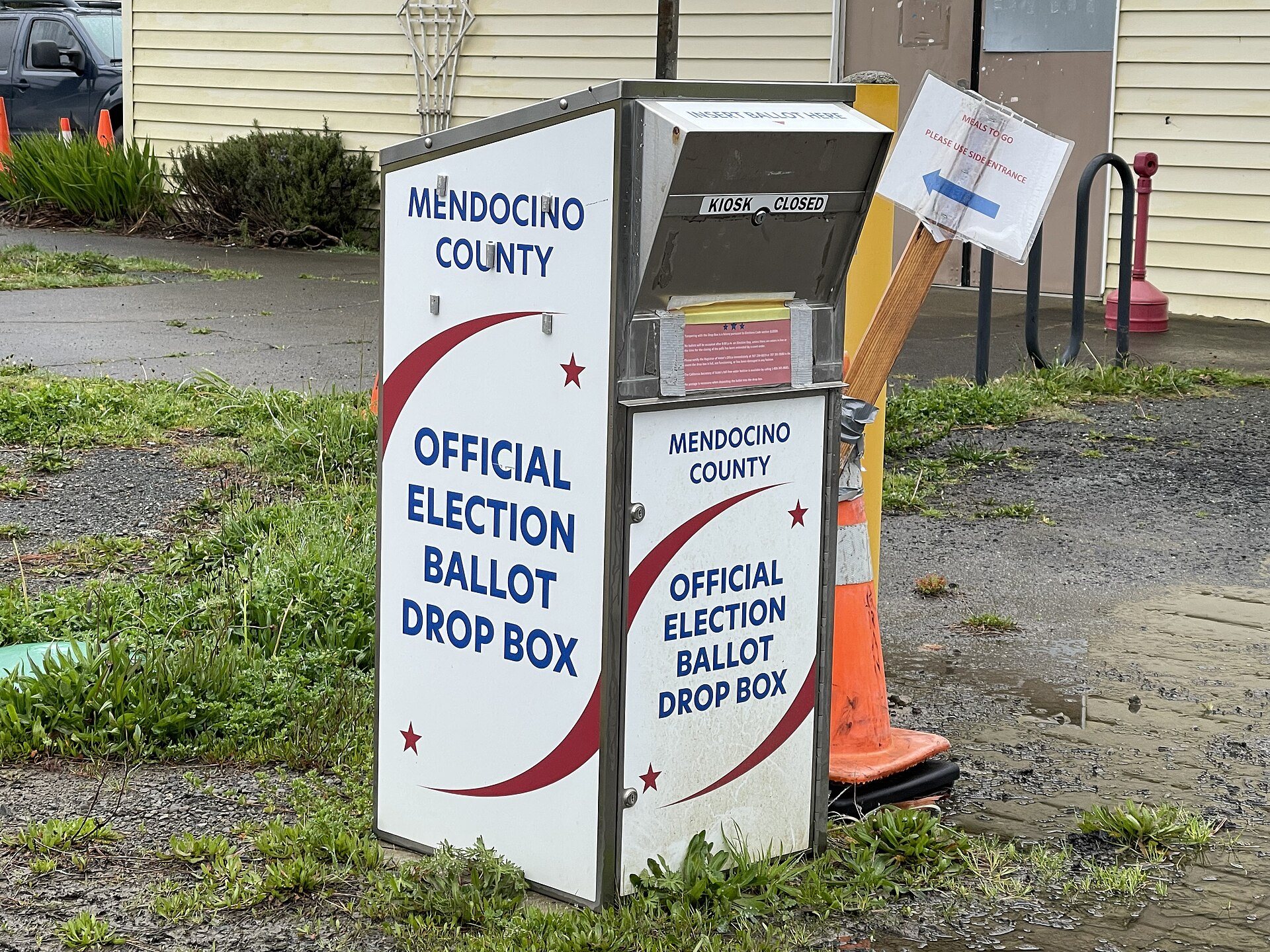
A Justice Department lawyer could not tell a federal appeals court on Sunday which outside data sources fed a list of 20,000 California voters he wants kept out of the vote count, nine days before the election. A three-judge panel of the Ninth Circuit, the federal appeals court for the western states, heard an hour of argument on the department’s emergency request: order California to stop counting the ballots of 20,000 people the government says are likely noncitizens. Questions from Judges Bennett and Sanchez went badly for the department, the Spokesman-Review reported. Judge Mark Bennett, appointed by President Trump, said he did not see how the court had jurisdiction, meaning the authority to hear the request, when the trial court had not yet ruled. The panel also included Judge Patrick Bumatay, another Trump appointee, who focused most on the harm when noncitizens do vote and how states should handle objections to alleged noncitizen voters. Judge Gabriel Sanchez, appointed by President Biden, repeatedly asked what third-party sources the list was built from, and the department’s lawyer, Matthew Donnelly, could not say. No ruling had been issued when we wrote.
A loss for the department looks likely. It would not end the damage. A suit filed nine days before an election, backed by a letter threatening officials with prosecution, can do harm whether or not a judge ever grants it, and the people best placed to limit that harm are the courts and the department itself.
The facts are as follows. On October 15 the department sued California and Los Angeles County, after giving the county’s top voting official a flash drive with about 20,000 names and 48 hours to investigate, NPR reported. The department asks a judge to stop California and Los Angeles County from counting ballots tied to the list. NPR says the government has not explained where the figures come from, and that experts say matching incomplete voter data against imperfect immigration data produces many false positives. California’s Secretary of State, Shirley Weber, refused, calling the accusations “unsupported and likely inaccurate”. Los Angeles County registrar Dean Logan said the process would break election laws, including limits on removing voters close to an election.
Four days later the department announced criminal charges against 28 people in California, all green-card holders who appeared on the same list, NPR reported. Many are accused of false statements on citizenship applications, which ask whether the applicant previously registered to vote. Some did not appear to have voted, and some registered more than 20 years ago. Bill Essayli, whom NPR describes as the first assistant U.S. attorney for the Central District of California, argued that registering by mistake is unlikely, since applicants attest to citizenship under oath. The department says it has charged 113 noncitizens across 20 states in seven weeks.
On Friday, October 16, the day after the suit was filed, Acting Deputy Attorney General Trent McCotter wrote to California officials warning that they could face criminal prosecution for knowingly processing ballots cast by people federal agencies had identified as noncitizens. That evening, NPR reports, President Trump posted on Truth Social that “they will all go to jail for a long period of time”, apparently aimed at those officials. A week later, the Spokesman-Review says, letters sent on Friday, October 23 ordered county offices across the state to set the ballots aside within 48 hours, with threats of criminal penalties.
Why is the department doing this? The suit follows a failed first attempt. The department spent months trying to obtain California’s complete voter roll, including partial Social Security and driver’s licence numbers, and has lost every one of the 26 decided cases over such demands, NPR reports. With that route closed, it built its own list. According to the department’s complaint, as Newsweek summarises it, the immigration agency U.S. Citizenship and Immigration Services (USCIS) compared voter-roll data with its records and sorted possible matches into high, medium and low confidence. Investigators at Homeland Security Investigations then reviewed the top tier, and the department says about 20,000 have been manually verified. Two features of that chain stand out. The list has shrunk: DHS said in July that more than 190,000 California registrants might be noncitizens, and the department now describes 20,000 as a manually verified subset. California Attorney General Rob Bonta reads the gap as the other 170,000 having been wrong, which DHS rejects. And the complaint itself concedes, Newsweek says, that voter-roll data are often incomplete and that lower-confidence matches can reflect outdated or mismatched records. Earlier claims have not held up well either. NPR’s October 16 report says the administration’s July claims of hundreds of thousands of noncitizens on the rolls of four states have since been shown to be vastly overstated, and, according to Newsweek, Weber says a similar claim of nearly 16,000 in Nevada failed to establish a single noncitizen on the rolls. Newsweek adds that a Reuters investigation found 129 people prosecuted for noncitizen voting since 1996. Our reading of the pattern, which no one on either side has confirmed, is a political priority, a legal route that kept failing, and a list assembled to find another way in. Even so, that does not explain why a list that has already shrunk this far should be trusted to keep ballots from 20,000 people out of the count.
The legal weakness is not subtle. Bennett also said the Constitution leaves election procedures to the states, and he asked, in the Spokesman’s account, how a federal court could order what the department wanted. The Election Law Blog reports that he cited a Supreme Court decision on state authority over elections that Donnelly said he did not know. The blog’s author, UCLA law professor Rick Hasen, wrote after the hearing that the Ninth Circuit lacks jurisdiction and that the panel may use the occasion to signal that the department would lose the case on its legal substance as well. Hasen has predicted the whole suit will “go nowhere”. NPR reports that Weber’s and the county’s letters cite a federal law, the National Voter Registration Act, which restricts mass removals of voters from the rolls in the 90 days before an election, although whether it governs a request to set ballots aside is arguable.
It would be a mistake to take that as the end of the matter. The first reason is the pressure on the people who run the count. A letter from a senior Justice Department official warning that processing ballots could be a crime, followed by a presidential post predicting jail time, is aimed at county election staff who must decide, in the next days, whether to follow an instruction their lawyers say is unlawful. Most will refuse. It does not take many hesitations, in a state that counts millions of ballots, for the story to become that some counties set ballots aside.
The second reason is the doubt. The list has been described by the department as people it has good reason to believe are noncitizens. Logan, the Los Angeles registrar, said a preliminary review of a subset found many were born in the United States, were not registered and had never voted, according to the Spokesman-Review. The department’s complaint describes a process, but its lawyer could not tell the panel which outside data sources fed the list. The department’s claim and Logan’s findings sit uneasily together, yet the number 20,000 has already travelled much further than either of them, and it will still be quoted after the courts have moved on. The 28 charged people are real cases, and they are a small fraction of the list. They do not show the list is reliable. They show that a handful of people were selected from it for prosecution.
Could this have been done differently? The department’s lawful routes were open for months, and it chose a late and loud one. The 90-day window in which the National Voter Registration Act restricts systematic removals before a federal election opened in early August, and the state and county argue it applies here, though that is a legal question for the court. The Department of Homeland Security’s July letter alleged more than 190,000 potential noncitizens in California, but the list went to Los Angeles in October, after the window had opened, on a flash drive whose password, NPR’s reporter said, was on a Post-it note delivered with it. If the names could have been verified earlier, which is our inference and not something either side has said, a process begun before August, with notice to each voter and a chance to prove citizenship, would have been far harder to challenge. If they could not, that is itself an answer about how reliable the list is. California and Los Angeles also have options they have not used. Publishing Logan’s preliminary review, described above, with personal details removed, and offering to run the department’s names against state records under court supervision would give the judges evidence instead of dueling accounts.
Is noncitizen voting a real problem, and what happens to a citizen who is wrongly on the list? It does happen, in small numbers. A Reuters investigation found 129 people prosecuted for it since 1996, Newsweek reports, which is the scale of the problem on the record. Nothing we found shows noncitizen voting on a scale that could change a result. The legal route for the cases that exist is prosecution of individuals after notice and a hearing, which courts have tested. Keeping ballots from 20,000 people out of the count is a different instrument. What the department asks the court to order would halt counting of those ballots until the voters are proven to be citizens, and we found no mechanism for a citizen on the list to prove it before the election, which is the strongest practical argument against it.
So what should happen now? The Ninth Circuit should rule quickly, even if it only says it lacks jurisdiction, because uncertainty is the commodity this suit trades in. The district court should hear the department’s evidence on Tuesday and require it to show how names moved from the high-confidence tier to the verified 20,000, since the judges’ own questions show that is the missing piece. The department should explain its method in public, not only in court. California counties should keep counting under the guidance of the Secretary of State. And any voter who is on the list and is a citizen should be told how to confirm it before November 3, a question we did not see either side address.
The strongest objection is that noncitizen voting is illegal, the department has charged people with it, and a federal government is entitled to check the rolls and, as the department puts it, ask a court to preserve ballots while it does. That is a fair description of the department’s case, and the charges are not frivolous. But the department’s request does not just preserve ballots. It asks that those ballots not be counted until voters are proven to be citizens, on a list whose outside data sources its own lawyer could not name, with days to go. If the check is real, it can be done on a timetable that does not put ballots from 20,000 people in suspense, and the Constitution gives states, not Washington, the first say over how it is done.
We do not know how the Ninth Circuit or the district judge will rule. We know the department’s account of how the list was built but have not seen the data behind it, and we do not know how many of its names are citizens, or how many ballots tied to it have been returned, since NPR says that figure was not given. We do not know whether the department will send similar letters to other states, and we do not know what the 28 defendants will plead.
On Sunday a federal judge asked a Justice Department lawyer what the list was made of, and the lawyer could not say. The courts will probably settle the legal question within days. The factual one is the department’s to answer, in public, before anyone is asked to treat 20,000 as a finding and not a claim.
Comments
Every comment is read by a person before it appears, so yours will not show straight away. We publish comments that are civil and on the subject. To report a mistake in the piece, use the corrections page, so it is fixed in the piece itself.