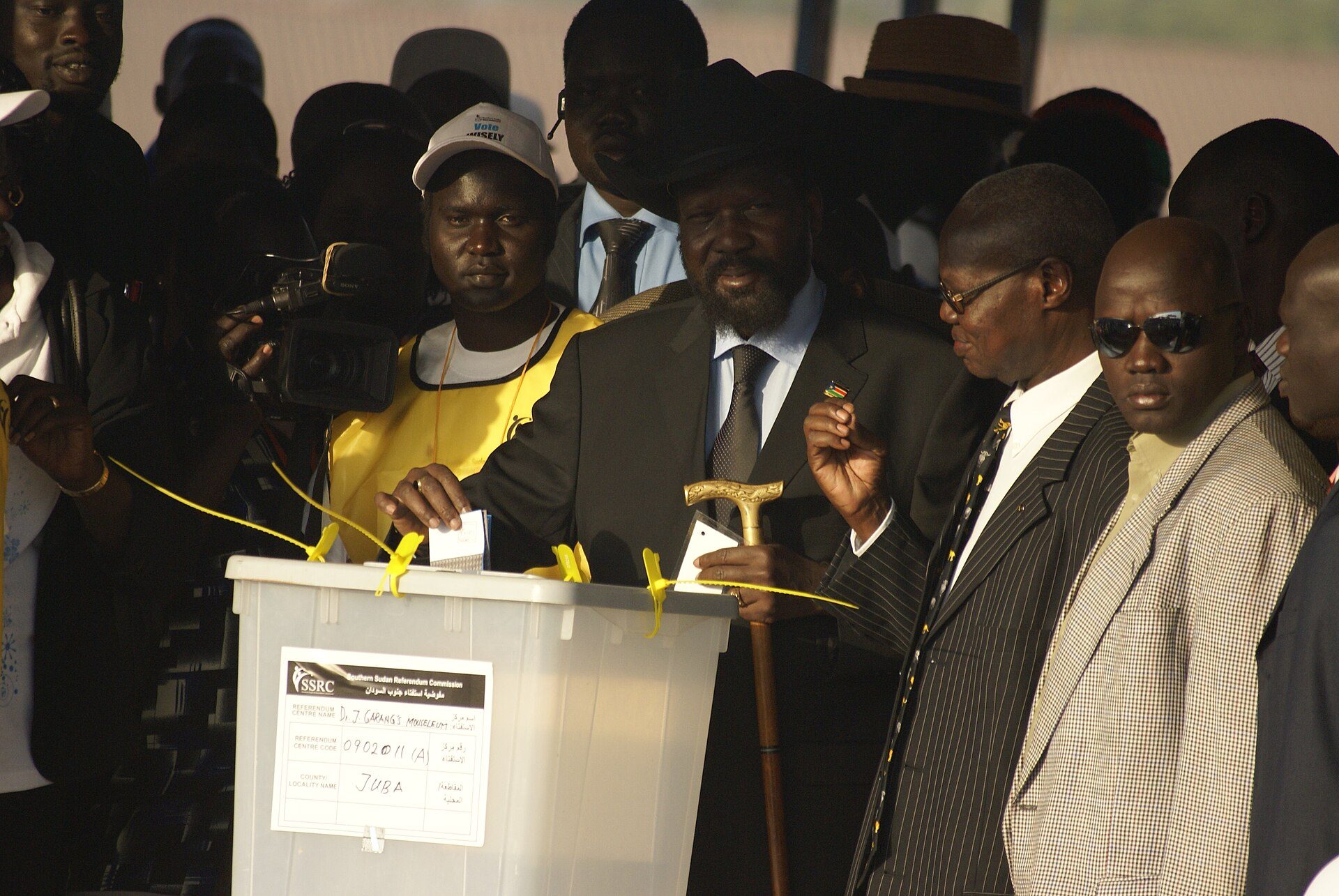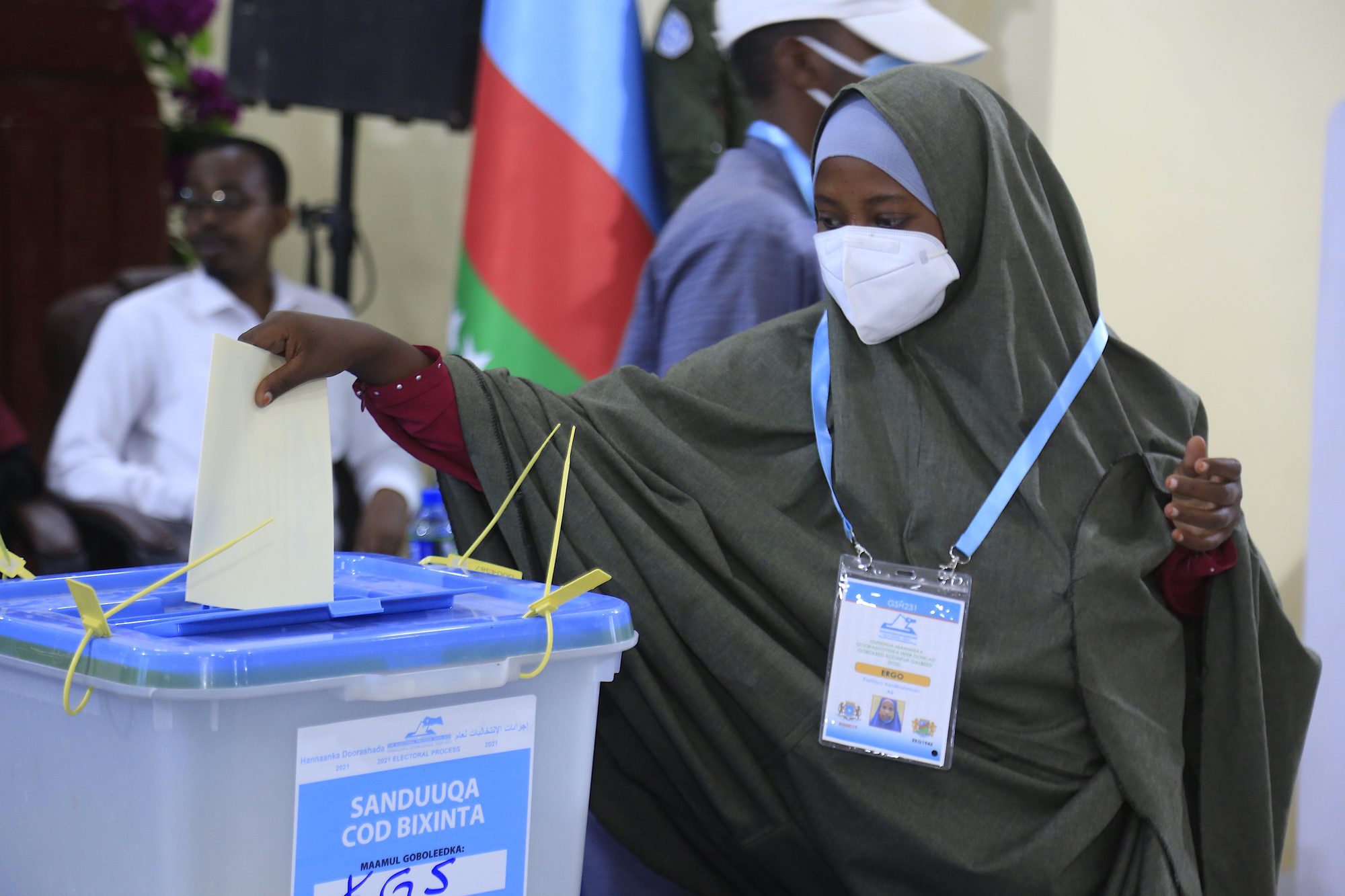
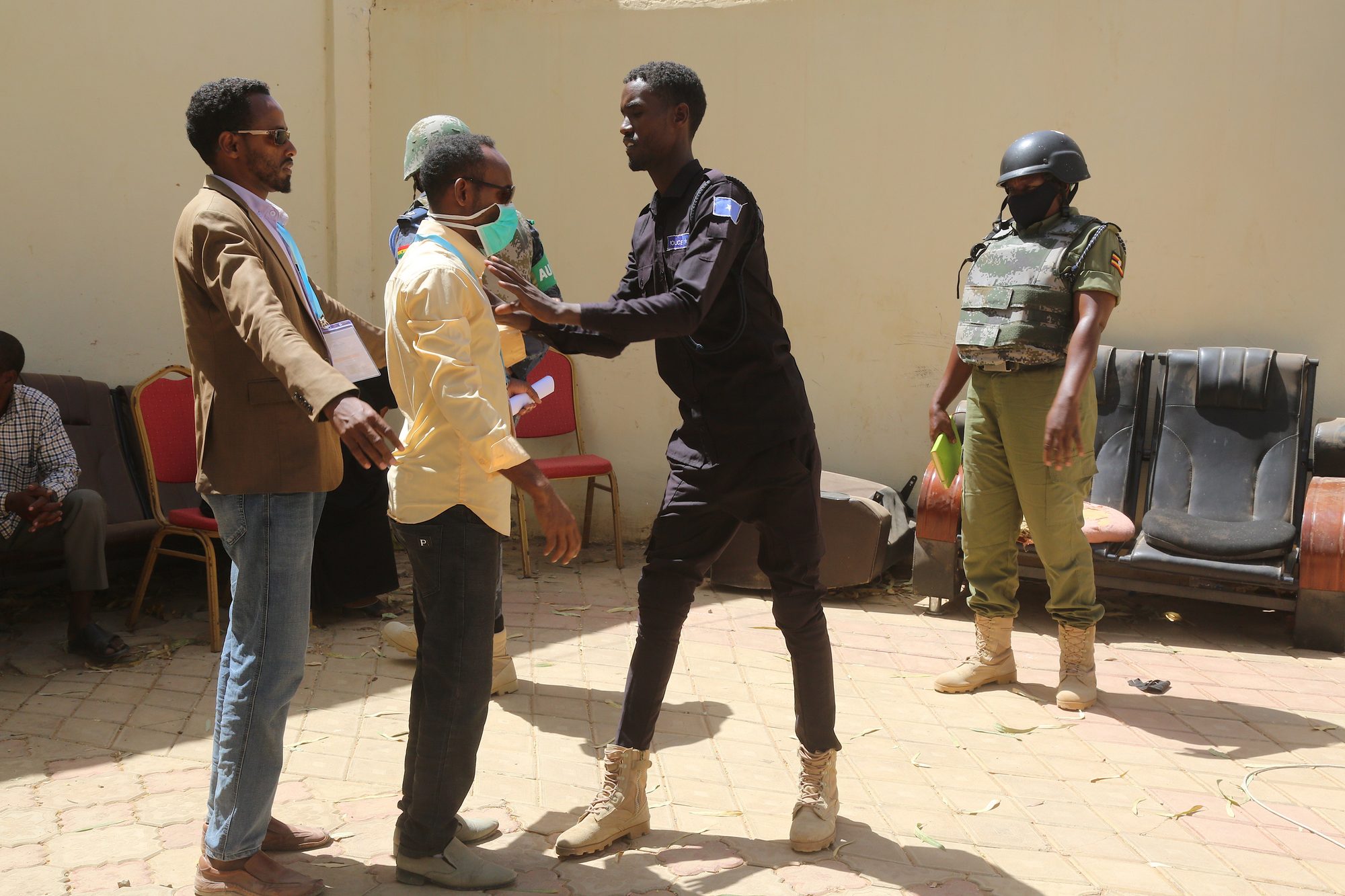
Hirshabelle marked its first one-person, one-vote election on Wednesday, September 30, amid tight curfews in Jowhar and Beledweyne. President Ali Abdullahi Hussein “Guudlaawe” cast his ballot in the capital, calling the vote a milestone. However, the buildup was marred by internal friction in Beledweyne, where his own vice president spent weeks arguing the election shouldn’t proceed without a broader political consensus.
Voters chose the state House of Representatives and local councils across 12 districts in Hiiraan and Middle Shabelle. No ballot names a president. But the ruling Justice and Solidarity Party (JSP) has already named its candidate for the state’s top job. It is Guudlaawe.
Three states, three outcomes
President Hassan Sheikh Mohamud’s government pressed all three states where Villa Somalia holds sway. Each president answered differently. Two are out of the contest. One is on the ballot.
South West. Abdiaziz Laftagareen refused. He broke with the president over constitutional changes that would extend federal terms from four years to five, and he held his own re-election on March 28. Federal troops entered Baidoa on March 30. He resigned that day and fled to Nairobi. The army took the city within 48 hours of his vote. Ten weeks later, Adan Madobe was elected president in the same city with the federal government’s full backing and no comparable pushback, as I reported in The Guarantee. Laftagareen never accepted the outcome. His forces attacked Baidoa on August 17 and September 3, and again on September 28, two days before Galmudug and Hirshabelle voted. MSF said the latest round killed three people and wounded 69.
Galmudug. Ahmed Abdi Kariye, known as Qoor Qoor, did not fight. On June 25 he said he would not seek re-election, after talks involving the intelligence chief and the prime minister. Three days later the ruling party named Liibaan Shuluq as its sole candidate. The July vote then went to the Supreme Court, which threw it out. Galmudug voted again the same day as Hirshabelle. I laid out that sequence in my September 3 investigation.
Hirshabelle. An earlier president, Ali Abdullahi Osoble, was voted out by the state parliament in 2017. Guudlaawe took the other road. In April he and the president agreed that he would run again on the ruling party’s ticket. The party then made him its candidate. He is the only one of the three presidents still in the contest.
The evidence points to a straightforward conclusion: the president who cooperated was permitted to stay. While motive remains unproven, the chronology speaks for itself.
The same rule at the top
The rule is not limited to the states. In Mogadishu it produced a Speaker. Abdulkadir Mohamed Nur Jaamac was Hassan Sheikh’s preferred candidate for a South West seat in 2021 and 2022, but Laftagareen blocked him. Ten days after federal troops removed Laftagareen, a Baidoa parliamentary seat that had never been put to a vote was reassigned, and Jaamac, a minister, was sworn into it. On August 11 he became Speaker, 142 votes to 30, in a ballot lawmakers from Puntland and Jubaland boycotted. I laid out both steps in my Speaker investigation. The methods shift—deploying troops in one region, running a party ticket in another, securing a lopsided majority in a third—but the destination remains identical. If Hassan Sheikh wants you in office, you get there.
The Hawadle complaint
Vice President Yusuf Hagar Dabageed is a Hawadle politician from Hiiraan. He says Hassan Sheikh abandoned an understanding that the Hawadle would be considered for the presidency. According to FTL Somalia, he told a Hawadle gathering that Hassan Sheikh had promised him years earlier that he would lead Hirshabelle, then told him the choice had gone to Guudlaawe.
The same report adds a complication. In August Hassan Sheikh asked Hawadle elders to agree on one candidate. They authorized him to choose. That authorization is now read as an endorsement of Guudlaawe.
The Hawadle are not speaking with one voice. A Hawadle political council led by former Hirshabelle president Osoble backs Guudlaawe and the election. On September 12, hundreds rallied in Beledweyne for Guudlaawe. Five days later Hawadle leaders called for the process to be suspended. On September 21 they said no election lacking consensus can take place anywhere in Hiiraan. On September 24 hundreds more marched against it.
This week the JSP put a Hiiraan figure on its ticket. Regional governor Abdifatah Hassan Afrah is its candidate for deputy.
What Galmudug’s court case means for Hirshabelle
The Supreme Court’s findings in Galmudug work as a checklist. Hirshabelle’s record against it is mixed.
The calendar. Galmudug’s vote moved twice, and the court said that left too little time. Hirshabelle’s vote also moved. It was first set for August 20, then pushed to September 30. The commission cited unfinished registration in four Hiiraan districts and parties’ need for more time. The new final voter list was due September 19, 11 days before polling. That beats Galmudug’s July register, which was still open two days out. But the timetable itself gave about 30 days’ notice, and I found no report confirming the September 19 list went out on time.
The register. The Galmudug court looked hard at registration. In Hirshabelle, registration is where the fight happened. On September 1, armed Macawiisley fighters took over a registration site at a Beledweyne school. They said they would not allow an election without consensus. They are the local fighters who led the 2022 uprising against al-Shabaab in Hiiraan. FTL Somalia reported an attack on a registration centre on September 7 that killed one person and wounded two. I could not independently confirm that. I found no published count of how many Beledweyne residents ended up on the register.
The agents. Galmudug’s case turned on party agents. Representatives were kept out of polling stations, and Towfiiq’s agents recorded numbers that differed from the official ones. Hirshabelle set September 24 for accrediting agents and September 26 for observers. The Hawadle leaders opposing the vote in Hiiraan aren’t staying to monitor and contest the results; they are rejecting the process entirely. A Galmudug-style legal challenge requires an active participant armed with evidence, which a group that stays out won’t have. To be clear, this is my own analysis, not a declaration from the court. I have found no petition against the Hirshabelle vote.
Capacity. The commission ran Banadir, then South West, and on September 30 ran two states on the same day. The Galmudug court did not rule on capacity. It did say a failure at one stage can sink the whole election.
The politics. The judiciary focused on procedural corrections rather than the core political struggle. In Hirshabelle, that struggle is the real story. Even a procedurally flawless election cannot resolve the foundational dispute over who holds the presidency.
Who is likely to win
Results had not been announced when this report was written. Guudlaawe is likely to win, because he carries the ticket of the JSP, and the party is led by the president who backed him. I said as much in The Guarantee. The JSP, led by Hassan Sheikh, took 63 of 89 seats in Galmudug’s July vote before the court voided it. In 2020 Guudlaawe won his first term by 86 votes to 13, backed by then-President Farmaajo.
Two things could complicate that: the Hawadle objection in Hiiraan, and how the count is run and published.
What to watch
Whether the commission publishes polling-station results. Whether it says how many people registered in each Hiiraan district, and how many could not. And whether the people who held the registration sites in September accept a result they called predetermined.
Galmudug proved that the judiciary has the teeth to throw out an election, but it also showed that the same commission is left to run the rerun. Now that Hirshabelle has voted, the upcoming count will reveal whether officials actually learned from the Galmudug ruling, or simply watched it happen.
Read the companion report: The Court Voided Galmudug’s Election. The Rerun Kept the Same Referee, the Same Voter List, and Left Out the Party That Sued.