
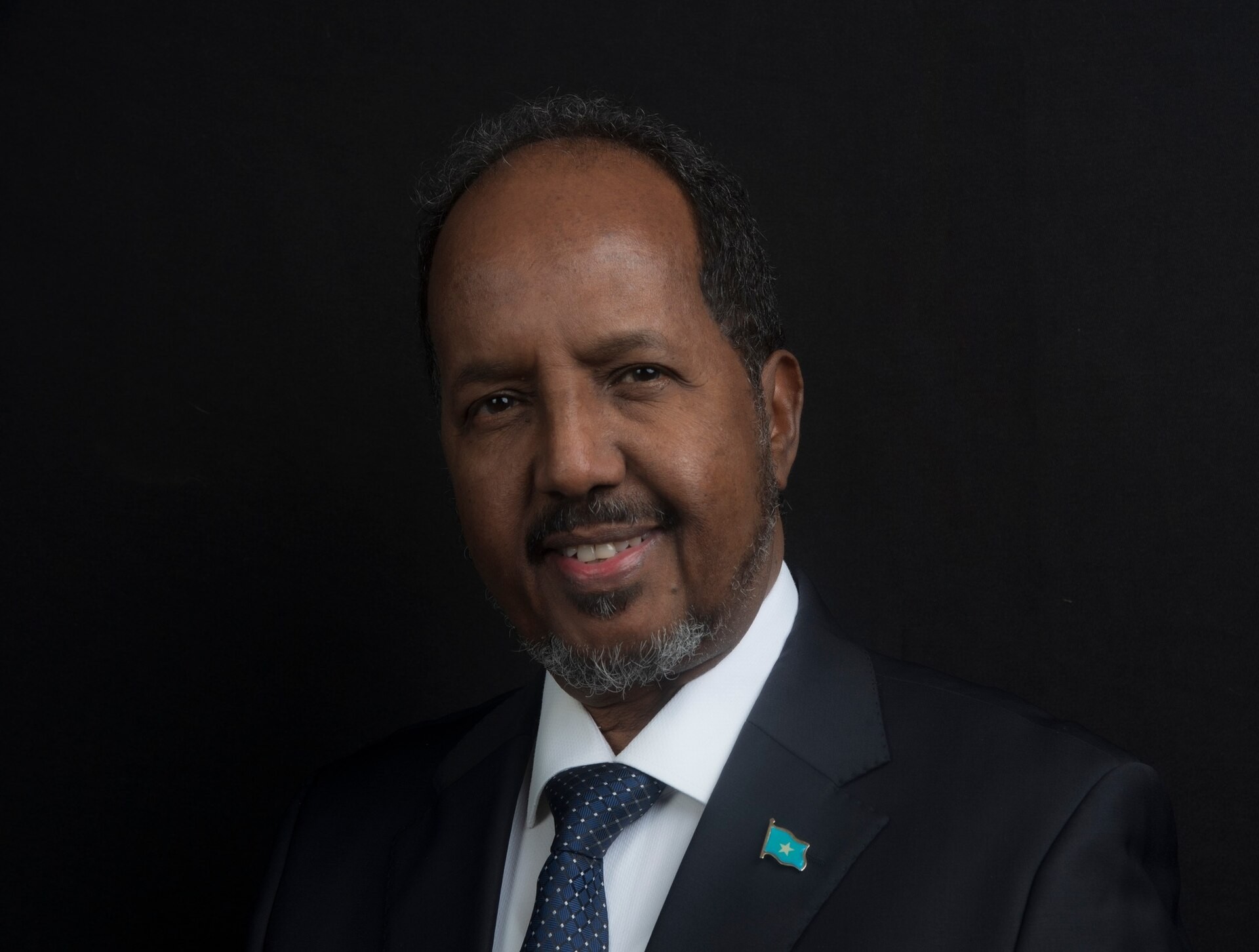
On Saturday, November 7, Ibrahim Idle Suleiman took the oath as chief justice of Somalia’s Supreme Court. President Hassan Sheikh Mohamud attended the ceremony in Mogadishu and urged the new chief justice to serve with integrity, honesty and responsibility, Dawan Africa reported. The man Suleiman replaced, Bashe Yusuf Ahmed, had been dismissed by the president on Wednesday. On Thursday, five judges of the same court had declared that dismissal null and void and ruled that the president’s own term ran out on May 15.
The same day, Bashe stood before reporters in Mogadishu and said he no longer felt safe in the capital. “I do not feel safe in Somalia’s capital,” he said, accusing the president of threatening his security, according to Garowe Online. The presidency had not responded when that report was published.
Somalia’s constitutional crisis has exposed a question that neither the presidency nor the judiciary can answer through assertions of authority alone: who holds the country’s institutions accountable when their decisions are themselves disputed?
The confrontation was extraordinary in both timing and consequence. The president attempted to replace the head of the judiciary while a constitutional challenge affecting his own mandate was before the court. The judges then ruled that amendments extending elected terms from four to five years could not automatically prolong the mandates of officials already in office. According to the Associated Press, the court ordered political leaders to agree on an electoral framework within 30 days and conduct elections within 90 days.
The government disputed the ruling, leaving Somalia with competing claims to constitutional authority. Yet the crisis cannot be understood simply as a president resisting judicial oversight. The Supreme Court’s earlier decisions concerning disputed regional elections have raised questions about the consistency of its own standards. Those questions do not invalidate the November judgment, but they make judicial accountability part of the story rather than an issue reserved for the executive.
The Constitutional Dispute Behind the Confrontation
In March 2026, Somalia’s federal parliament approved constitutional amendments extending presidential and parliamentary terms from four to five years. The government presented the changes as part of an electoral reform programme intended to replace indirect political arrangements with a more representative system. Opposition leaders and some federal member states challenged the amendment process and its application to officials already holding office, arguing that elected mandates could not be prolonged without renewed authorization from voters.
Former President Sharif Sheikh Ahmed brought the dispute before the Supreme Court in October. His petition challenged both the constitutional amendment process and the consequences of applying the new provisions to incumbent institutions. The court treated those issues separately. It rejected the challenge to the amendment process because it found that Sharif lacked the necessary legal standing, meaning the right to bring that part of the case, but accepted the argument that the new five-year terms could not automatically apply to officials elected under the previous four-year framework.
The distinction is central to understanding the judgment. The court did not invalidate the entire constitutional reform programme. Instead, it held that amendments changing the length of future terms could not silently extend existing mandates. The November 5 judgment, as reported by Garowe Online, determined that parliament’s mandate expired on April 14, 2026, and Mohamud’s on May 15. It also restricted the federal government to routine caretaker responsibilities and called for an agreed electoral framework followed by elections.
The judgment also declared actions taken by those institutions after their terms ended unconstitutional and void, Garowe Online reported. Parliament’s term ended on April 14, and South West voted in May. Whether that reaches the electoral commission’s work, and with it the South West vote that the court itself certified on May 25, is not clear from the published summaries of the judgment.
The ruling created an immediate institutional confrontation because the government rejected its legal basis. The Attorney General’s office argued that the court had failed to address preliminary objections concerning jurisdiction and standing, questioned the composition of the judicial panel and challenged the procedures followed. These objections deserve examination rather than dismissal merely because they came from an administration adversely affected by the judgment.
Nevertheless, procedural objections cannot by themselves settle the underlying constitutional question. If amendments adopted during an elected term can extend that same term without explicit authorization, the distinction between constitutional reform and political self-extension becomes dangerously uncertain. Conversely, a court exercising constitutional review must demonstrate that it has followed the law governing its own jurisdiction and proceedings.
Three Elections, Different Judicial Responses
The Supreme Court’s credibility must also be considered through its handling of electoral disputes before November. During 2026, its Election Division dealt with elections in Banadir, South West and Galmudug. The cases were not identical, and different outcomes do not automatically establish inconsistency. They nevertheless provide a useful test of how the judiciary balances electoral legality, procedural deadlines and the rights of political participants.
In Banadir, district council elections held in December 2025 were certified in March 2026 after the period for legal challenges had expired. In South West, the court also certified elections conducted in May. In both cases, procedural requirements and the absence of successful timely challenges played important roles in finalizing the results. Certification, however, should not be confused with a comprehensive judicial finding that every aspect of an election was beyond criticism. A court may uphold results because the necessary legal challenge was not properly brought.
Galmudug produced a different outcome. Following elections on July 30, the Towfiiq political organization challenged the process, alleging irregularities. On August 24, the Supreme Court annulled the results and ordered fresh elections after finding that the vote had not complied with constitutional and electoral standards. The five judges sat under Chief Justice Bashe Yusuf Ahmed, the judge the president dismissed ten weeks later, as Garowe Online noted at the time. The electoral commission subsequently accepted the ruling and committed to organizing a rerun.
The contrast with the two earlier votes is sharp. In March it certified Banadir’s results on the stated ground that no official complaints were filed during the legal period. In August it rejected the commission’s argument that a result cannot be challenged when no complaint was lodged on polling day. Garowe Online’s analysis counted 25 days’ notice of the polling date in Banadir and 22 in South West, against the 90 days the August judgment requires, and found that no voter register was published for Banadir. Why the argument that held in March did not hold in August is the question on which the court’s credibility turns.
The annulment demonstrated the court’s willingness to overturn an election when a challenge was properly before it and substantial violations were established. It has done so rarely. Of the five votes discussed here, which include the Galmudug rerun and Hirshabelle’s parliamentary vote, certified on October 19, the court certified four and annulled one. But the subsequent rerun raised another question: what does a judicial remedy accomplish if the political organization whose challenge helped overturn an election is absent from the replacement contest?
I examined the rerun in an earlier report, and one point from it matters here. Towfiiq was not included among the political organizations authorized to contest the September 30 Galmudug rerun. The omission prompted criticism because the party had played a central role in challenging the original election. Hiiraan Online reported its absence from the approved list and the concerns expressed by its representatives about the process.
The electoral commission offered a different explanation. Its spokesperson said Towfiiq had not submitted the formal application required to participate in the rerun and denied that the decision was politically motivated. That position was reported by Goobjoog. The available reporting therefore establishes a dispute over compliance with electoral procedures, not proof that the commission deliberately excluded the party for political reasons.
The distinction matters. Election authorities are entitled to enforce lawful registration requirements, and political organizations must comply with them. But the legitimacy of an electoral remedy also depends on whether the procedures governing a rerun are transparent, reasonable and applied consistently. Where a party succeeds in challenging an election but does not participate in the replacement contest, the public is entitled to ask whether the legal intervention corrected the underlying problem or merely restarted the process under disputed conditions.
The Supreme Court subsequently certified the rerun results after the period for challenges expired. That decision may have been procedurally defensible, but it left broader questions about participation and public confidence unresolved.
This is the connection between the regional election cases and the November constitutional confrontation. Judicial independence protects judges from political interference; it does not place their reasoning beyond examination.
The President’s Power and the Judiciary’s Independence
Mohamud’s November 4 dismissal of Chief Justice Bashe Yusuf Ahmed brought the separation-of-powers dispute into sharp focus. The court rejected the decision, arguing that the president lacked authority to remove its chief justice unilaterally through the procedure used. The timing, immediately before a judgment affecting the president’s mandate, inevitably raised concerns about whether executive power was being used to influence judicial proceedings.
Events since have deepened the dispute. Former Prime Minister Hassan Ali Khaire has accused the government of sending security forces to the court and trying to arrest the dismissed chief justice. AFP could not verify the claim, though photographs circulating in Somali media appeared to show armed personnel inside the court compound. Garowe Online also reported that Bashe and the five judges who ruled have lost their protection teams and have reportedly taken refuge at the residence of former President Sharif Sheikh Ahmed, the man whose petition began the case. If that is confirmed, judges sheltering at the home of the litigant whose petition they decided will hand the government an argument about impartiality, however understandable the fear that drove them there. The presidency has called national talks for November 14 to 18.
The timeline gives both sides something to say. While Bashe was chief justice, the court certified Banadir and South West, then annulled Galmudug’s vote in August. Sharif’s petition reached it on October 11 and was accepted the next day. The president dismissed him on November 4, and the ruling came on November 5, from five judges who did not include Bashe. The court says the dismissal is void; the government swore in Suleiman as his replacement on November 7. His critics ask why a chief justice whose court certified those elections now says he no longer feels safe in the capital, and why, according to Garowe Online, judges are reportedly sheltering at the home of the man who brought the case. His defenders ask why a president would remove a chief justice the day before a ruling on his own term. Neither question answers the other.
Timing alone, however, does not conclusively establish the president’s motive. The proper inquiry concerns the constitutional authority for removing a chief justice, the procedures followed and whether the decision interfered with a pending case. The government must explain the legal basis for its action and the institutional safeguards it believes were satisfied. Equally, the court must be prepared to defend the procedures through which it rejected the dismissal and decided the constitutional petition.
The absence of an established Constitutional Court also increases the burden on the Supreme Court, which exercises constitutional functions within Somalia’s current judicial framework.
The deeper danger is that each institution may invoke the constitution while refusing to recognize the other’s authority to interpret it. A president cannot establish judicial accountability by replacing judges whenever their decisions become inconvenient. Nor can a court preserve public confidence merely by declaring its own judgments binding while leaving legitimate questions about procedure unanswered.
Who Is Accountable to the Constitution?
The confrontation has immediate implications for Somalia’s electoral transition. The Supreme Court has ordered a political agreement on an electoral framework and elections within 90 days, while the government disputes the judgment’s validity. The court has also limited the federal administration to caretaker functions, but the practical enforcement of those restrictions remains uncertain. Without agreement among political institutions, the judgment risks becoming another disputed claim in a political system already struggling to establish accepted rules for elections.
Constitutional reform requires more than parliamentary approval or judicial interpretation if the institutions expected to implement it do not share an understanding of its legitimacy. Yet political disagreement cannot justify indefinite extensions of authority or the abandonment of lawful electoral obligations. A credible resolution must address both the constitutional rules and the political confidence needed to implement them.
For the court, that means explaining its choices. Where an election is annulled, the remedy should address the violations identified. Where results are certified because challenges were not filed on time, the public should understand the distinction between procedural finality and substantive electoral fairness.
The presidency faces an equally demanding standard. It must demonstrate that its constitutional reforms, judicial appointments and electoral timetable comply with lawful procedures rather than merely advancing the government’s political preferences.
Somalia does not need a constitutional system in which the executive is beyond judicial review, nor one in which the judiciary is beyond legitimate scrutiny. It needs institutions capable of resolving disputes through transparent procedures, enforceable judgments and elections whose rules are accepted before the results are announced.
The question is not whether the president or the judges should prevail in a struggle for institutional supremacy. It is whether either can demonstrate that the constitution, rather than political convenience, governs the exercise of public power.
Comments
Every comment is read by a person before it appears, so yours will not show straight away. We publish comments that are civil and on the subject. To report a mistake in the piece, use the corrections page, so it is fixed in the piece itself.