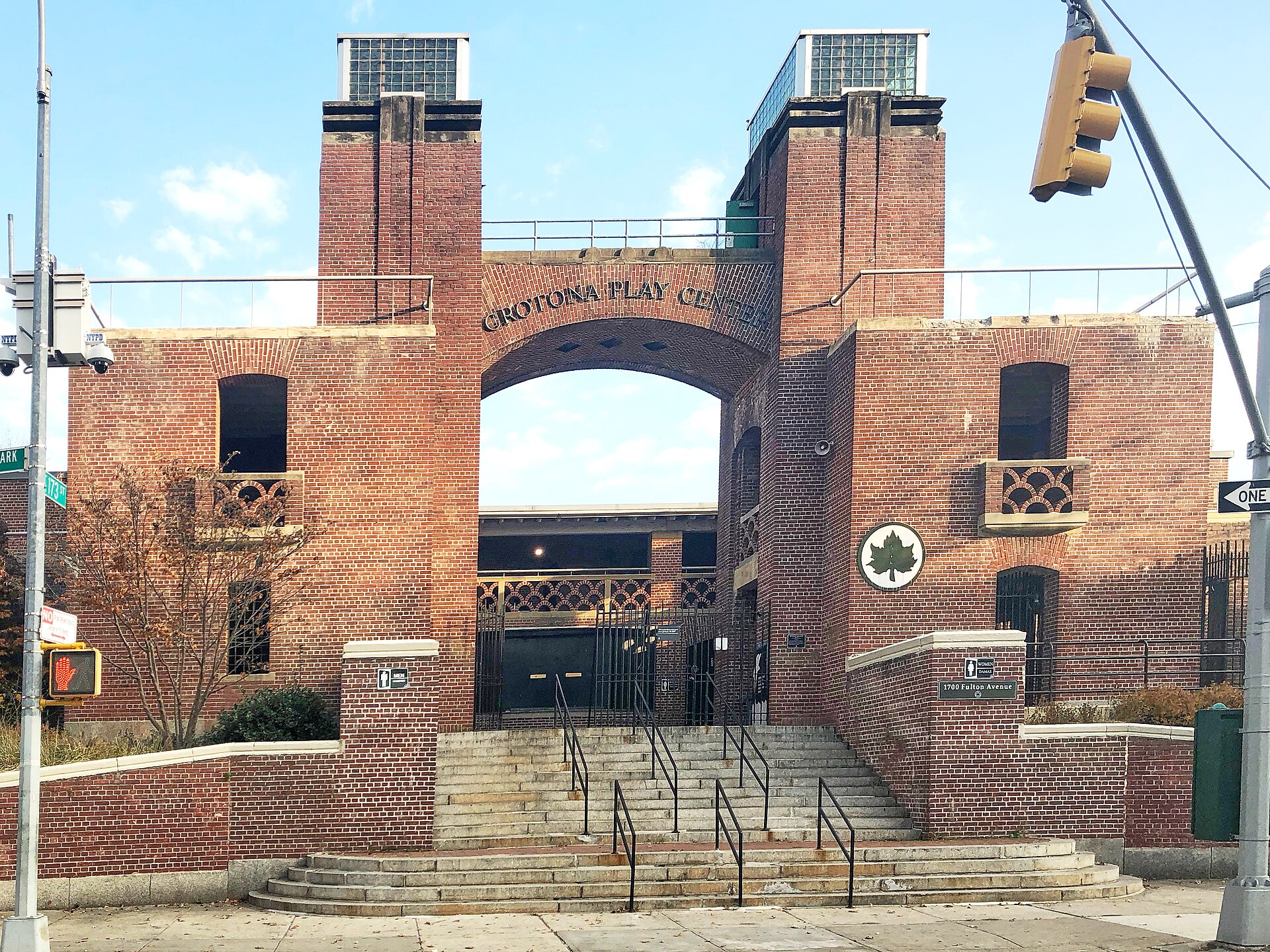
On Thursday morning, Thomas Frimpong gave his son one instruction: make sure you get to school on time. ABC7 New York reports that it was the last thing he said to him. Javits, 15, walked out of the apartment he shared with his father in the Bronx, around the corner from where he would be shot. A little before 9:30, he was hit once in the stomach near East 171st Street and Crotona Place. He ran about a block, and then he collapsed.
The school phoned the father to say Javits had not arrived. Later, the principal phoned again, to say he had been shot, according to Gothamist. Thomas Frimpong, a 60-year-old yellow-cab driver, got to St. Barnabas Hospital, where his son was pronounced dead. He told CBS New York, by phone, “I’m here with him alone.” He also called Ghana, to tell his son’s mother. A year earlier he had brought the boy across an ocean for exactly this: a school to get to on time.
Police are looking for three boys, aged 16 to 18, who were last seen in black clothes and blue surgical masks, according to CBS New York. No one has been arrested, and police have not named a suspect or said what led to the shooting. On Saturday, Mayor Zohran Mamdani said on X that President Trump had agreed to give the boy’s mother a visa so she could say goodbye to her son, according to Gothamist. The White House had not responded to Gothamist’s request for comment when it published, and we could not establish the visa type or whether she holds it.
The promise
Javits’s story is the story of a promise. Across many African communities, America is believed to be the place where a child’s future is secured: a good school, a safe street, and a road to a profession. His father says Javits dreamed of becoming a doctor, according to CBS New York. A man drives a yellow cab for years, saves, and sends for his son. Thomas Frimpong did exactly that, and he did it right. A year ago Javits’s mother let him go, and we do not know what she was told. We know only what such a journey is meant to buy: a better life for the child.
By every account we found, Javits was the child that promise is made for. He was quiet, his father says, a boy who came home, stayed in and played on his phone. He did not hunt for trouble. He reported it. His father says his son told him a boy kept bullying him whenever he went to lunch, and that he had reported it several times. Two students were suspended, the father said, and the principal told him about three days before the shooting that Javits had been defending himself, ABC7 reported. He took that to mean the matter was over. “I thought that was all,” he told Gothamist. Police have not confirmed any link between the bullying and the shooting, and they have not said the suspended students had anything to do with it. The bullying account is a father’s belief. It is a serious one. A school bus aide told CBS New York that it could be revenge for the suspensions or something else entirely, and called that speculation.
Acting is not protecting
Take his account at face value and look at what the school did. A boy reported bullying several times. The adults acted: they suspended two students and told his father he was not at fault. Every step followed the rules. Three days later he was shot on the walk to that school. Here we will be blunt, and we label this as our reading. A suspension punishes the students who were suspended. It does not protect the boy who reported them, and it ends in days. A school can say it acted, and still lose the child. The question the Department of Education has to answer is not whether the school followed its rules. It is what the school did to keep Javits safe once the suspended students were due back: whether it called their families, whether anyone walked with him, whether it had a plan at all. We have seen no sign that it did, and no sign that it did not. The Department of Education has said its hearts are with the family and school community, that it is supporting the police investigation, and that counseling is available.
The city’s numbers will be used to argue that nothing unusual happened. The 42nd Precinct, which covers this part of the Bronx, has recorded 17 shootings so far this year, down from 27 at this point last year, according to NYPD data cited by Gothamist. That is a real improvement, and it belongs in the story. But a falling average does not walk anyone to school, and a city that can count shootings by precinct should be able to say who was watching this one boy’s route. A resident told ABC7 that young people need afterschool programs to keep them off the street. Those are the hours the statistics do not cover: the walk in the morning and the empty stretch after the last bell.
Javits’s family was stretched across an ocean: a father who drives a cab all day, a mother in Ghana, and one adult in one apartment. In our reading, that is a household with very little margin: no second adult to walk him in, and no one nearby to notice when the danger came back. It is also why the visa matters. In his post, Mamdani wrote that he had “just got off the phone with President Trump,” who he said “has agreed to grant her visa immediately,” Gothamist reports. The mayor’s office did not say what kind of visa it will be, according to Gothamist. Ghana’s Foreign Minister, Samuel Okudzeto Ablakwa, has been in contact with the father, according to MyJoyOnline. A mother should not have needed a presidential phone call to bury her son. We do not know whether she had ever applied to visit. We do know that help came only after he died, and help that arrives only once a child is dead and the case is in the news is not a system that protects children.
There is a wider setting for that phone call. Ghana is one of the 75 countries on the State Department’s list for a pause in immigrant visa processing that began on 21 January, according to TIME and the law firm Mintz. We want to be exact about what that means. The pause covers immigrant visas, the kind that let a person settle in the United States. It does not cover tourist or other temporary visas, and we could not establish which kind Javits’s mother needs. A visit to say goodbye and to bury her son may not fall under the pause at all. But it shows where Ghanaian families stand: a relative who wants to join someone here by immigrant visa is already waiting behind a freeze, and a mother who needs to cross the ocean for her child’s funeral needed a call from a mayor to a president. In our reading, that tells us how much the country that invited this boy in makes families depend on favours.
Ghana’s government has moved faster than most. Ablakwa said it will pay the full cost of the mother’s travel and has assigned officials to help her with the visa application, and that officials from its mission in New York have visited the family, according to Gothamist. The Ghana Diaspora Public Affairs Collective noted two earlier attacks on Ghanaians in the Bronx, an elderly couple robbed at gunpoint at a bus stop days before Javits was shot and a man fatally stabbed in January, and said there is no established evidence that they were connected. It is asking city leaders to listen to the community.
The question
If the visa comes, Javits’s mother will cross an ocean to the country that took her son, and she will arrive to bury him. We cannot write that sentence without anger. The police should say whether they have looked at the school dispute, the Department of Education should say in public what protection Javits was given, and the mayor should be asked what the city does for a child who reports a threat and is told the matter is handled. Anyone with information can call the NYPD’s Crime Stoppers line at 1-800-577-TIPS, and calls are confidential. His father has asked the people who did this to give themselves up.
This week, African fathers across America who are working double shifts to send for a son or a daughter are asking themselves a question they did not want to ask. Is it worth it? Is it worth bringing a child here and risking losing him to a gun? Many will ask it, and we understand why. But the question is unfair to the father. Mr. Frimpong did not fail his son. He did what the country invites immigrant families to do: bring the child, enroll him in school, keep him out of trouble. If anyone failed, it was the places that were supposed to keep that child safe: a school that could suspend two boys but, as far as we can tell, could not guarantee his walk; a city that could not keep one morning street safe; a country that admits these children and then leaves their parents to carry the risk alone. A promise that holds only when nothing goes wrong is not a promise. America cannot keep inviting these boys and then ask their fathers whether it was worth it.
What to watch. Whether police say if they have looked at the school dispute, whether the Department of Education says in public what protection Javits was given, and whether his mother's visa comes through.
Comments
Every comment is read by a person before it appears, so yours will not show straight away. We publish comments that are civil and on the subject. To report a mistake in the piece, use the corrections page, so it is fixed in the piece itself.