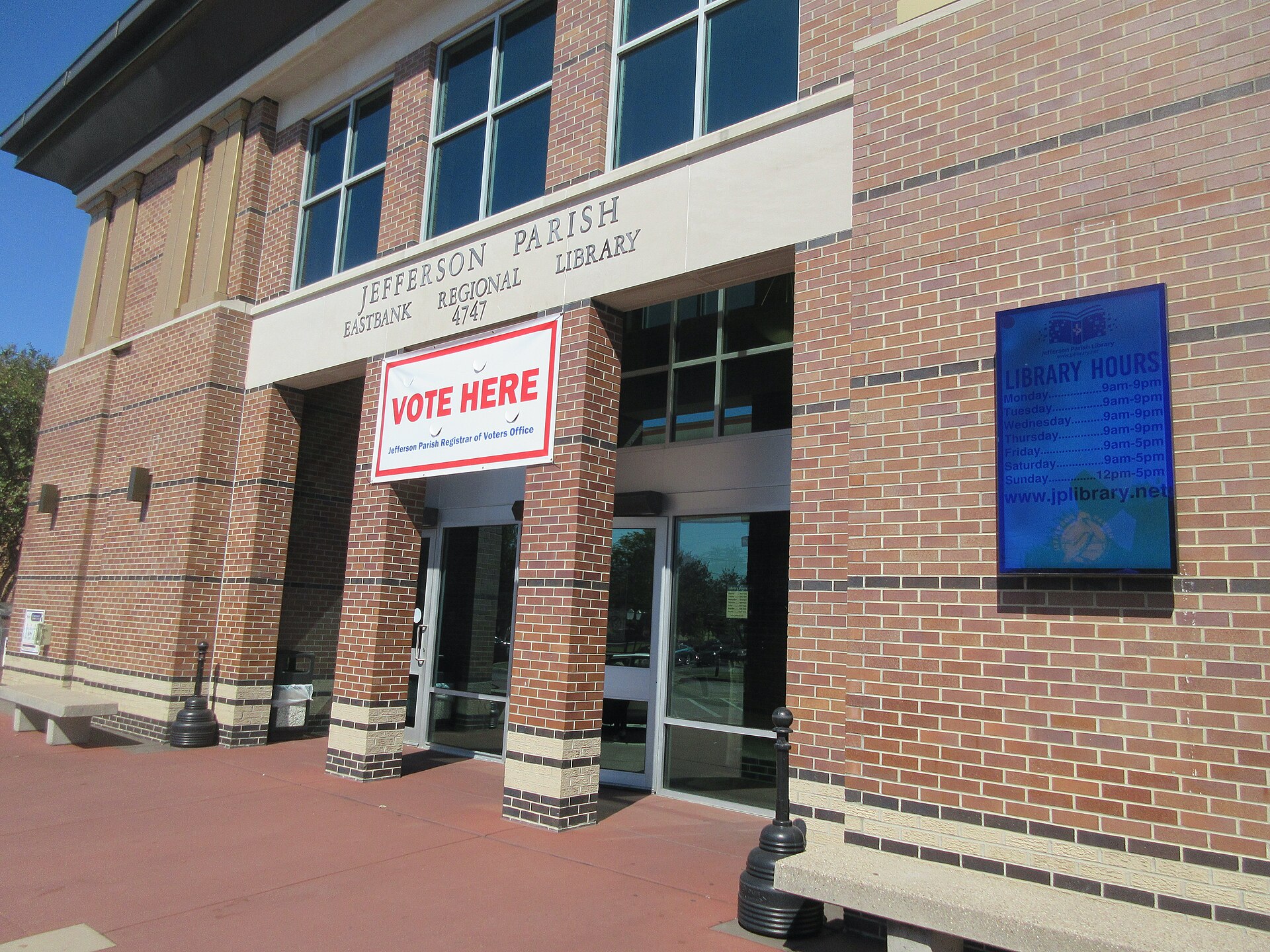
A group called Our Heritage Matters registered with the Federal Election Commission on 15 October. Five days later it began spending to boost third-party candidates and attack Republicans. By 29 October it had put about $1.2 million into ten House and Senate races, according to a CNBC analysis of the filings. Who paid for it is not public. Because it formed after the 15 October reporting deadline, its first report naming donors is not due until 3 December, a month after Election Day.
Tuesday’s midterms are the most expensive in the country’s history by every count we found, but the total is the smaller story. The larger one is how the money moves: more and more of it goes through committees that appear in the final weeks, spend at once and name their donors afterward, while the agency that polices such spending has been mostly unable to act. Nothing in the reporting we read says these groups broke a rule. The gap is in the reporting calendar.
First, what is being decided. On Tuesday Americans vote for all 435 members of the House of Representatives and about a third of the 100-member Senate. Republicans hold both chambers now, the House 218 to 214 with two vacancies and the Senate 53 to 47, and Democrats need a net gain of four seats in each to take over, according to Reuters. Money flows in two ways. Candidates raise it themselves, with limits on each donor. Super PACs, groups that can take unlimited sums to back or attack candidates but may not coordinate with them, spend it on their own. That second kind, which we call outside money, is where the record is.
The record
The nonprofit OpenSecrets, which tracks political money, projected on 30 October that total spending will reach $11.9 billion. The 2022 midterms cost $8.9 billion, or $10.2 billion in today’s dollars, so this year is about 17 percent higher by our arithmetic. The advertising firm AdImpact, which counts only ads, reported that $11.21 billion had been spent or reserved by 29 October, already more than the whole 2024 presidential cycle. The growth is in outside money, which OpenSecrets expects to reach $3.9 billion, up from $2 billion in 2022.
Why it costs more
The first reason is the map. Democrats are contesting Senate seats that Republicans have held for years. Kansas has not elected a Democrat to the Senate since 1932, Texas since 1988, and Alaska and Iowa since 2008. The Cook Political Report, a forecaster, listed all four as too close to call, along with Maine, Ohio and Michigan, and attributed Republicans’ weaker position to falling enthusiasm among their own voters and underperformance at the top of the ticket. Polls gathered on 1 November by 270toWin, a site that collects them, put Democrats ahead or level on average in all seven. In most the lead is smaller than a single poll’s margin of error, the range within which a lead can be noise.
None of that means Democrats will win. Decision Desk HQ, a forecaster, gives them a 57 percent chance of taking the Senate, which leaves a large chance that they do not. But the money follows doubt more than likelihood. Forecasters favour Democrats in the House, and AdImpact cut its House estimate from $2.2 billion to $2 billion because redistricting, the redrawing of district maps, left 28 races less competitive. It raised its Senate estimate from $2.8 billion to $3.4 billion. The chamber whose result is least settled is the one drawing the money.
Texas shows it best. The Senate race there has drawn $573 million in ad spending and reservations, AdImpact said on 30 October, the most for any race that is not for president. Outside groups supply 92 percent of Republican Ken Paxton’s ad support and 23 percent of Democrat James Talarico’s, and AdImpact found Republican groups paying premium rates to air ads during NFL and college football games. The candidates’ own fundraising runs the other way: Talarico raised nearly $145 million to Paxton’s $22 million. Most of the outside money is spent to attack. OpenSecrets found that more than 60 percent of it, nearly $1.5 billion by mid-October, went to oppose candidates, and one dollar in every seven went against just three Democrats: Talarico, Sherrod Brown in Ohio and Abdul El-Sayed in Michigan. Michigan is the one seat on our chart that Democrats hold. El-Sayed leads the polls, yet $92.4 million of outside spending has been aimed at him, the third-largest sum against any candidate in the country.
The second reason is the donors. Elon Musk has given $445 million to federal committees this cycle, about a tenth of the $4.2 billion that 515 donors giving at least $1 million have put into super PACs, according to Public Citizen, a consumer group that also campaigns for limits. Some of the largest donors back Democrats, including the Soros family at more than $102 million and Michael Bloomberg at more than $80 million. Even so, OpenSecrets counts $2.03 billion of outside spending from conservative groups against $1.67 billion from liberal ones, while Democratic candidates are expected to outspend Republican candidates $2.2 billion to $1.4 billion. Companies are paying in as well. Public Citizen counts $517 million of corporate money in super PACs, more than in all of 2024, with crypto firms at $189 million, artificial-intelligence firms at $60 million and online-betting firms at about $46 million. It says its figures likely undercount, and notes that Anthropic pledged $20 million in February that had not yet appeared in filings when it wrote.
The third reason is the rulebook. On 30 June the Supreme Court, in a case brought by the National Republican Senatorial Committee, NRSC v. FEC, struck down limits on how much political parties may spend in coordination with their own candidates. Meanwhile the Federal Election Commission, which enforces these rules, had two of its six seats filled in mid-October. It needs four commissioners to act, so it could not investigate or fine anyone.
Money that arrives before its name
Federal law requires super PACs to report large spending within a day or two, but to name donors only in periodic reports. A committee formed just after one of those deadlines can spend for weeks before a report is due. CNBC calls such committees “pop-up” PACs. It found 22 formed in the last ten weeks that have each spent at least $1 million on congressional races, together about $637 million by 29 October, roughly a sixth of all outside spending reported in House and Senate races this cycle. Counting only the final ten weeks, they made up more than 22 percent of that spending, against less than 2 percent at the same point in each of the last two midterms. In 2022, five such groups had spent about $18 million. In 2018 it was three groups and about $12 million. One law professor told CNBC the reason is “almost entirely to avoid disclosure, even if just temporarily.”
The tactic is not one party’s, though Republican-linked pop-up groups have spent about twice as much as Democratic-linked ones. Take Texas PAC, which formed on 28 August and began spending to help Paxton. The money came through the Senate Leadership Fund, the main Republican super PAC for Senate races. Musk’s role became public only on 12 October, after The New York Times reported it, and filings three days later showed he had given the fund $158 million in two payments, each matched by a transfer to Texas PAC the next day. By 29 October Texas PAC had spent about $181.6 million. The largest of the 22, No Going Back PAC, formed on 1 September and was linked by public reporting to MAGA Inc., President Trump’s main super PAC. Its first report, on 20 October, showed MAGA Inc. had given it $200 million, after it had already spent about $187.8 million; by 29 October it had spent about $242.2 million. With Texas PAC it accounts for roughly two-thirds of what the 22 groups spent. On the Democratic side, Lower Costs Now formed on 10 September and reported on 15 October that the Senate Majority PAC, the main Democratic super PAC for the Senate, had given it $23 million. By 29 October it had spent about $75.5 million across eight Senate races.
Many of the new groups carry local-sounding names. The Maine Standard has spent $8.2 million, all of it against Democrat Troy Jackson, and the Cornhusker Majority about $7.1 million in Nebraska, almost all of it against independent Dan Osborn. Both are financed by the Senate Leadership Fund, a link that did not show up in their reports until 15 October. The effect, OpenSecrets’ executive director Hilary Braseth told CNBC, is that voters see a series of local groups instead of one national organisation spending tens of millions. Dark money, spent by nonprofits that never name their donors, adds another layer: OpenSecrets has tracked at least $1.47 billion this cycle, already above the $1.35 billion of 2024.
What the money is for, and what to expect
At stake is control of Congress. Reuters says Republicans would use a majority to pursue more tax cuts, higher defence spending and deeper cuts to the safety net, and that a Democratic House would likely open investigations into the Trump administration. Whether the money changes any of that is the open question. A George Washington University professor, Todd Belt, described the contest as close to a natural experiment, with Republicans holding the money and Democrats the message against the administration. The Brennan Center, a research group that campaigns for tighter limits, reports that The Washington Post found roughly $500 million of Republican spending since the summer had not appeared to move polls. If that holds, the record sum may buy less than its size suggests. If Paxton wins in Texas with outside groups supplying 92 percent of his ad support, that will point the other way.
For anyone watching on Tuesday night, the money suggests what to expect. Texas, Ohio and Michigan drew the most ad spending, according to AdImpact, so their results will show most clearly what the money bought. Decision Desk HQ’s projection is 51 Democratic seats, a bare majority, so a seat or two either way could change who controls the chamber. And the money story will not end with the vote. OpenSecrets expects its dark money total to keep rising as post-election reports arrive, and the committees formed after 15 October will not name their donors until 3 December.
The total will get the headlines. The figure to watch is the share of the money voters could not trace before they voted. In CNBC’s count, late-forming committees accounted for under 2 percent of outside spending in the final ten weeks of each of the last two midterms. This year they account for more than 22 percent.
What to watch. The donor reports due on 3 December, which will show who paid for the committees formed after 15 October; whether Texas, where outside money supplied 92 percent of the Republican's ad support, shows that outside money can stand in for a candidate; and whether the Federal Election Commission regains the four commissioners it needs to enforce the rules.
Comments
Every comment is read by a person before it appears, so yours will not show straight away. We publish comments that are civil and on the subject. To report a mistake in the piece, use the corrections page, so it is fixed in the piece itself.