
Editor’s Note: Tibor Szenczy gave The Field this account and approved the final text. I checked it against Hungarian and international reporting, corrected two points of his account, and wrote to Liberty Steel and the Hungarian economy ministry on 9 November for comment. They have until Thursday 12 November, and I will add any answer here. Ismail Abukar, editor
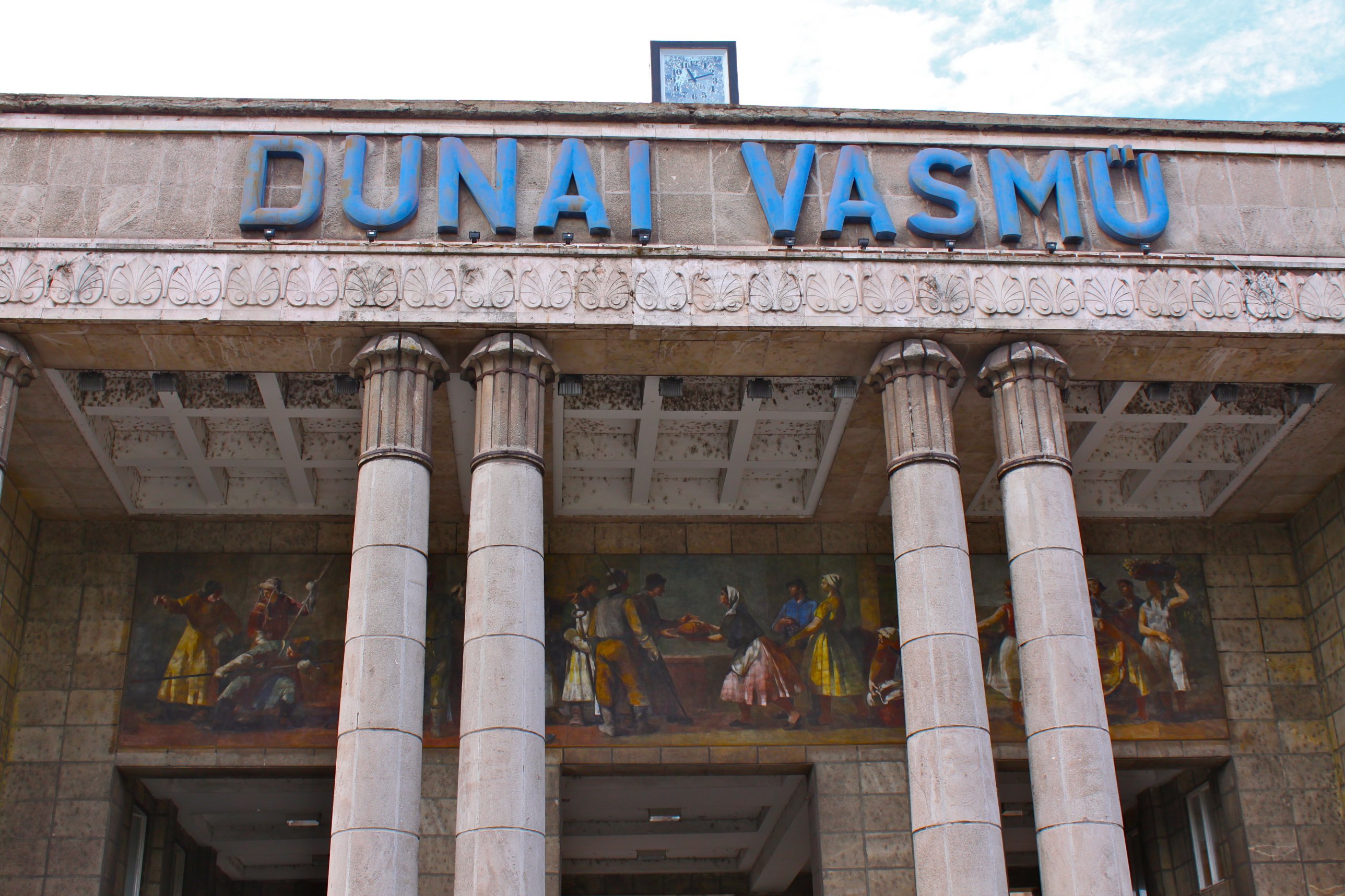
On Monday 23 June 2025, 1,700 people queued outside the gate of the steelworks in Dunaújváros, Hungary, to be told they no longer had jobs. They were called in alphabetical order, in hourly slots, so that each could be handed a dismissal notice in person. The local union leader told the news site Telex that the first slot started twenty minutes late and that by evening the delay had grown to three hours. A reader sent Telex a photograph: a long, packed line in front of the works’ famous entrance, which was once a symbol of Hungarian industry.
Tibor Szenczy was not in that line. He is chief mechanical engineer at a pumping station in the town that supplies industrial water used for disaster management, and he still has his job. Many people he has worked alongside do not. He wrote to The Field because he believes the collapse of the steelworks is talked about as bad luck when it followed a decision: the decision, in 2023, to hand the works to Liberty Steel, part of the Gupta family’s GFG Alliance. He says he is not accusing any government of acting in bad faith. His question is narrower and harder to wave away. What did the state check before it chose Liberty, and what did it do with what it found?
The question matters now because the damage has not stopped. More than a year after the dismissals, about 1,000 of the roughly 2,700 people let go in 2025 had still not found work by July, Telex reported. In October, Index and other Hungarian outlets reported that Dunaújváros, a city of about 43,000 people, could be unable to pay its bills by January 2027 without quick help from the government, because the shutdown left a hole in its budget. The government elected in April has paid to keep the empty site safe. On 30 May it told its economy minister to assess the investment offers for the site by 15 June and to prepare a national steel strategy by 31 August. On 5 November, Népszabadság reported that five groups from Bulgaria, Britain, China and India have approached the ministry since August, some of them proposing to restart steelmaking and rehire former workers, and that none had been given a meeting date. The ministry told the paper that what is left of the Dunaferr group is privately owned and in liquidation, which means its assets are being sold to pay its debts, and that it cannot see those companies’ data. The paper found no public report on the offers. The government has not said in public whether the works will restart or be sold.
What the town went through, as Tibor tells it
Tibor says the local council was not ready for thousands of people losing work at once. The other big employer nearby, the Hankook tyre plant, took on mostly younger people, in his account. The retraining on offer, he says, was for jobs such as nursery assistant, hairdresser or a farmer’s certificate known as Aranykalászos gazda. He says homelessness is rising. And he says people lived for about three years under the threat of redundancy, and that many feared their families would be separated.
Tibor also asks that the figure of 2,700 be read for what it is. It counts only the people dismissed in 2025, he says, while the works have been shrinking for about 25 years, from a time when some 12,000 people worked there, and the suppliers and contractors who lost work do not appear in the official redundancy figures. We found no source for the 12,000 or for the contractors, so those remain his account.
We could check some of the rest and not all of it. The Hankook plant is at Rácalmás, next to Dunaújváros rather than in it, and its expansion promises 450 jobs only from 2026, according to Telex in July 2025; the union leader said then that very few of the dismissed had found work. The government announced training with a monthly payment of at least 70 percent of the minimum wage for up to twelve months. We found no published list of the courses and no figures on homelessness, so those two points stay with Tibor.
How the state chose Liberty
The works had been run by the Ukrainian-Russian owner group ISD, which went insolvent at the end of 2022. The company was put into liquidation by a court, and the state paid about 16 billion forints, roughly 42 million euros, for six months of wages. In July 2023 the economy ministry announced that Liberty had won, with a bid of 55 million euros, about 2 million above the minimum price. The ministry called it the valid, winning bid in an open and transparent procedure, and a state secretary called the sale an outstanding success. Neither statement says what anyone had checked about the buyer.
There were other applicants. Metinvest, a Ukrainian steelmaker, said it was excluded because the ministry never gave the liquidator the national-security screening it needed, and called the tender non-transparent. That is a losing bidder’s claim, not a finding. The government said in 2024 that only one valid offer arrived. We found no published rival bid, so no one outside the process can say what the alternatives were worth.
Liberty’s finances were not a secret. On 2 March 2021, Argus Media reported that Liberty had pulled out of an earlier round of talks over Dunaferr. Its sources pointed to trouble at Greensill Capital, a lender to Liberty, and to Liberty’s difficulty finding money elsewhere. The same report said Hungary’s foreign minister, Péter Szijjártó, and Sanjeev Gupta had been negotiating the deal. GFG replied that it had adequate funds and that refinancing was going well. Greensill collapsed that month. On 14 May 2021, Britain’s Serious Fraud Office opened an investigation into suspected fraud, fraudulent trading and money laundering linked to GFG’s financing. GFG said it would co-operate fully. Telex reported in 2025 that the investigation was still open, and we found no charges.
None of that shows anyone knew Liberty would fail, and nothing we found shows that anyone acted in bad faith; Telex, which has covered the sale closely, has said motives cannot be proved. But it means the question “what did you check?” has something to bite on. In 2021 a Hungarian minister had been at the table with this buyer when its funding problems became news. Two years later the state needed a buyer, and nothing public shows how that history was weighed. Tibor recalls politicians saying Liberty had been thoroughly scrutinised. We looked for that statement and did not find it. If someone has it, with the speaker and the date, we will print it.
What followed was fast. The blast furnaces, the towers that turn iron ore into iron, were halted in August 2023, within a month of Liberty’s win being announced. In June 2024 Liberty began closing the last two coke ovens, which make the fuel the furnaces burn, and Telex reported that workers on short shifts lost about a third of their pay. By October 2024 the ministry was saying Liberty had promised everything and delivered almost nothing, and put the state’s own contribution at 70 billion forints. In November a Budapest court ordered the two main companies into liquidation. Liberty’s side, as it has put it in Hungarian media, is that it inherited “total chaos” from earlier owners, that the number of its workers barely fell, and that it could not get cash to keep running because Hungarian banks would not lend. It also said it wanted to restart a furnace if markets allowed. The collapse had other causes too: weak steel prices, the European Union’s charges for carbon dioxide emissions, and the previous owners’ failure.
The government’s two positions sit awkwardly together. In March 2024 a state secretary said that without Liberty there would be no steelworks today. In October 2024 the ministry said Liberty had failed to deliver. Both can be true. Neither explains why Liberty was the choice, and we found no published file on what was checked about the buyer, no audit-office report and no parliamentary inquiry that does.
Two parts of Tibor’s account need correcting, and we have done it rather than repeat them. He pointed to Romania, where Liberty took over the Galați steelworks, as another case of a government choosing Liberty after Hungary’s problems were visible. The dates do not allow that. Liberty bought Galați in 2019, four years before Dunaferr, in a sale by ArcelorMittal under European Union competition conditions, and Galați is now insolvent with its sale unresolved. Romania is an earlier precedent, not a later choice. Unions at the sites Liberty bought that year had warned about Gupta’s finances, according to a 2024 statement from the industriAll union federation. Tibor adds that Galați deserves a second look, and he is right to ask. In November 2025, prosecutors in Bucharest raided Liberty’s Galați works and offices in a case over the sale of certificates that let a plant release carbon dioxide, GMK Center reported. Liberty said it strongly denies any wrongdoing and acted in line with Romanian law. We found no charges, and nothing we found connects that case to Dunaferr; Tibor does not say it does. What it gives a Hungarian ministry choosing a buyer is a reason to ask how that buyer ran the plants it already owned.
The second is the restart. Tibor says the new government plans to restart the steelworks, and doubts it is technically possible. We found no restart plan from the government that took office in May. The restart talk came from the previous government in early 2026. The new one has funded the site’s upkeep and ordered a strategy, and since August private investors have put proposals to the ministry. Népszabadság reported that some propose restarting steel production, and that the sums mentioned in them are not commitments. His doubt is an engineer’s opinion, and it fits the reporting: Telex has quoted specialists and former employees saying that once coke ovens cool they cannot be restarted and that making steel from ore on the site is no longer physically possible.
What the town is owed
A town that has lost its biggest employer is entitled to see the file. That means the evaluation of the bids, the national-security screening Metinvest says it was denied, whatever checks were made on Liberty’s finances and the foreign minister’s contacts with its owner, and one honest total for what the state spent. The ministry says 70 billion forints; Telex counts about 100 billion. The gap is itself a reason to publish. It is also owed a plain account of the offers now on the table. The resolution gave the minister until 15 June to assess them, no public report has been found, and the bidders say they cannot get a meeting.
On 23 June 2025 the town was told, one name at a time, what had been decided. It has still not been told why.
Comments
Every comment is read by a person before it appears, so yours will not show straight away. We publish comments that are civil and on the subject. To report a mistake in the piece, use the corrections page, so it is fixed in the piece itself.