Editor’s Note: An Afghan mother in Iran wrote the first part of this piece and asked to publish without her name, because she fears for her family. The Field agreed to protect her identity, and the piece runs with her permission. She asked us not to contact third parties about her case, so we have not. I wrote the two sections that follow her account and checked them against public statements and reporting. Her husband’s account of a warning in Afghanistan is what she reports, and we could not check it. Ismail Abukar, editor
I am an Afghan mother. I live in Iran with my husband and our children. I was born in Iran too, and my children were born and raised here. My family fled the wars and violence of Afghanistan, but I have never felt the safety and stability that others take for granted. The fear of being expelled, and of an uncertain future, has been with me since I was a child. Again and again I have felt my children’s chances shrink because they are Afghan.
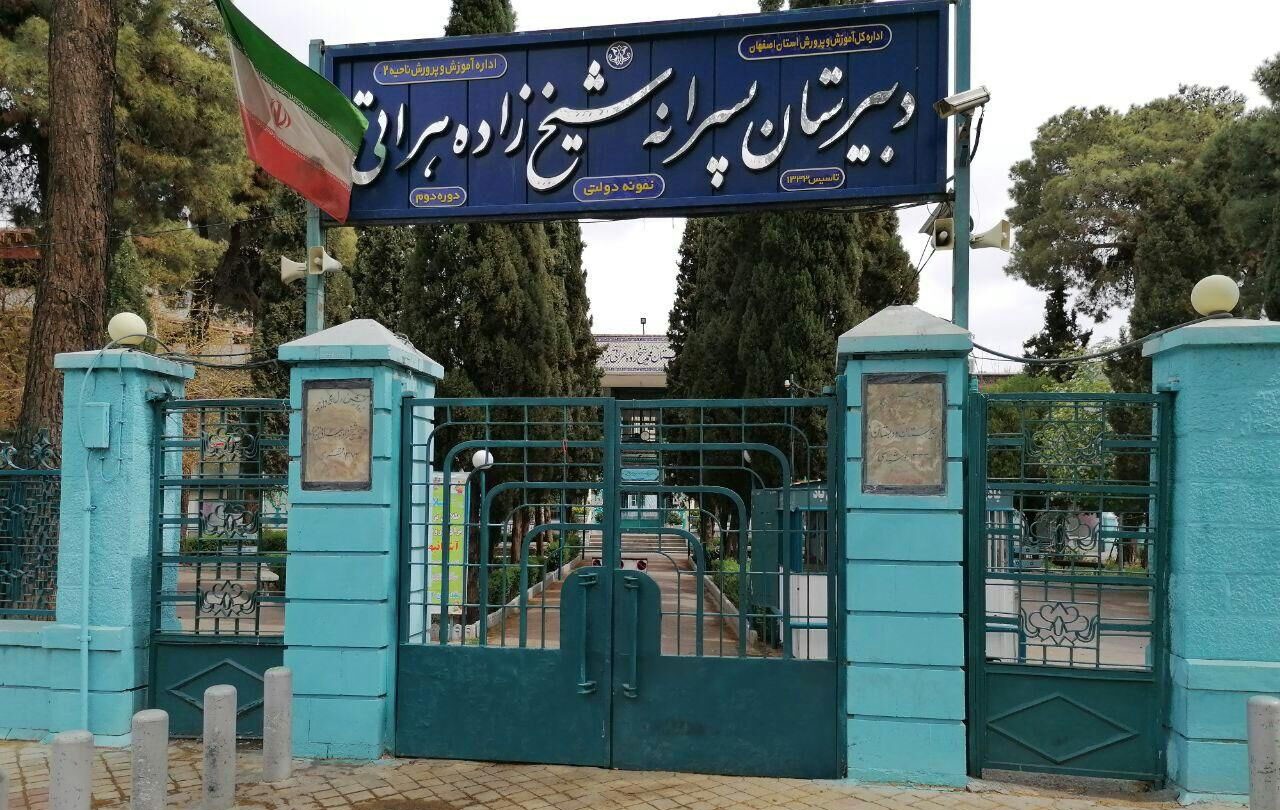
My eldest child was an exceptional student. When I tried to enrol him in a school suited to his ability, I was told they do not accept foreign-national pupils. Despite all his effort, he slowly lost hope of continuing his education. Today I grieve that I could not give him the chance to go to university.
My second child’s experience was more painful. At school something bitter and damaging happened to him. I complained to the school’s officials and to the authorities above them, but I saw no effective follow-up. I changed his school, but the effects did not go away. His grades fell. He no longer wanted to go to school. He had trouble making friends and getting along with children his age. He grew withdrawn and restless, and sometimes got into fights. Afterwards, pupils and people around him mocked him.
It is very hard to watch a child struggle with anxiety and loneliness when he should be happy and playing. His mental health has been harmed, and because of our money problems we have not been able to get him the professional psychological support he needs.
Sometimes my children have heard words that no child should hear, among them “You are Afghan” and “You are dirty.” To the person who says them they may be only a few words. To a child who wants to be accepted, they can leave a deep wound.
I only want my children to go to school, to have friends, to play and to dream about their future, without their nationality being an excuse for humiliation or exclusion. We have valid passports and residence visas for now, but the permit does not last long, and I do not know what will happen to us when it ends. We live with the fear that our residence will not be renewed and that we will be forced to leave.
There is one more reason we cannot go back. Not long ago, my husband went to Afghanistan for a short time to deal with an identity document. While he was there, someone accused him of having belonged to the Fatemiyoun, an Afghan militia that fought in Syria. He denies it. Afterwards, a person he did not know warned him that the matter had been passed to the Taliban, that they knew where he was staying, and that he should leave at once. The same person said his fingerprints had been registered as belonging to a member of that group. We cannot check that claim, and I report it only as what this person said. Fearing for his safety, my husband left and returned to Iran. He has not been back to Afghanistan since.
We do not feel safe in Afghanistan, and in Iran I cannot be sure of a stable future. I am not asking for money. I am looking for protection and a legal and humane way to give our family safety and a future, so that we can stay together. I do not want to be separated from my husband or my children.
I do not ask the world to change our past. I only ask for a chance so that my children’s future does not look like our painful past. I want them to wake up one day without fear, to go to school, to laugh and play, and no longer to feel ashamed of being Afghan.
Is there a place in this wide world where my children can simply be children, without fear and humiliation?
What the rules promise
Iran has promised these children school more than once. It ratified the UN Convention on the Rights of the Child in 1994, with a reservation excusing it from any provision it judges to clash with Islamic law, Human Rights Watch noted. In May 2015 a decree of the Supreme Leader, Ali Khamenei, was made public. It said no Afghan child should be kept from school, even one living in Iran without papers, according to a 2017 research paper on its effects. A 2016 government directive then replaced a 2004 one that had barred undocumented children and allowed fees. By the same paper, it created a support card for undocumented children, removed the fee rules (though schools kept asking for “contribution” payments), and opened every school up to the end of secondary school, including the schools for outstanding pupils. The paper estimates that about 48,000 undocumented children gained access, on top of about 360,000 already enrolled.
Iranian law also treats schooling as a duty. A 2020 law on the protection of children and adolescents makes it a crime to prevent a child from studying through secondary school. In September 2024 the Prosecutor General, Mohammad Movahedi-Azad, told prosecutors across the country to watch over children who have dropped out, Mehr news agency reported. The instruction as reported does not mention nationality. Radio Zamaneh says the same official has admitted that denying a child school breaks this law whatever the child’s nationality, but we could not find that statement ourselves.
Where the promise breaks
The same 2017 paper found that, after the decree, many officials kept citing the old 2004 rules and that provinces applied the new ones unevenly. The pattern has returned. Since 2024 the Interior Ministry’s foreign nationals centre, not the schools, decides who may enrol, as Radio Zamaneh reports. Families need an online appointment and a referral letter from a sponsorship office. Under guidelines the Education Ministry issued in May 2026, only foreign pupils with valid papers from that centre can enrol, and only in the area named on those papers. Zan Times reported in January 2025 that schools in designated areas could give Afghan pupils only 20 percent of their places. It also reported that a school near Tehran kept four of its ten Afghan ninth-graders out over their papers, and that an education department employee told an aid-group mentor the decree had been revoked. That account comes from one outlet, with names changed.
The numbers show the result. The head of the Interior Ministry’s foreign nationals centre, Nader Yarahmadi, said, according to a 31 August 2026 report, that foreign pupils had fallen from about 600,000 to about 320,000, and that nearly 1.8 million undocumented migrants were deported last year. A Shafaqna report on the first day of this school year quoted an Education Ministry spokesman saying more than 200,000 foreign pupils had registered and that all of them can register in public schools. Families told Shafaqna that referral letters went only to children who had been in school the year before.
Officials give several reasons. After the June 2025 war with Israel, Iranian media reported arrests of Afghans and others on spying charges, and state television aired “confessions” from detained Afghans whose authenticity could not be verified, Rudaw reported. Money and space matter too. The Stimson Center cites an Interior Ministry official’s figure of 42 million tomans a year per pupil, which it converts to about $1,000, and says some Tehran schools have classes of more than 50 children, nearly half of them Afghan. Behind these sits fear at the school gate. A Zan Times investigation quoted a principal who turned away a child with “mixed” papers because inspectors later criticise schools that admit them. The risk falls on the principal, not on the official who promised access, and a principal can avoid it by saying no.
That may explain why this autumn’s statements have not settled the matter. On 6 September, Amirollah Shamghadri, a provincial deputy governor for security, said no foreign child should be kept out of school over residency or paperwork problems, Negar reported. In the same remarks he said unlicensed community schools must not operate. Nine days later Seyed Jafar Seyedabadi, head of the foreign nationals office in the same province, said children with defective papers can continue if at least one parent has legal residence, Shahrara News reported. On 4 October, Didpress reported, Yarahmadi said children can enrol with incomplete papers if their parents hold valid residence permits, and that the children’s papers can be completed during the year. The condition is that a parent holds valid residence papers, so it does not help a family without any. The same one-parent rule was reported in September 2025, when principals still refused such children. We found no count of children admitted under the new rule.
Then there is what happens inside the classroom. Zan Times quoted a ninth-grade Afghan girl near Tehran describing years of insults and beatings from classmates, and a principal accused of blaming Afghan pupils in racist quarrels. In October 2025 a video showed a teacher repeatedly telling an Afghan pupil that Iran was not his home. A member of parliament’s education committee confirmed the teacher was dismissed, and the Education Ministry said it took disciplinary action and that every pupil is entitled to respectful treatment, Khaama Press reported. Iranian newspapers had reported abuse of Afghan schoolchildren as far back as 2016. UNHCR’s April 2026 overview, drawing on consultations and a helpline in March, describes children in nine provinces with sleep problems, isolation from missing school, difficulty concentrating and emotional withdrawal. The agency says those findings are not statistically representative. They describe the same kind of harm she reports for one of her children.
What would close the gap? The Stimson Center urges simpler papers so that every refugee child is enrolled automatically, schools that run two shifts a day in crowded areas, and help with school costs. The prosecutor general’s instruction is another tool already in hand. We have not contacted any official about her case, because she asked us not to contact third parties. Everything here comes from public statements and reporting. Officials have now said in public that no child should lose school over papers. Whether the door opens for her children will show whether those words reach the schools.
Comments
Every comment is read by a person before it appears, so yours will not show straight away. We publish comments that are civil and on the subject. To report a mistake in the piece, use the corrections page, so it is fixed in the piece itself.