Some Houston voters left “I just voted” stickers at a memorial to Lorenzo Salgado Araujo, Democracy Now reported on Wednesday. Salgado Araujo, a Mexican national, was shot and killed by an immigration officer on 7 July during a vehicle stop in Houston, according to Al Jazeera. The Department of Homeland Security says he ignored commands, rammed an Immigration and Customs Enforcement (ICE) vehicle and tried to run over an officer. His son told Telemundo Houston that his father was out looking for workers to hire. Rep. Sylvia Garcia, a Houston Democrat, has asked for an independent investigation.
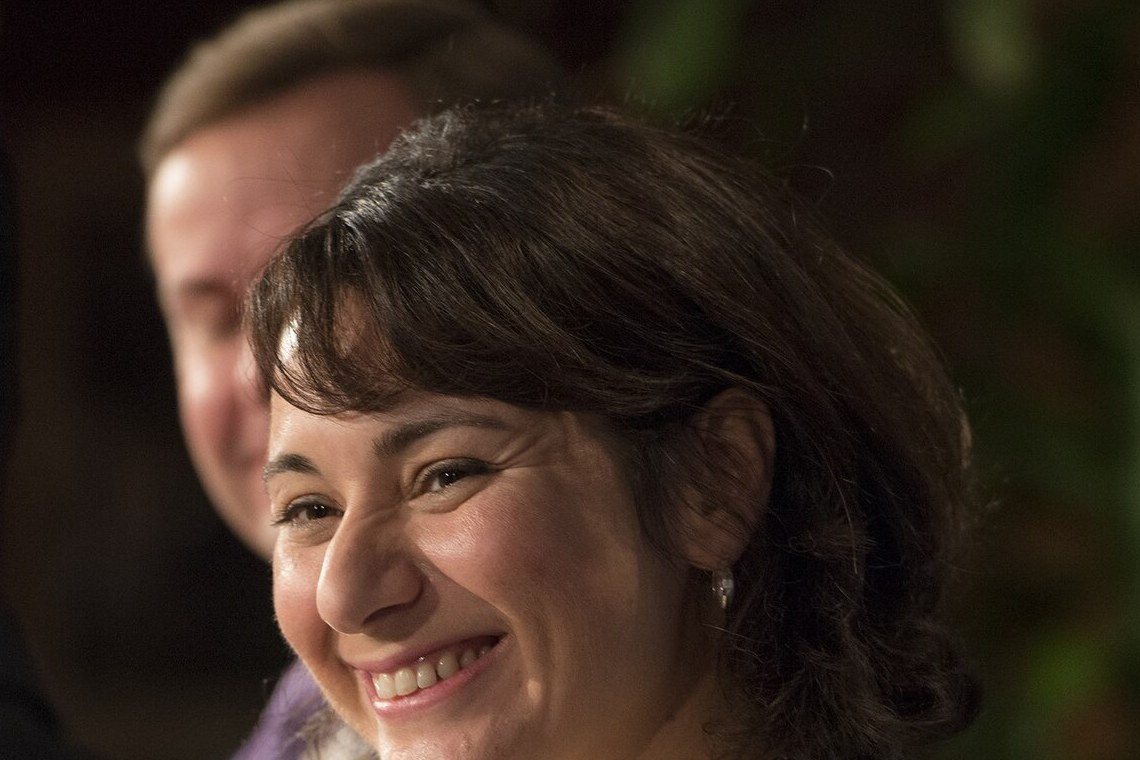
On Tuesday, Texas elected Gina Hinojosa governor. NBC News has her at 5,230,929 votes to Gov. Greg Abbott’s 4,524,955, 52.8 percent to 45.7, a margin of about 706,000 with 99 percent of the expected vote counted on Thursday morning. She is, according to Governing and Democracy Now, the first Latina governor in the state’s history, and she was born in Brownsville, the Texas Tribune reports. Nobody can say how many of her 5.2 million voters were thinking about Salgado Araujo. The exit polls can say how many were thinking about ICE, and the answer is less tidy than either party’s version.
Our argument is that Latino voters in Texas swung hardest in border counties that Donald Trump carried in 2024, and that anger at immigration enforcement was a real part of it, but not the main engine. Voters named the economy first, and the same poll shows that voters who put enforcement first stayed with Abbott.
The map
Start with the counties along the border, where NBC compares this year’s governor’s race with the 2024 presidential vote. Starr County, on the Rio Grande, went from Trump by 16 points to Hinojosa by 49, a swing of 65 points. Zapata County went from Trump by 22 to Hinojosa by 32. Maverick County went from Trump by 18 to Hinojosa by 35. Hidalgo County, the largest in the Rio Grande Valley, went from Trump by 3 to Hinojosa by 42, with 70.5 percent of the vote. Cameron County, which includes her hometown, went from Trump by 6 to Hinojosa by 35. Webb County, which includes Laredo, went from Trump by 2 to Hinojosa by 40.
The whole state moved 20.8 points toward Democrats compared with 2024, NBC calculates. So the border moved far faster than Texas did as a whole. The congressional map shows the same thing. Democrat Bobby Pulido took the 15th District, which runs through the Valley, with 62.3 percent of the vote, flipping a seat held by Republican Rep. Monica De La Cruz, a move of 42 points toward Democrats from 2024, García Bedolla writes in Time. Democrat Katy Padilla Stout flipped the 23rd District in West Texas. Democrats Henry Cuellar, in the 28th, and Vicente Gonzalez, in the 34th, won with 65.8 and 55.6 percent. Democrat James Talarico won the Senate seat over Ken Paxton, 55.1 percent to 43.0.
What voters said
NBC’s Texas exit poll, a survey of voters as they leave polling places, puts Latino voters at 24 percent of the people who voted, and they went for Hinojosa 65 percent to 33. Latino men backed her 59 to 40 and Latino women 70 to 28. White voters, 55 percent of the electorate, went for Abbott 59 to 40, so Latino voters did not carry her alone. She also won voters under 45 by 68 to 30 and independents by 59 to 38. What set the Latino vote apart is where it came from: it was the group that had moved most toward Trump, and the border counties are where it moved back.
On ICE, Texas voters disapproved of how the agency is doing its job by 58 percent to 41, and 49 percent said they disapprove strongly. NBC did not publish that question for Latino voters in Texas alone, but its national poll of Hispanic voters did: 69 percent disapproved of ICE, and 71 percent disapproved of Trump’s job performance. Hispanic voters nationally backed the Democratic House candidate 64 percent to 34. Mike Siegel, an Austin city councilor and founder of Ground Game Texas, a progressive organizing group, told Democracy Now that young Latino voters in the Valley “completely flipped the narrative,” driven by the economy and anger at ICE’s conduct. That is his account, not a finding, though NBC does show Texas voters aged 18 to 29 voting 77 percent for Hinojosa.
What the poll does not say
Here the story gets harder. Asked which issue mattered most, Texas voters chose the economy first, at 40 percent, and they split 54 for Hinojosa and 44 for Abbott. The state of democracy came second, at 29 percent, and those voters went 72 percent for Hinojosa, and the poll does not say what they meant by it, so we do not explain it here. Immigration was the top issue for 15 percent, and those voters went 84 percent for Abbott. The voters who disapproved of ICE did not necessarily rank it first, and the ones who did rank it first were more likely to be Abbott voters.
Among Hispanic voters nationally, the order was the same: 45 percent named the economy as the top issue and 26 percent the state of democracy, while 15 percent named immigration, and those voters leaned Republican 61 to 37. About six in ten called the cost of living crucial to their vote, and they backed Democrats 70 to 27. In Texas, 72 percent of voters rated the economy not so good or poor, and those voters went for Hinojosa 70 to 28. Our reading is that ICE gave the move its anger and the cost of living gave it its size. The background is in a Time essay by Lisa García Bedolla, a University of California, Berkeley professor and author of a book on Latino politics. She cites Equis Research, which found that Latinos shifted 16 points toward Trump from 2016 to 2024, more than any other racial group. She also cites a Pew survey from October 2025, in which 52 percent of Latino respondents said they worry a lot or some that they, a relative or a close friend might be deported, and 59 percent had seen or heard of ICE raids in their communities in the past six months. Voters who moved toward Trump over prices and then recoiled at how his government treated their neighbors would fit all of those numbers. The poll cannot tell us whether that describes the same people.
What she has promised
Siegel told Democracy Now that Abbott made Texas a “testing ground” for federal immigration enforcement through Operation Lone Star, the state’s border-security program, and state police cooperation with ICE, and that Hinojosa could end that cooperation. He described it as his hope. We did not find her making that commitment. What Governing reports her promising is a “populist agenda”: saving public schools and putting money in voters’ pockets. The poll suggests the voters who sent her to Austin want both, and when she takes office she will be judged on which one she moves first.
Two years ago the Rio Grande Valley was where Republicans showed their gains with Latino voters. On Tuesday it was where Democrats showed theirs. Starr County moved 65 points in two years, and nobody in Austin should assume it has stopped moving.


Comments
Every comment is read by a person before it appears, so yours will not show straight away. We publish comments that are civil and on the subject. To report a mistake in the piece, use the corrections page, so it is fixed in the piece itself.