Editor’s Note: Bobby Pham wrote this argument and approved the final text. I checked every figure, date and quotation against its source, corrected the attributions that differed, and linked the originals. Reuters’s account rests on unnamed officials, and the piece says so. Ismail Abukar, editor
At 10:50 on the night of Tuesday 27 October, two days after he lost Brazil’s presidential runoff, Flávio Bolsonaro crossed a bridge into northern Argentina with his wife and their two daughters, according to Argentine authorities. At 11:30 they boarded a chartered plane. By the next day they were in the United States. A Brazilian Supreme Court justice had just ordered him to hand in his passport in a money-laundering investigation, and Reuters described the departure as a last-second decision. Reuters reported that a US official said Secretary of State Marco Rubio had recommended admitting the family and President Trump had signed off. It also reported that US authorities granted humanitarian parole, a temporary permit to enter the United States, at the border, and that Jason Miller, a Trump adviser close to the Bolsonaros, helped arrange the flight from Argentina, according to a person familiar with the matter.
That is a striking end for a candidate Washington is reported to have spent a year trying to elect. The question I want to examine is not whether the United States preferred Flávio to Luiz Inácio Lula da Silva. Governments have preferences, and they keep closer ties with foreign politicians whose policies they like. The question is whether American state power, meaning diplomatic access, sanctions, tariffs, security designations and immigration decisions, was used selectively to change the balance of Brazil’s domestic politics. If the reporting is accurate, that would be political intervention even if it fell short of a coup or of controlling the vote. My conclusion is measured. The public record supports serious questions about selective American pressure. It does not show that Washington controlled the election, caused Flávio’s defeat, or organised every step of his departure.
What Reuters reported, and what it could not show
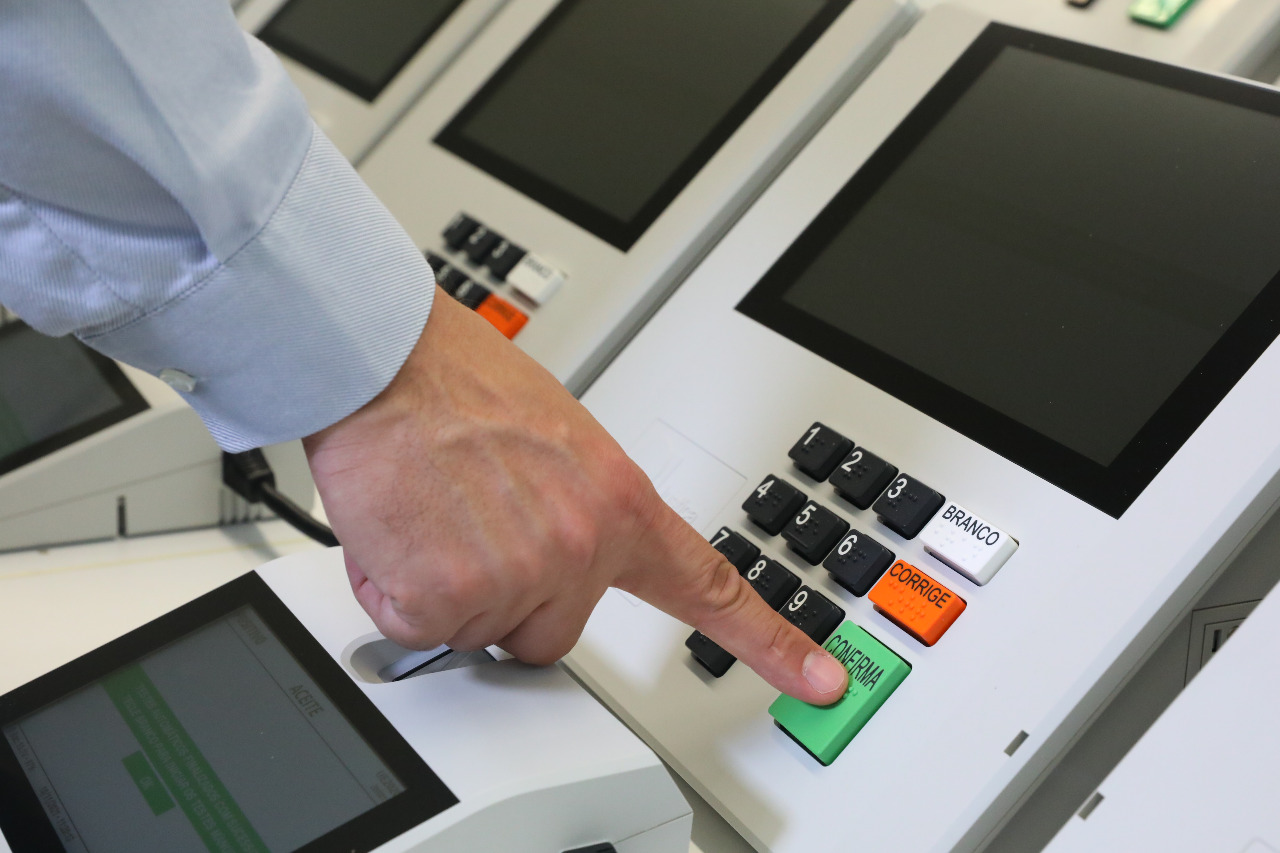
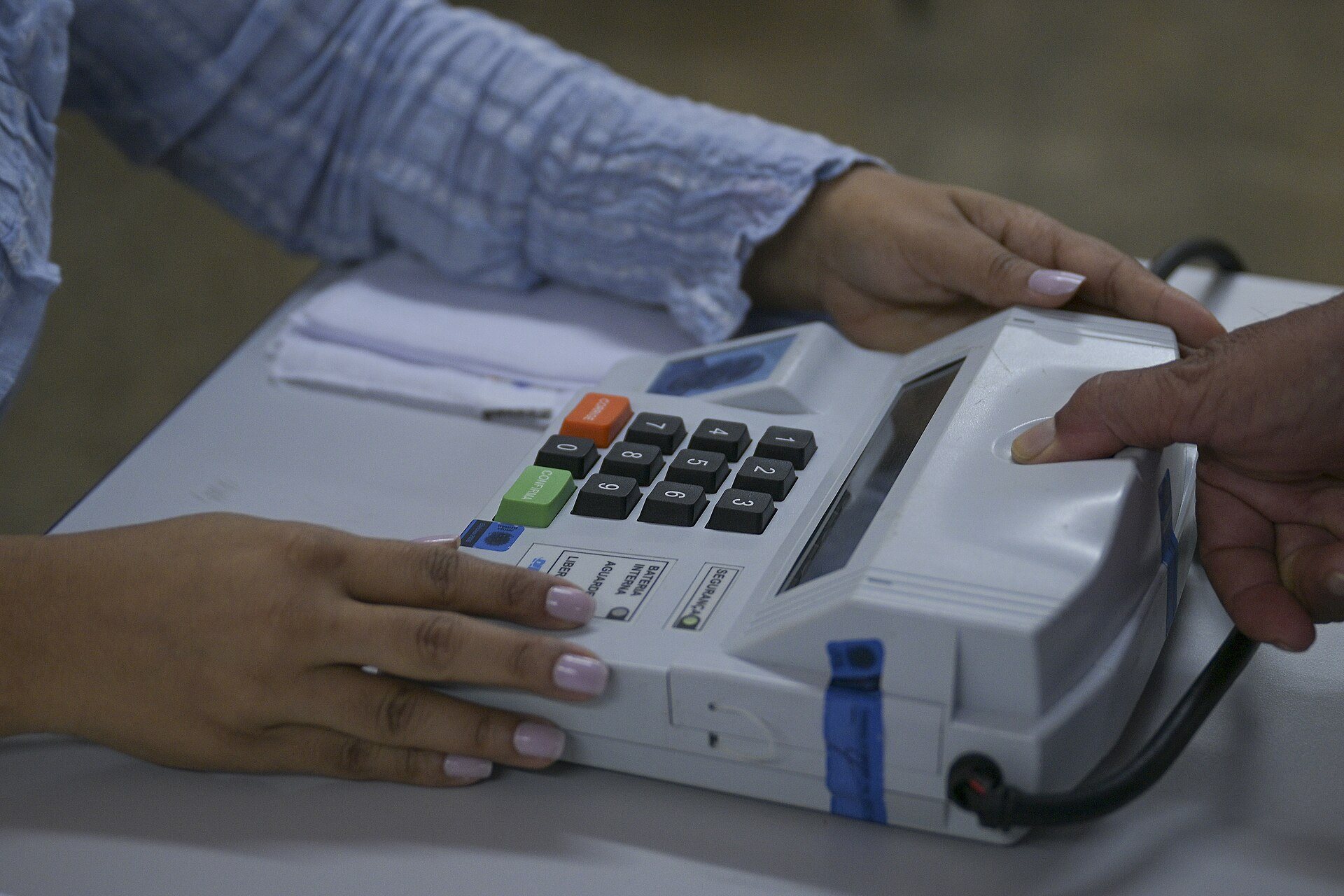
The result is not in doubt. Brazil’s electoral court announced that Lula won the 25 October runoff with 64,256,232 votes, or 51.79 percent, against 59,826,041 for Flávio. The day before the vote, Reuters published an investigation based on ten current and former US officials. It named two political appointees at the State Department who reportedly had wide latitude over Brazil policy, Darren Beattie and Ricardo Pita. According to three sources, they told American diplomats that it was US policy to restore Jair Bolsonaro as Brazil’s leader, even though he is barred from office for plotting a coup. After he received a 27-year sentence in September 2025, they reportedly shifted to his son and told embassy staff not to engage other conservative contenders who could challenge Flávio.
That last instruction matters more than it looks, because diplomatic attention is political capital. A meeting with an ambassador or a senior official tells a candidate’s voters that he has powerful friends abroad. If diplomats were told to freeze out other centre-right figures, that would not stop those rivals from campaigning. It could narrow their access to Washington and signal which faction was the favoured partner. That is not deciding an election. It is trying to shape the field the election is held on.
Reuters also reported that the Bolsonaro family lobbied in early 2025 for Global Magnitsky sanctions, a US tool for penalising foreign officials accused of corruption or human-rights abuses, against Alexandre de Moraes, the Supreme Court justice who oversaw Jair Bolsonaro’s trial. A former official said Beattie phoned the Treasury’s sanctions office to press for them, and that Treasury Secretary Scott Bessent did not oppose. The sanctions were announced in July 2025 and Moraes was removed from the list in December without an official explanation. On the gangs, Reuters said Pita asked State Department sanctions officials to explore terrorist designations, a legal label that lets Washington freeze assets and prosecute anyone who supports the groups, against Brazilian criminal groups. In May 2026 Flávio met Beattie and Deputy Secretary of State Christopher Landau in Washington to press for designating the PCC and Comando Vermelho, and the State Department announced the designations the next day.
The limits of that reporting are as important as its content. Reuters could not determine how much influence Pita or Beattie had over the designations, or whether the two men acted on orders from the White House or from Rubio. The White House declined to comment. State Department spokesman Tommy Pigott did not answer questions about the officials or specific measures, and said American actions against narco-traffickers and to protect free speech defend Americans, and that Brazilians have the right to choose their leaders. The account rests on unnamed officials, not on a published directive.
It also does not describe a single master plan. Trump said the vote looked “rigged,” then told reporters on Monday 26 October, “I like Lula, I get along with him very well.” Reuters reported that a US official and another person familiar said the administration does not plan to back Flávio’s claim to be Brazil’s rightful leader, though Trump could change his mind. The Congressional Research Service, Congress’s in-house research arm, noted that as of 28 October the administration had not recognised the result.
The tools, and how they backfired
Brazil gives Washington reasons to care who governs it. It is the largest country in South America by population and economy, holds large farming, energy and mineral resources, belongs to the BRICS group of emerging economies, and trades heavily with China. Reuters noted before the vote that tariffs and critical minerals were at stake. I read American interest as three overlapping aims: regional influence, less dependence on China for critical supplies, and a government more open to American security and commercial priorities. None of that is improper in itself. The danger comes when tools meant for bargaining between two governments are used to reward one faction or punish another in the middle of an election.
Each tool works differently. Diplomatic access lifts a favourite without a public endorsement. Tariffs impose costs on companies and regions, and become a form of pressure when tied, openly or not, to a government’s political or judicial decisions. The tariffs of up to 50 percent that arrived in July 2025, during Jair Bolsonaro’s trial, are the clearest example. Reuters could not determine whether Beattie or Pita were involved in them, but analysts told it that they backfired: the court went ahead with the trial, the tariffs lifted Lula in the polls, and Washington later watered them down after pushback from firms such as JBS. A second round of 25 percent followed in July 2026, which the US justified with a yearlong trade investigation covering Brazil’s Pix instant-payment system, an 18 percent tariff on American ethanol and the enforcement of deforestation laws. Flávio himself asked Washington to delay them until after the election, warning they would hand Lula “precisely the political victory it has been engineering,” and Lula called that request treason, Al Jazeera reported. Analysts quoted there said Brazilians strongly dislike US tariffs and that even right-leaning voters resent foreign interference.
Of the other tools, a terrorism designation may have a real law-enforcement rationale, but it also widens American legal reach and creates diplomatic leverage, so the test is its timing and whether similar cases were treated the same way. Admitting a defeated candidate can be a lawful immigration decision. It reads differently when the same administration is saying the election looked rigged, and it is not proof that Washington organised the trip. Flávio also had his own reasons to leave, because a court had just ordered him to give up his passport.
Not everyone who watched this from inside is persuaded it was ordinary diplomacy. Orna Blum led the State Department’s Brazil and Southern Cone office until she retired last year in opposition to the administration. She told Reuters that when foreign policy is used to pressure a democracy over a political ally’s legal fate, “the line between diplomacy and political intervention has been crossed.” She is a critic, and her view is not a finding. But it comes from someone who knew how the department handles Brazil.
Earlier cases, and what would settle it
History shows how far such pressure has gone and where the record stops. In Iran, a declassified CIA memorandum of 8 March 1954 says the President, the Secretary of State and the Director of Central Intelligence approved a plan on 11 July 1953 to remove Prime Minister Mohammad Mosaddegh and install a pro-Western government under the Shah. It describes direct pressure on the Shah, a propaganda campaign, and work to unite the factions opposed to Mosaddegh. That is documentary proof of an American-backed overthrow, carried out in secret.
Brazil’s own 1964 coup is subtler. The National Security Archive records that President Johnson authorised “Operation Brother Sam,” a plan to supply arms, ammunition and gasoline and, if needed, combat troops. Ambassador Lincoln Gordon had proposed covert deliveries and a naval task force off the coast, and two days later asked for a contingency commitment to open military intervention. The coup then moved faster than any help could. A White House memorandum of 1 April recorded Gordon’s report that the coup was “95% over” and that the contingency planning for supplies “were not necessary,” while the Library of Congress guide says the extra support proved unnecessary. The honest reading is that Washington prepared and signalled support, not that American troops carried out the coup. It still shows that policymakers were ready to back an unconstitutional change of power when they thought their interests were threatened.
In Chile, a memorandum from the CIA director dated 16 September 1973 says US policy since Allende’s inauguration had been “to maintain maximum covert pressure to prevent the Allende regime’s consolidation.” The 40 Committee, the US body that approved covert operations, had approved $6,476,166 since January 1971 for opposition parties, media and private-sector groups. It approved another million dollars on 20 August 1973. The same memo says the CIA “played no direct role” in the events that led to the military government. Money and pressure, yes. Proof of a hand on the trigger, no.
These cases cover a range of tools: covert action in Iran, contingency support for local forces in Brazil, funding and sustained pressure in Chile. The 2026 reporting describes something different, closer to picking favourites, economic pressure, sanctions and political signals than to a secret operation. The tools differ, but the question is the same each time: were they used to advance a bilateral interest, or to change another country’s internal balance of power? History gives context. It does not prove present intent, and administrations, laws and oversight have changed.
The voters also refused to behave like instruments. The Field’s count of the runoff found that Lula added about 10.3 million votes between the rounds and Flávio about 3.7 million, with a larger electorate accounting for much of the gain. Outside pressure can help an incumbent who is able to frame an election as a defence of national independence. It can unite divided voters, lower trust in the foreign actor and make later cooperation harder.
To reach a firm finding, investigators would need the embassy instructions, the messages between the State Department and the White House, the records behind the sanctions and the tariffs, and the legal review of the terrorism designation. They would also need a reliable account of how Flávio left Brazil and was admitted to the United States. The Congressional Research Service already notes that some members of Congress have questioned what role the administration played in his departure. Brazilian and American legislators could demand all of it, and courts could test what they receive.
The United States is entitled to pursue its interests in Brazil. The issue is whether it used the instruments of state power to favour one side in Brazil’s democratic contest and to pressure institutions exercising sovereign authority. If it did, that would be a serious breach of the spirit of non-interference, whether or not it worked. Flávio Bolsonaro is now in Miami, and the election he lost was decided by Brazilians. Whether Washington tried to decide it for them is the question that remains.
Comments
Every comment is read by a person before it appears, so yours will not show straight away. We publish comments that are civil and on the subject. To report a mistake in the piece, use the corrections page, so it is fixed in the piece itself.