
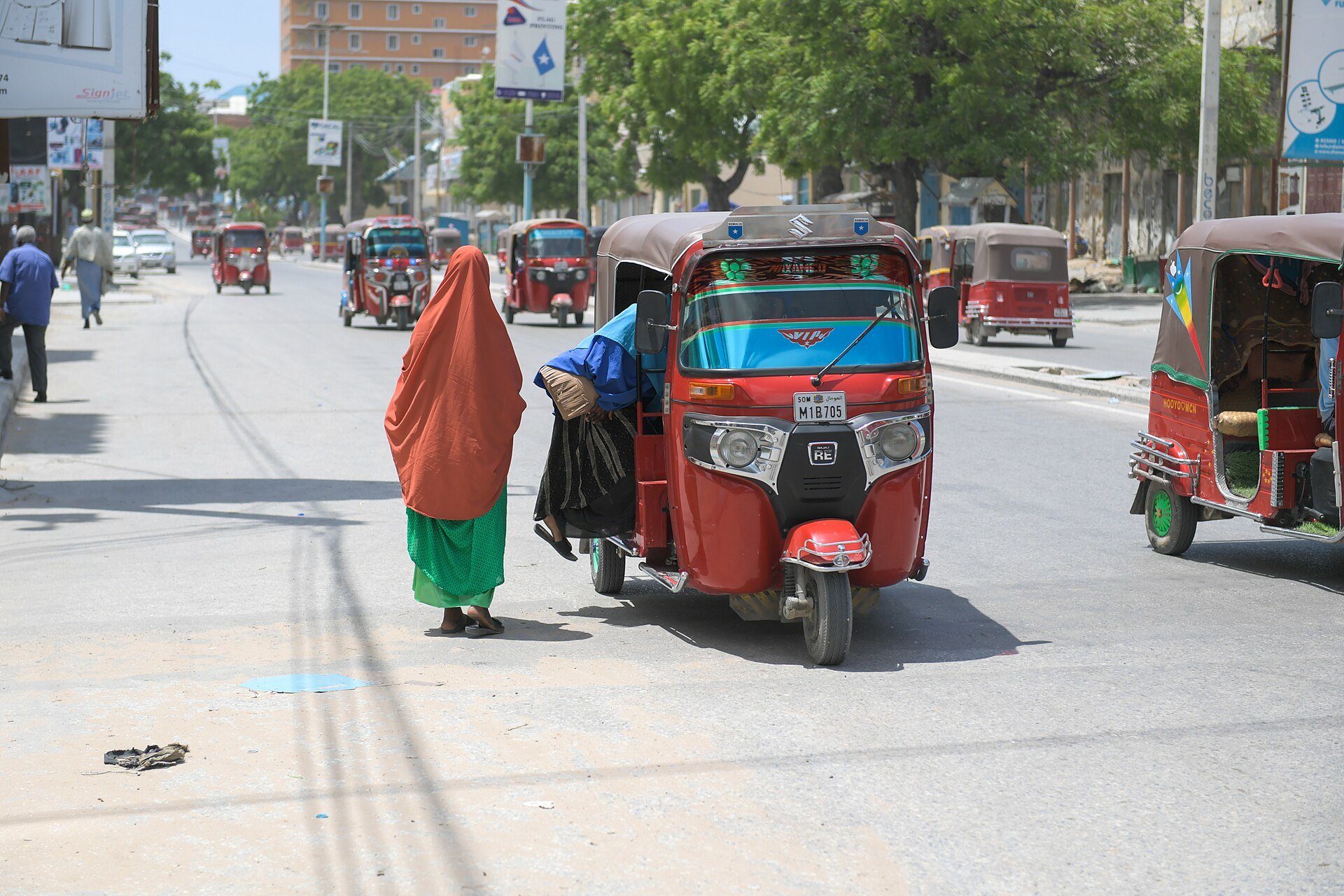
The kiosk stays open all night, and so do the men who come to it.
That is how one owner in the Mogadishu districts of Waberi and Hamar Jajab described his nights to me. Plainclothes officers of Somalia’s National Intelligence and Security Agency (NISA) came after dark, he said, and took cigarettes, shisha tobacco and shisha leaves. They said they would pay tomorrow. Tomorrow never came. When he finally asked to be paid, they threatened him and slapped him.
Owners told me they call the police, and nothing happens. Their explanation is that the police know these men are NISA, and know there are many of them in those districts, and will not risk a shootout they would lose. So this owner called a friend instead. The friend knew a soldier who works around the checkpoints. The soldier came to the kiosk to talk to the NISA men, an argument turned into a fight, and then the two groups shot at each other. Some NISA men and some soldiers were hurt. I do not know how badly. The owners told me the NISA men fear the military because it has heavy weapons. This happened in 2025, during the months I was collecting my data, and I give no exact date or street to protect him.
I have no second source for that shootout. It matters now because the government says attacks in Mogadishu have fallen about 87 percent since 2023, and kiosk owners describe a part of the security system that, they say, answers to no one outside NISA.
The Nabad Sugid are NISA’s plainclothes officers. They work in Mogadishu’s markets, streets and intersections, and they are meant to protect the city from the armed group Al-Shabaab.
I have been counting since 2020. Drawing on my own notes, my talks with drivers and the daily news, I counted nearly 2,000 incidents between 2020 and 2026 in which tuktuk drivers were shot, injured, beaten or intimidated by security forces. The incidents come from districts across Mogadishu, but most are in the central ones: Waberi, Howlwadag, Hamar Jajab, Hodan, Warta Nabada, Wadajir, Dharkenley, Boondheere, Hamar Weyne, Shangaani, Abdi Asiis and Shibis. That count covers every security force on the city’s roads, not only NISA. I cannot say how many were NISA, because NISA works differently from the police and the army and is rarely named in the news. The true number is probably higher. Most incidents are never reported, because the people who suffer them are afraid.
According to my interviews, the Nabad Sugid are young, mostly between 21 and 35. They wear ordinary clothes and carry pistols. Kiosk owners told me they have no vehicles and no radios, because they are meant to act as spies.
Each district has a NISA commander who answers neither to the district police nor to the district administration, and hundreds of operatives, I was told. Some, my sources said, work the big markets: Bakaaro, Hamar Weyne, Madiino and Suuq Bacaad. Some work main roads, including Maka Al-Mukarama, Sayidka Street, 21 November, Via Liberia and Via Roma. Others hold intersections, among them Dabka, KM4, Shaqaalaha, Taleeh, Zoobe and Haaji Baasto. One kind of unit guards the security cameras at intersections. Others man checkpoints.
What drivers, kiosk owners and residents told me
Drivers told me they meet security forces every hour, at checkpoints and on the road, and that these meetings are dangerous. They said they are beaten, intimidated and shot. The count bears that out: it includes drivers shot or injured by security forces, some of them fatally. I have not split the incidents by trigger or by force. The triggers I know of are disputes between an officer and a driver and, in other cases, a driver refusing to pay a bribe. Tuktuk drivers are the most exposed group, in my view, because they are on the road every day and pass through checkpoints run by every security force in the city, so they meet armed men more often than almost anyone.
The other abuses were described to me in interviews, and I did not count them. They fall into three groups. The first is robbery: operatives rob shops and people walking home at night, and I was told some victims were killed for refusing to hand over their belongings. The second is kiosk incidents, which means taking goods without paying and threatening the owner who asks for the money. The third is illegal taxes: forcing money out of small traders without showing identification, then arresting, beating or threatening those who refuse, and disrupting markets.
I was also told the abuse is not limited to NISA. Residents and sources said police and soldiers do the same, and several of the incidents I counted involve them. This article is about the Nabad Sugid.
Operatives also use their position in personal quarrels, my interviewees said. A brother, cousin or friend in the Nabad Sugid can frighten someone who has fallen out with you, using what residents call the government shirt, the power that comes with working for the state.
What I do not know
I do not know how many of the nearly 2,000 incidents involved a death, or how many involved NISA, because I have not split them. I do not know how many of the military court cases involved NISA alone, or how many ended in a conviction. I also do not know whether NISA has investigated any of these cases internally, or whether the abuse has changed in 2026. As of 17 November I found no published report of a NISA officer charged over robbing a kiosk, taking money from a trader or beating a driver, and NISA did not answer my questions. The courts do hear some cases against armed men. In September, FTL Somalia reported that a military court had sentenced a former soldier to death for shooting dead a tuktuk driver, Yusuf Ahmed Abdi, in Garsabaaleey in July. On 15 November it reported that a military court had sentenced a NISA private to death for killing a man in a family dispute. Neither case was about the abuses described here.
The check that is missing
Moving an accused operative to another street would not be discipline. NISA should investigate the accused and hand them to prosecutors. Someone outside NISA should have the power to review complaints against the Nabad Sugid. In February 2023, while parliament was weighing the NISA law, Human Rights Watch said the bill made no provision for people to file complaints against NISA officials. I have not checked whether the law as passed fixed that. Police need clear authority to act when a NISA officer commits a crime. Any partner that funds NISA can ask for these changes as a condition of support.
A second report looks at how the Nabad Sugid have fared against the Amniyat, Al-Shabaab’s intelligence wing, and what has kept Mogadishu safer.
Comments
Every comment is read by a person before it appears, so yours will not show straight away. We publish comments that are civil and on the subject. To report a mistake in the piece, use the corrections page, so it is fixed in the piece itself.