Editor’s Note: Nine years after the truck bombing at the Zoobe junction killed more than 500 people in Mogadishu, the head of Somalia’s military trial court has publicly described how Al-Shabaab killed his father, which he says was meant to stop a trial linked to the attack. Abdulkadir Isse, an independent journalist based in Nairobi, reports Judge Hassan Ali Nur Shuute’s account, given at a national conference on 14 October. It rests on Shuute’s own words in a recording of the speech, which I watched in full, and on Somali press reports. The story attributes each claim to its source and says which parts rest on Shuute’s word alone. I edited it for length and clarity.
Ismail Abukar
The trial of the Zoobe bombing suspects
On 14 October 2026, nine years to the day after the deadliest bombing in Somalia’s history, Shuute spoke at a national conference in Mogadishu on preventing and combating extremist ideology. He chairs the country’s first-instance military court. A recording of the speech, posted by RTN Somali TV, shows the hall quiet as he talks. Garowe Online reported the speech the same day.
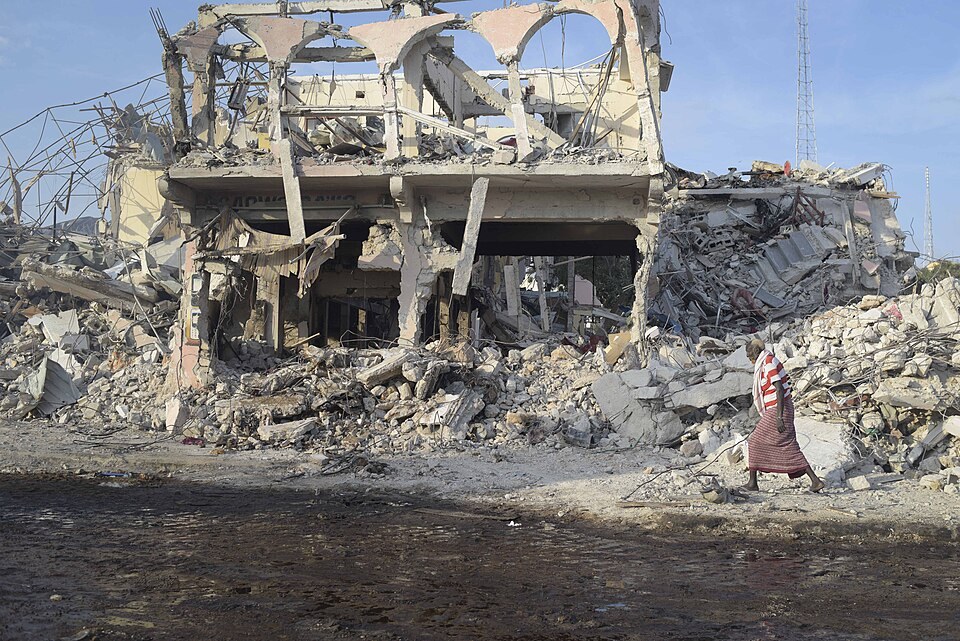
The attack happened on 14 October 2017, when a truck packed with explosives blew up at the Zoobe junction in Mogadishu and killed more than 500 people. Horseed Media reported on 1 January 2018 that the military court was trying five men over the attack, with Shuute presiding.
Shuute said the man on trial mattered to Al-Shabaab because he had once been a driver for the group’s current spokesman, and that the government had a strong case against him. The group’s spokesman is Ali Mohamed Rage, known as Ali Dheere, who has held the post since 2009, according to the Critical Threats Project, and who was still speaking for the group in September 2025, according to Kaab TV. Garowe Online’s report of the speech says the suspect was accused of directing the truck’s driver and was later linked to another vehicle bombing in Mogadishu’s Danwadaagta area. According to Shuute, Al-Shabaab first tried to deny any part in the attack. Then the trial began, and the group looked for a way to stop it.
According to Shuute, the first idea was to go after him, but the court chairman was too well guarded. He said an informant inside Al-Shabaab then suggested an easier target: his father, who lived openly in the Dharkenley district of Mogadishu and kept a daily routine that anyone watching could learn.
Shift to a soft target
On Tuesday evening, 2 January 2018, gunmen entered the family home near the Bo’le market and shot Ali Nur Shuute, who died of his wounds. Garowe Online reported the killing that night, blamed it on Al-Shabaab, and said the motive was unclear. Radio Risaala reported it the same day and said security forces took him out wounded and he died on the way.
Shuute said a neighbor phoned him while it was happening to say that armed men were inside the house. He said the first hearing in the Zoobe case was held in December 2017 and that the court then set the next one for Thursday, 4 January 2018. Horseed Media had reported a hearing date on 1 January, the day before the killing, quoting the presiding judge. Shuute told the conference that he buried his father and went to the hearing the same day. He did not step aside from the case. He said the court learned from then on never to announce exact hearing dates in advance.
How Shuute learned the motive
Shuute said he learned the reason for the killing later, from Mohamed Haji Ahmed, known as Ilkacase, who was a defendant in a different, separate case before Shuute. According to Shuute, Ilkacase told him that the group had killed his father because he was the judge hearing the trial of an important Al-Shabaab member.
The court sentenced Ilkacase to death on 31 December 2019, and he was shot by firing squad in Mogadishu on 29 November 2020, together with two other men, Saalim Saciid Maxamed and Axmed Maxamed Haashim. Caasimada and Radio Dalsan both reported it that day. They describe the three men as having planned and carried out killings and attacks in the capital.
Those two reports do not mention Shuute’s father or the Zoobe trial. Horseed Media’s January 2018 report lists five defendants in the Zoobe trial, and Ilkacase is not among them, which fits Shuute’s account that his case was separate. Nobody besides Shuute has said publicly that Ilkacase told him why the group killed his father.
An infiltration strategy
Somali news reports have called Ilkacase a university lecturer, and he said in an interview on Gungaar TV that he had been a teacher. Shuute argued that men like him are the real danger: people with respectable jobs and official papers who can walk into government and school buildings without drawing attention. He said Al-Shabaab buys or fakes those papers by exploiting corruption and weak background checks, and then uses the access to learn the daily lives of the people it wants to reach, judges included.
What is not known
It is not known whether anyone besides Shuute can confirm what Ilkacase told him about the killing, because I could not find a public record of Ilkacase’s trial. It is also not known who the man on trial was, or whether he was one of the five men named in the January 2018 report, or who the informant Shuute describes was.
Why it matters
If Shuute’s account is right, it shows that Al-Shabaab will go to great lengths to protect people it treats as important, even a man who once drove for its spokesman. The group treats judges and their families as targets, and it will go after a relative when it cannot reach the judge himself. In this case the pressure failed. The trial went ahead, and the judge who lost his father stayed on the bench.


Comments
Every comment is read by a person before it appears, so yours will not show straight away. We publish comments that are civil and on the subject. To report a mistake in the piece, use the corrections page, so it is fixed in the piece itself.