
Editor’s Note: Manizha Sherzai reported this from Peshawar and tells it in her own words, published with her permission. I edited it for The Field: I checked every UN, Dawn and Human Rights Watch figure against its source, added the latest UN data, and told her each change. I also wrote to the Khyber Pakhtunkhwa police on 9 November for their response. They had until 5 PM Pakistan time on Thursday 12 November and had not replied by then. I will add any answer here. Ismail Abukar, editor
An Afghan shopkeeper in a Peshawar market laughed when I asked him for an interview. He was speaking Dari with another person. He said, in words to this effect: “We left our country because it was not safe and came here. Now, are you not going to let us live in peace here either?”
I also approached an elderly man who was walking through the market with his wife and asked if I could interview him about his stay in Pakistan and whether he had faced any harassment or mistreatment. He replied, in words to this effect: “Why are you involved in these things? Go and do something more suitable for you.” He appeared uncomfortable being approached by a woman. When his wife realised why I had approached them, she immediately pulled her veil over her face.
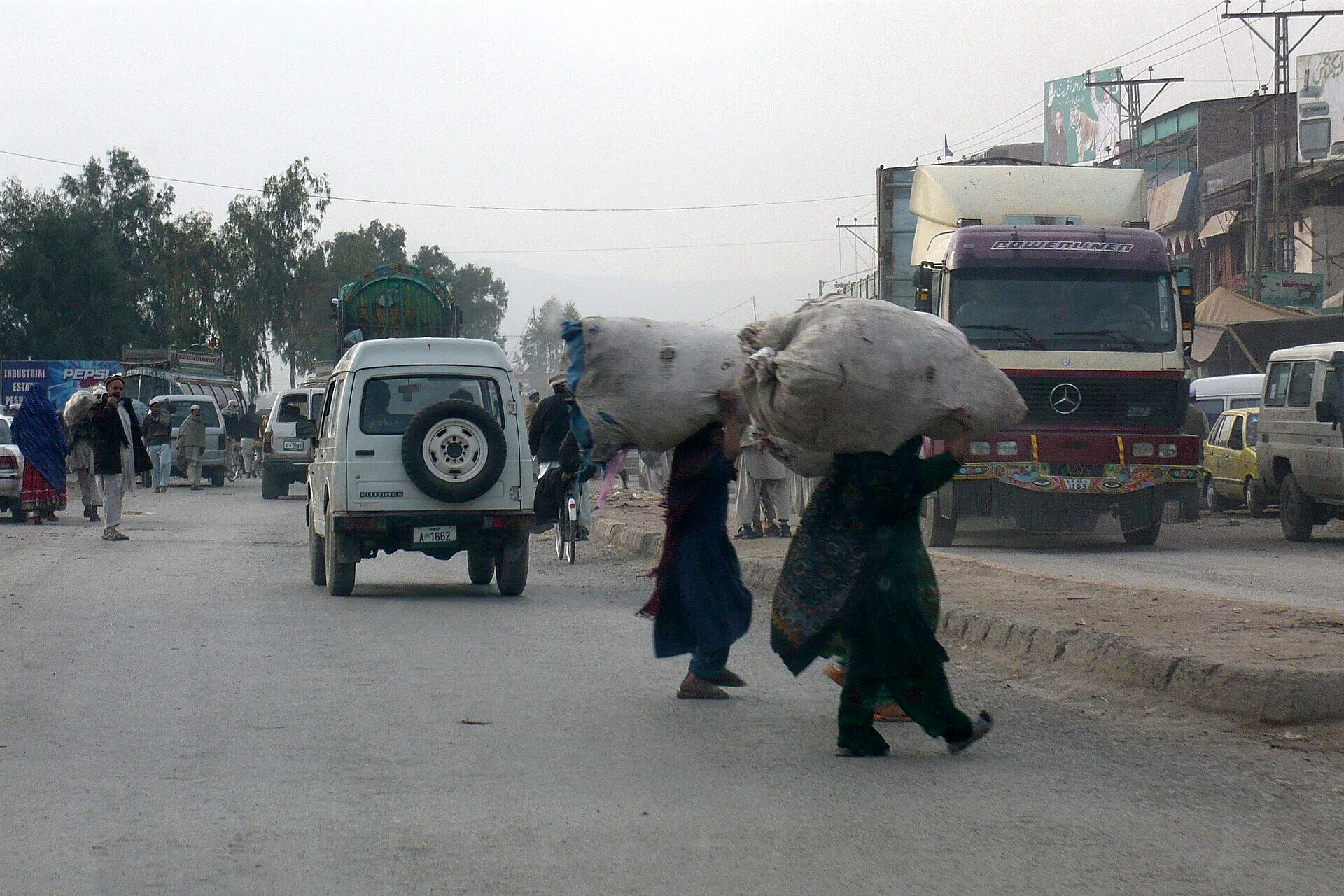
On 7 November I went to a busy market where many Afghans run shops, to understand how Afghans living in Pakistan are coping with the uncertainty over documents, arrests and deportations. I wanted to hear whether that pressure had changed the way they moved through public spaces, worked and dealt with other people. What I came away with was a laugh, a rebuke and a veil.
Many of the shopkeepers I asked did not want to talk, and no one agreed to an interview. I did not insist or pressure anyone to speak. My camera was not turned on when I approached people. I understood what the people said myself, and I have written their words as closely as I remember them.
Those small refusals sit in one of the places where Pakistan’s crackdown is heaviest. In a joint update on 5 November, the UN refugee agency (UNHCR) and the UN migration agency (IOM) counted 88,575 Afghans arrested or detained in Pakistan between 1 January and 31 October 2026. Peshawar district alone recorded 11,765 of them, the second-highest total of any district in the country after Chaghi, in Balochistan province, and about seven in ten of the arrests in Khyber Pakhtunkhwa province. The agencies say their figures, especially for undocumented Afghans, are likely too low.
I want to be careful about what the market gave me. The two remarks are what people said. The reasons below are my understanding of why others declined, except where they said so themselves. Some Afghans refused, I believe, because they were worried about their safety and did not want to be identified. Since my camera was off, I do not think it was the camera they feared, but being identified at all. With so many police around, people were anxious that speaking to the media could cause problems for them in Pakistan, or even after they returned to Afghanistan. Some people also refused to speak with me because I am a woman journalist, which I link to cultural and religious beliefs and to attitudes toward women. Tribal News Network reported in 2022 that cultural barriers are a big obstacle for women journalists in Khyber Pakhtunkhwa, and that the Peshawar Press Club has had only 19 registered female journalists since it was founded. It would be wrong to assume that everyone who declined did so for the same reason, and some may simply have preferred not to speak with a stranger or appear in a report. But in an environment where undocumented migrants fear detention, questioning and possible deportation, concerns about being identified deserve serious consideration.
What people have reason to fear
The fear has a record behind it. After border clashes between Pakistan and Afghanistan at the end of February, police across Khyber Pakhtunkhwa stepped up arrests. Peshawar police said they arrested 1,044 Afghans in the crackdown, and a local court sent hundreds to jail while their cases were heard, Dawn newspaper reported on 2 March. The same report says the magistrate on duty ordered police to release scores of arrested Afghans who held valid visas or court orders. Some of those arrested, in other words, had papers. By 4 March, The News reported, police had halted the drive until further orders: the closed border meant nobody could be deported, and ruling-party politicians had criticised the treatment of Afghans. The arrests did not end there. The UN counted 983 Afghans arrested across Pakistan in the week of 25 to 31 October alone.
Human Rights Watch said in April that it had interviewed eight Afghans in Pakistan and four who had recently returned to Afghanistan. They described door-to-door raids, arrests without warrants, and police taking phones and cash and demanding bribes for release, with those who could not pay detained and expelled. It is a small sample, and the organisation’s statement carries no reply from the Pakistani government. Pakistan says its drive targets foreigners living in the country illegally, and in February 2025 its Foreign Office called allegations of mistreatment from Kabul “misplaced”, Arab News reported. Peshawar police said those arrested had stayed without legal documents despite repeated warnings to leave, Dawn reported.
For an Afghan family living in Pakistan, uncertainty about legal status can affect everyday decisions. It can influence whether someone feels safe travelling, seeking employment, visiting public places or approaching the authorities. Human Rights Watch quotes a mother in Islamabad who said her daughter is ill and she cannot take her to hospital for fear of arrest. For women, children and people who previously worked in media, civil society or international organisations in Afghanistan, displacement can involve additional concerns about personal safety, family responsibilities and the possibility of returning to a country where their previous activities may expose them to risks.
What the numbers cannot show
The same UN update counts 822,359 Afghans who returned to Afghanistan from Pakistan between 1 January and 31 October, 87,673 of them deported. About one departure in ten is recorded as a deportation. The rest, roughly 735,000 people, are recorded as returns. But among the people who returned in the week of 25 to 31 October, fear of arrest was the main reason given by 95 percent of undocumented Afghans and holders of the Afghan Citizen Card, and by 68 percent of holders of Proof of Registration refugee cards, the update says.
A return that is recorded as a return can still be driven by fear of the police. The figures alone cannot show where one ends and the other begins. Only the people who left, and the people who stayed, can say. They are the ones least willing to speak.
That is the difficulty I met in the market. I had gone hoping to give Afghan migrants an opportunity to describe their situation in their own words. Instead, I returned without an interview. That absence of testimony should not be mistaken for an absence of hardship, and it raises an important question: how can the experiences of displaced people be documented when those who have the most to say may be the least willing to speak publicly?
Responsible reporting must recognise these limits. In my view, securing an interview or a photograph is never more important than a person’s safety. For that reason this report names no one, shows no footage, and does not name the market.
A human rights question that needs attention
Pakistan has a legitimate interest in managing migration and regulating immigration. Its interior ministry announced an “Illegal Foreigners’ Repatriation Plan” on 26 September 2023, and the government has since set deadlines for different groups of Afghans to leave. However, immigration enforcement must also respect fundamental human rights, including protection from arbitrary detention, access to due process and safeguards against forced return to situations where individuals may face serious harm. Human Rights Watch says Pakistan’s forced returns may breach its duties under the UN Convention Against Torture and the rule against sending people back to places where they face persecution or torture. UNHCR has urged Pakistan to exempt Afghans with international protection needs, and those in particularly vulnerable circumstances, from involuntary return.
If the arrests are lawful, the evidence should be easy to publish. Releasing how many of those arrested were later freed because they held valid papers, and letting independent monitors into the holding centres, would answer much of what fear now keeps unsaid.
Afghan migrants should not become invisible simply because they are afraid to speak. Their experiences deserve careful documentation, independent attention and meaningful consideration by the international community.
The question is not only how many Afghans are being detained or deported. It is also what happens to the people whose fears, uncertainty and everyday struggles remain largely unheard.
The silence of these people does not mean they have no story to tell.
Comments
Every comment is read by a person before it appears, so yours will not show straight away. We publish comments that are civil and on the subject. To report a mistake in the piece, use the corrections page, so it is fixed in the piece itself.