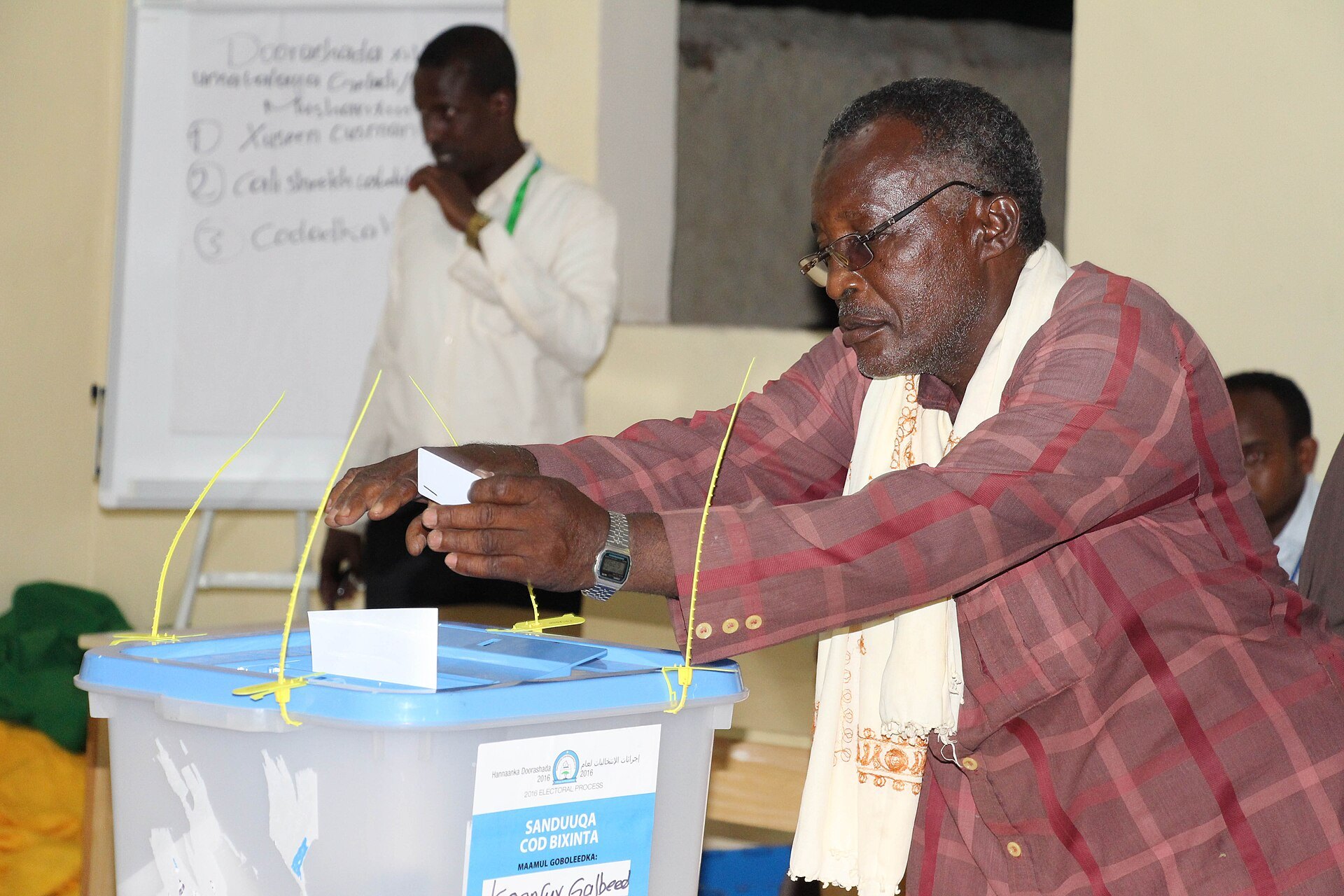
A Somali journalist who was inside the hall in Baidoa on 10 June told me that lawmakers were taking photos of the ballot paper, and that when they went out, they showed the photos to the team Madobe had in the hall. The journalist also said that a lawmaker who did not take a photo faced intimidation and blackmail.
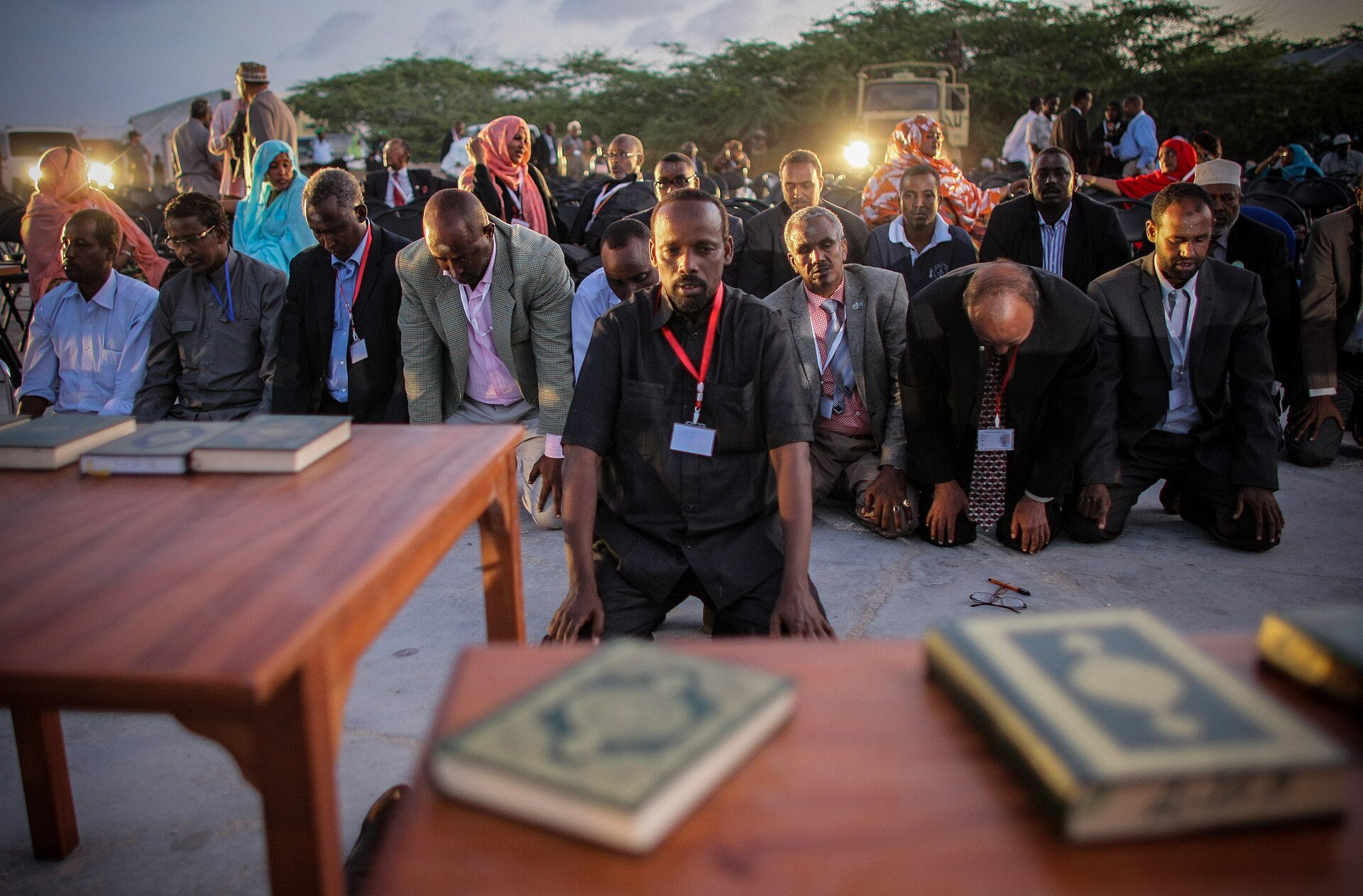
For the people inside the hall, everyone was shaking hands. Outside, hundreds of thousands of people in the displacement camps were scared of what would happen, because they knew the army that was kicked out of the city would come back and fight. They did not know what to do when the fighting broke out. Ordinary people who lived in the city were also quietly packing their bags, getting ready for a big conflict in and around Baidoa. When it started, they would flee. People who work in the camps and residents of Baidoa told me this.
That day, the ninety lawmakers in the hall chose the president of South West State. Adan Madobe, then Speaker of Somalia’s federal House of the People, won 88 of the 90 votes. Baidoa’s voters had chosen that parliament themselves, for the first time, and the president it elected was already known.
The city has been fought over three times since, and the fighting has not stopped. Somalia’s Defence Ministry said fighters loyal to Abdiaziz Laftagareen, who led South West State for more than seven years before he resigned in March, clashed with federal troops in Baidoa on 17 August. The military said it repelled another attack by his loyalists on 3 September, and on 28 September an army commander said the army had driven out thousands of his fighters after a day of heavy fighting. Laftagareen said his fighters had gone in to restore security. Doctors Without Borders (MSF) said Bay Regional Hospital received 94 wounded on 17 August, 71 on 3 September and 69 on 28 September, with four, one and three deaths recorded, and that roads to the hospitals were blocked. In mid-October his forces moved outside the city. AFP, in a report carried by Arab News on 17 October, quoted military officials and eyewitnesses saying they had taken five towns in Bay region, including Buurhakaba and Awdiinle, about 30 kilometres from Baidoa, with fighting reported only in Buurhakaba. South West’s information minister said the districts would be brought back under government control. On 3 November, Dawan reported that Madobe said security in Baidoa had improved in his first 100 days, that his government had not yet met its security goals and that some roads were still unsafe.
Before the vote, two candidates, Sharif Hassan and Jawari, said lawmakers could be asked to photograph their ballots. The electoral commission said phones and electronic devices would be banned inside the hall. On the day, Sharif Hassan said lawmakers had been told they could bring their phones in.
Earlier in June, Sharif Hassan and Jawari had said they would not take part unless Madobe resigned as Speaker. They agreed to take part after talks with representatives of the presidency in Baidoa, and Caasimada Online reported that Liibaan Axmed Hassan, the ruling party’s candidate in Galmudug, met Sharif Hassan and persuaded him to take part. Galmudug’s own election is covered in The Field’s earlier report.
Sharif Hassan later withdrew. Jawari stayed on the ballot and received one vote. The South West House has 95 seats. Of the ninety who took part, Madobe received 88. A Somali outlet wrote that the result was known in advance.
What the reform changed
Under the old system, all the power was in the hands of the elders and the delegates that the elders named or nominated. Now every ordinary citizen was voting.
The ordinary voters I spoke to, the people who were actually standing in the line, in the dust, told me that what is happening now, one person one vote, is a good thing. They are voting for their MP, and that is more important, because their MP represents them and will fight for them in the government. They said reform means they will now be 100% represented. If that does not happen, they will vote for someone else in the next election. If the MP they elected does not do his duty, they have the freedom to vote for someone who will. They said the MP will speak for the community and bring what he promised to the community. They told me, yes, this is a real change and real progress that Somalia has made.
They also told me they saw the MPs campaigning within their communities, talking to everyone and making promises about what they would change. They hope their MP will keep his campaign promises and bring fresh water to the communities he comes from or represents. That is what they said.
They told me in Somali, wejigabax, which I translate to English as “humiliating.” They said the whole world votes, but in Somalia we never voted. They were not alive the last time Somalia voted, but they know from history that there was one election before 1969. They mean that before Siad Barre took over the country, there was a democracy and people were voting.
The second thing they said is that they knew the MPs would vote for someone who was already well known to be the next president. They were sad that the lawmakers would definitely elect a president who had already been nominated.
Two ways to take control of a region
In 2018, Sharif Sakin resigned in public and withdrew from the race, under pressure from the federal government.
What happened next was blunt. There was no real contest. Laftagareen had one big rival who was not taking orders from the presidency in Mogadishu, known as Villa Somalia: Mukhtar Robow, a former al-Shabaab deputy leader. Ethiopian troops arrested Robow and flew him to Mogadishu. Somalia’s security ministry confirmed the arrest.
What followed was an election in which the real candidate had already been arrested and taken to Mogadishu. We all know the result: Laftagareen won 101 of 147 votes. Then came a crackdown. When the community protested against what was happening, they were shot at and killed. It was a crackdown on any protest and on any freedom of speech and expression.
When the UN envoy to Somalia, Nicholas Haysom, spoke about the events that were unfolding, he was expelled from the country. That shows that President Mohamed Abdullahi Farmaajo was using a harder rulebook: if you talk, you go. Protesters were shot, and the envoy was sent out.
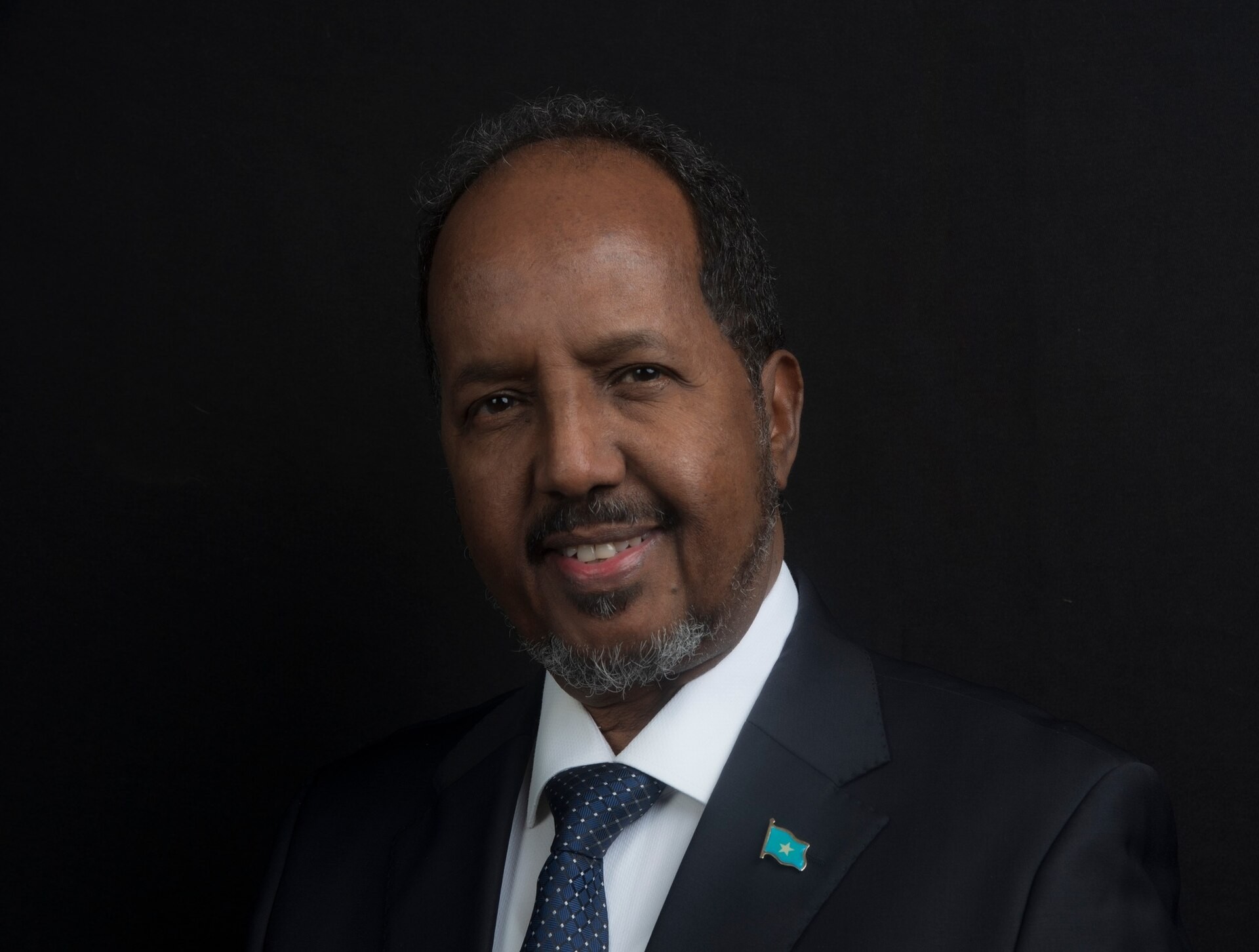
President Hassan Sheikh Mohamud could not do what Farmaajo did, because it is not the same year and Somalia is not in the same situation. Hassan Sheikh promised a fair, one person, one vote election. If he simply repeated what Farmaajo did, it would undermine his own promise.
Because he could not do the same thing Farmaajo did, he used people from that region to do the work of removing Laftagareen.
So he campaigned. Leaders from South West State campaigned in Mogadishu, including Abdulkadir Jaamac, who went on to become Speaker of the federal House of the People, and Robow, the religion minister, and a lot of other MPs who originally come from South West State. Then, in March, Laftagareen held an election and was re-elected. The federal government rejected it as an illegal “pseudo-election”. With the backing of federal troops, they went to Baidoa, took it by force, and held a one person, one vote election.
In August, Jaamac was elected Speaker, with 142 votes to 30 for Abdulkadir Omar Moalim.
That is the difference between 2018 and 2026. Even though Hassan Sheikh retook the city by military force, votes were then given to the people, and the people voted for their MPs.
A word Somalis know
Malxiis is a word Somalis have used ever since 2000, after the conference where Somalis agreed on a government. Somalis told me the word has been used since then. Every time a government was formed, the word came up, and it has kept going up to today. A malxiis is someone who is there just for show and not really there to compete. He is not a real challenge. Most of the time, the real candidate nominates him, so that he runs alongside him, just to show the world that there was a competition. But everyone in Somalia knows there was no competition, and that person was just a malxiis.
The 2021–22 elections worked like the earlier indirect elections. MPs were elected by 101 delegates. Those delegates were chosen with their clan elders. Each MP had to win the most votes of the 101 delegates. Some of the seats had decoys, the malxiis. A civil society observers’ report found that in 134 of the 275 seats, one candidate received all 101 delegate votes, after a second candidate registered only to meet the two-candidate rule and then withdrew.
One documented case: in February 2022, Mahad Salaad won seat HOP147 in Dhuusamareeb, in Galmudug, after another candidate withdrew and all 101 delegates voted for him by a show of hands, Caasimada Online reported. Mudug24 reported that two other contenders said they had been barred from the race. Salaad was appointed director of the National Intelligence and Security Agency in May 2022.
What a real election needs
In my view, an election has to have a few elements that show from the start that it is free and fair. The first is that it has to be safe. The election has to happen in a safe environment, and people have to feel safe to elect whoever they want.
The second thing is freedom of choice. Everyone who is voting has to have that freedom. They have to go to the polls and vote for whoever they think can deliver.
The third thing is unpredictability. Every election has to have that element. If the result is already predicted, that is not an election. It loses one of the best elements an election has to have. The voter, the campaigner and the candidate should not know whether they will win. It has to be chosen for them by the people. And if tomorrow they do not deliver, the people will vote against them. That choice has to come entirely from the people you represent.
The history of what happened in Baidoa was not told in the public media, and it was not found in the ballot boxes or the official votes that were broadcast. But what it reminds us is that even though people went to the polling places and voted, the result that mattered at the end was already predicted and already known. So it cannot be said that it was a democratic election, even though Somalia at least made a step toward a democratic election. What happened in Baidoa cannot be measured as a success. Yes, it was an election, but not the election that the people of Somalia and the people of Baidoa deserve.
The ordinary people who went to the polls and voted for their lawmakers knew, in the back of their minds, that even if they voted for the best lawmaker, the one they believed would make changes, the lawmakers would then elect a president who was already known. The voters I spoke to said they voted freely. But people would love to vote for the president too, so that ordinary citizens are also involved.
Comments
Every comment is read by a person before it appears, so yours will not show straight away. We publish comments that are civil and on the subject. To report a mistake in the piece, use the corrections page, so it is fixed in the piece itself.