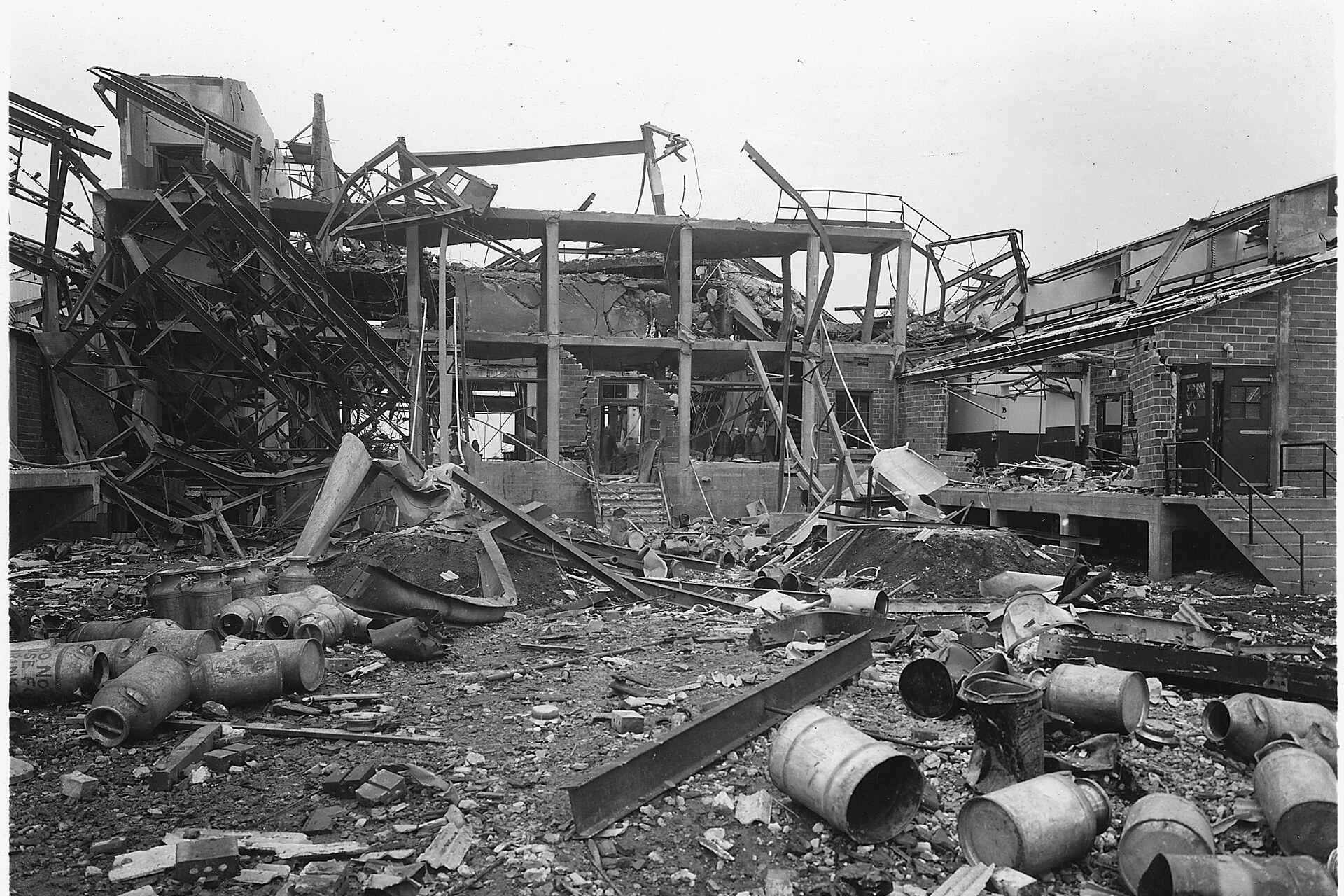
On Friday 20 November, at about noon, the Army planned to blow up nearly five tons of an explosive called lead azide at its ammunition plant in Middletown, Iowa. People living near the town park were told to leave between 8 a.m. and 2 p.m. because the blast could break windows. Then the date slipped, three times in five days, and on Wednesday 25 November the Army carried it out at about 9 a.m. local time.
On Monday 23 November, three decisions came within hours. President Donald Trump said he had ordered the military not to detonate until a federal appeals court and Iowa’s governor-elect, Rob Sand, agree. In the same post he blamed the Obama administration for storing the explosives badly in 2009 and said he would hold the incoming governor responsible for any harm if Sand or the courts refused. Then the appeals court, the Eighth Circuit, lifted its pause on the permit, finding that the EPA had built in safeguards and that the environmental groups had not shown the Army skipped other options. Sand did not give the approval Trump asked for. He said the administration should decide on the information it has from the people it brought in to do the job. Late Monday night the Army said it was proceeding with the removal on Wednesday morning, and its acting secretary, Adam Telle, wrote that “this is a consensus decision” because both Iowa’s current and incoming governors say the call belongs to the experts.
On Tuesday morning Telle and other federal officials held a news conference in Middletown. Telle said every expert the government could reach agreed that a controlled blast was far preferable to a spontaneous one, and officials set the time for 9 a.m. Wednesday, ahead of snow due that evening.
The director of the Bureau of Alcohol, Tobacco, Firearms and Explosives, Robert Cekada, said refilling the barrels with the water and ethanol mixture was stopped because it risked setting them off. Before the blast, no official said whether Trump’s condition had been met.
Update, 28 November: The EPA has released its first laboratory results, for water only. It found no lead in 38 samples taken after the blast from public water supplies, and its air monitors recorded no airborne lead for 30 hours. Before the blast it had found low lead, between 1.1 and 2.1 parts per billion, at four river and lake sites in Illinois and Missouri; it says that was already there and is far below its 15 parts per billion action level. Tap water, soil and dust results are still to come; independent scientists have said settled dust needs lab analysis. The Army says both blasts destroyed all 68 barrels; The Associated Press reports that questions remain over how and when the government told the public its plans.
The case is easy to read as a fight about lead dust. It is also a fight about the word “emergency.” The Army and the Environmental Protection Agency say the explosive is so unstable that it must go now. The record shows a danger the Army has known about since at least March, which the public learned about in pieces. That gap is where the story is.
An emergency with a long fuse
Lead azide is a sensitive explosive that was used in detonators for blasting caps, and the Army says it is no longer needed for production. The 68 barrels were stored for more than 20 years in earth-covered containers, sitting in a bath of ethanol and water meant to keep the material stable. According to an Army environmental assessment, dangerous crystals formed during storage. The same assessment does not say how long the material had been stored, whether the deterioration was detected before March, or whether earlier action could have prevented it. The Army did not directly answer when asked. The AP reported that a routine check earlier this year found some of the water had evaporated, which let the material crystallize, and that it is unclear why the Army did not dispose of the barrels before they deteriorated.
The plant closed on 12 March for what the Army called a proactive safety review and reopened on 30 March, with the material kept in secure storage bunkers under a new emergency permit that treats it as hazardous waste. That permit has been extended since, and the EPA’s own notices describe a third emergency permit to store the waste. So from the spring the danger was already an emergency in law, and for months the answer to it was to keep storing the material. Court filings, as CNN reports, show the Army told the EPA on or about 12 March and had a group of agencies looking at alternatives to a blast as early as January. The EPA approved the emergency permit for the blast this month.
The Army’s reason for hurrying is real. It says moving the barrels risks setting them off, and that the risk rises in cold weather. A reader should still be allowed to ask why a danger known since at least March, and managed for eight months under emergency permits, led to a public plan that told residents in October only that a blast would come sometime in November, and gave them the date five days ahead. Cold explains why winter raises the risk. It does not explain why the summer passed.
The alternatives, and the permit the Army said it did not need
The Army’s case for detonating on site rests on rejecting the other options. According to The Intercept, it ruled out chemically neutralizing the explosive and moving it to an existing demolition facility as too dangerous, and it warned that leaving the barrels in place risked an accidental explosion. The environmental groups, the Iowa Environmental Council and the Sierra Club, raised alternatives such as chemical neutralization in their emergency motion. Their position is narrower than it sounds. The council’s director has said the Army may have no other safe way to dispose of the material, and the council has called on federal and state leaders to provide more transparency.
Pam Mackey-Taylor, director of the Sierra Club’s Iowa chapter, answered some of our questions by email. She confirmed that the club was a party to the case and said the Army has changed its plan for the detonation since the court lifted its pause, in an effort to reduce the lead that goes into the air. The Army’s public safety advisory of 24 November lists sand-filled barriers, a water wall, gel blocks, foam barriers and misters, though it does not say which are new. Mackey-Taylor said the residents the club has spoken to do not want an unintended explosion, but they are worried about the effects of the planned one. After the pause was lifted, the groups, represented by Earthjustice, said they would not ask for another pause and would keep challenging the EPA’s permit.
The blast was never going to be clean. The Army said its modeling showed lead particles in the air that would be elevated but well below the level at which the EPA would require protective action, and the dust plume could have carried as far as 100 miles. The Intercept reports that the Army’s public map does not show how much dust would settle, and that a University of Iowa expert said hosing lead dust off moves it to the soil or into surface water. The Army does not plan long-term health monitoring. The Centers for Disease Control and Prevention says no safe blood lead level has been identified in children.
Then came the point that makes the case a test of power. After the appeals court paused the permit, the Justice Department told the court over the weekend that the Army would go ahead without one, under an emergency exclusion, a federal hazardous waste rule that lets an agency skip the usual steps when a threat is immediate, citing an immediate risk that the material will explode when temperatures drop. The Army was not ignoring a ruling. It was telling a court, in writing, that the permit the court had paused was not the only door. The effect is still the one the groups feared: a blast near homes under the Army’s own finding of emergency, while the permit, which required notifying communities, sampling before and after the blast, and cleaning up contamination, sat frozen. On Monday the court restored the permit, and the Army carried out its Wednesday plan after that ruling. Before the ruling, Military.com reported, the Army said it intended to act consistent with the permit’s terms even while the permit was paused. Those terms include an updated plume estimate within six hours, soil and surface sampling within 24 hours and a final report to the EPA within 30 days. We found no public statement, at the news conference or since, of which authority the Army relied on, the permit or the exclusion. The exclusion, according to EPA, exempts such emergency responses from the hazardous waste rules, including notifications, as long as the facility keeps a record.
The next question is who decides that an emergency exists. The federal definition says the threat is determined by an explosives or munitions emergency response specialist, and EPA’s guidance says the rule is for a threat that requires immediate and expeditious action. Here the specialist is the Army’s own, and the Justice Department’s filing includes a deposition from an Army explosives expert. The Army also set the first date for Friday, moved it three times, and chose Wednesday to allow for optimal weather conditions and all mitigation measures to be emplaced. The Army has to explain how both statements fit: a danger so immediate that no permit is needed, and enough time to wait for better weather and more safeguards.
The strongest case for the Army
The Army’s case deserves its best form. The material really is unstable. The EPA, which has its own scientists, agreed the risk was imminent and substantial. The appeals court, after hearing the environmental groups, decided they had not shown they were likely to win. The Army’s modeling puts lead levels below the EPA’s action level, and an uncontrolled explosion would come with no planning, no warning and no cleanup. If the choice is a controlled blast now or a possible accident in a cold winter, delay has a cost too. That is a serious argument, and part of it is already settled in court. The first readings after the blast also support it, though they cover only the air, not the ground.
It does not answer the question the Army raised itself. The Eighth Circuit’s stated reason concerns the EPA’s permit, and we found no ruling on whether the Army could set aside a court’s pause by declaring its own emergency. Trump’s post handed the final say to a court and a governor-elect, not to the Army alone. The Army then said it would go ahead on the strength of the court’s ruling and what Telle called a consensus that includes both governors, though Sand had not said he approved. That shows how loosely “agreement” was defined. Trump’s account of the storage needs care. The AP says the barrels had been stored for more than 20 years, which does not match a storage start in 2009. But Cekada said on Tuesday, as Radio Iowa reports, that the nation’s stockpile was moved to the Iowa plant in 2009 and that some of it was already more than 60 years old. That would make Trump’s date the year of the move, not the start of storage, and it raises a sharper question about how old material was kept. Sand, who takes office in January, has asked the federal government to share with the public the information he has been given. He had written the day before that no good options exist and that the situation is more dangerous and unpredictable than it ever should have been.
The questions the Army has not answered
On the storage, why was a stockpile the Army now calls too dangerous to move allowed to sit for more than 20 years? Who inspected the barrels, and what did the inspection records show? Officials said on Tuesday that the barrels were checked monthly and topped off each September, as Iowa Starting Line reports, and that crystals were found in March. What did the checks record before March, and who was told what, and when? A sworn declaration from Col. Aaron Teller of the Army’s 71st Ordnance Group, as Military.com reports, says an inspection on 28 April found deterioration in 58 of the 68 barrels, more than six months before the first public evacuation notice. Will the Army release the full environmental assessment and its inspection records, and who inside the Army is accountable for what they show?
On the emergency, who is the specialist who found it, what exactly did that person find, and on what date? Why does the Army’s own finding decide the matter, rather than a court or an independent reviewer? If the danger is immediate, why were there three delays and a date chosen for the weather? The blast went ahead without the governor-elect’s agreement. What happens to the Army’s claim if a court later finds the exclusion did not apply?
On the alternatives, what tests support rejecting chemical neutralization and moving the barrels? The Army convened a panel of experts in munitions chemistry, engineering and environmental safety to draft its plan. Who sat on it, and will anyone outside the Army be allowed to review its work? The original plan called for two controlled detonations. Why two, and why not smaller steps that could be monitored?
On the public, the EPA says its monitors read zero airborne lead for hours after the blast. Where were the monitors, who read them, and when will residents see the ground and dust results? University of Iowa researchers doing independent assessments said they lacked details on monitoring locations, instruments and reporting, and were still asking how far federal sampling would reach. Where is the map of how much lead settled? Will children be offered blood lead tests? The Army’s own assessment acknowledges contaminants could reach waterways. The Agriculture Department says about 350 farms could be affected. Who pays when cleanup disrupts farmland leases, and what is the plan for livestock and crops?
Most of these questions can be answered from the Army’s own records, and an assessment that does not say how long the barrels sat there is the first place to look. A blast near homes, decided by the Army’s own finding that it could not wait, is the kind of act a court, a governor and a community are entitled to examine before it happens, and now they must do it after the fact. Until the Army answers, the detonation will be explained by the emergency, and the emergency will be explained by the detonation.


Comments
Every comment is read by a person before it appears, so yours will not show straight away. We publish comments that are civil and on the subject. To report a mistake in the piece, use the corrections page, so it is fixed in the piece itself.