
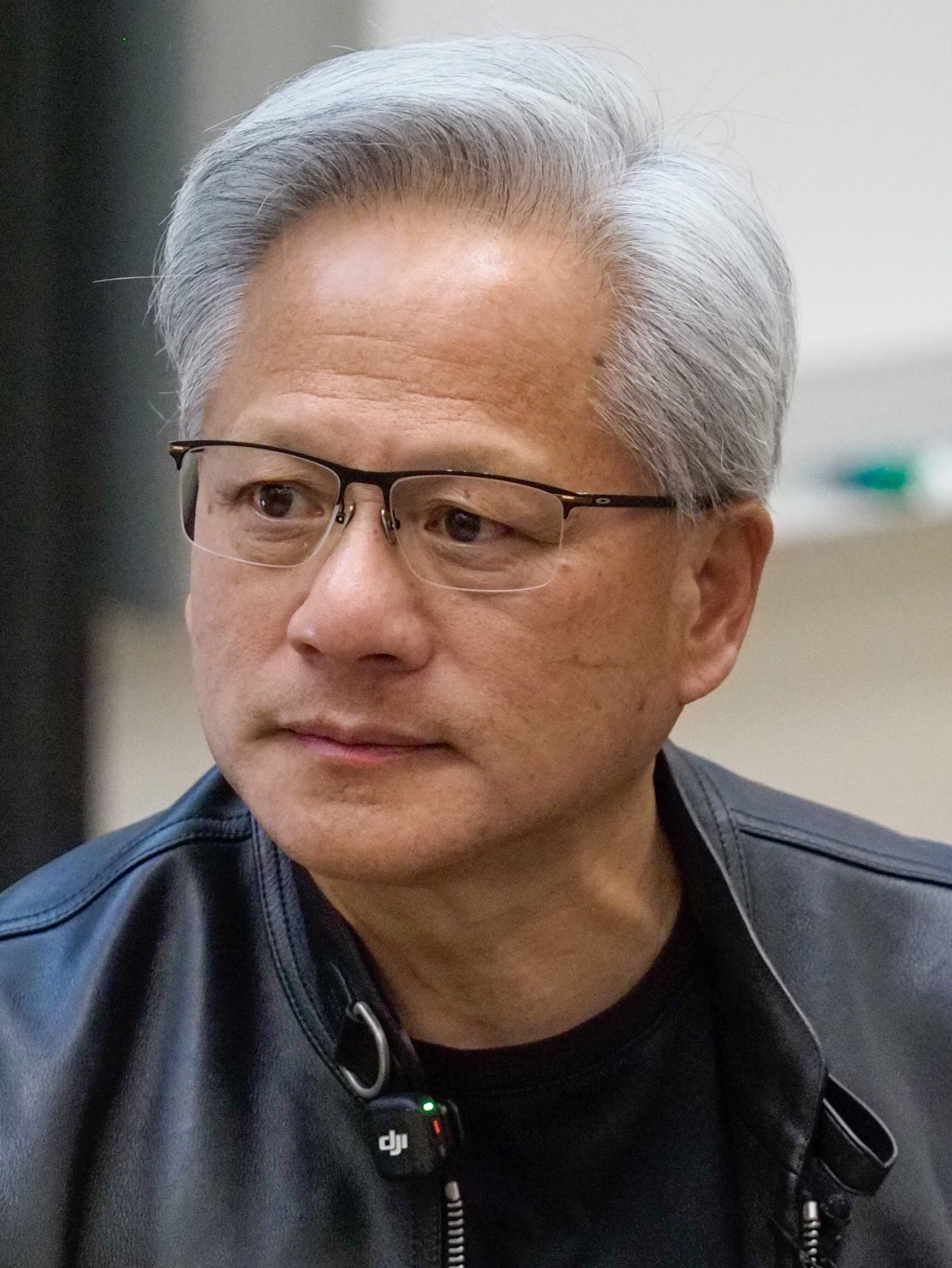
On Tuesday, at a Justice Department news conference, a reporter asked Attorney General Todd Blanche a plain question: had Jensen Huang been investigated, and what did the investigation find? Blanche did not answer. He said the president had talked to a lot of people before urging Nvidia’s board to take Huang back, and that he would not discuss his own conversations with the president. The night before, in a Fox News interview, he had refused to say whether Huang had been cleared of national security concerns or legal violations before his reinstatement.
The president had already described the investigation. On Monday he told CNBC the government had done “a very thorough investigation,” and that officials felt Huang was “exonerated.” Two days later, the vice president contradicted him. Speaking to reporters in Ohio, JD Vance said the Justice Department and “multiple officials in our national security apparatus” had told him Huang was “under no investigation.” The same day, Reuters, citing three people familiar with the matter, reported that the department never opened a formal investigation of Huang at all.
That is an odd foundation for what followed. Nvidia’s board restored its co-founder on the strength of “input” from the government. The assurance rests on an investigation that, on the vice president’s account, did not exist, and that the department still will not describe on the record.
The sequence is short. Huang resigned as Nvidia’s chief executive on 12 November, after the New York Times reported on his affairs, including one with Alice Huang, a former Megaspeed executive alleged to be a spy for Beijing. She is not related to him. Huang has acknowledged infidelity but, Reuters notes, has not confirmed involvement with her, and Beijing rejects the spy allegation. On 17 November the board chair told investors the board “does not intend to reinstate Jensen as CEO.” Six days later, the board voted unanimously to bring him back. Its own statement gives the reason: it had received “input from senior levels of the United States government,” and on that basis it was confident his return posed no national security risk. President Trump then told CNBC, in an interview on Monday, “I made the deal,” and that the administration had given the board assurances, “at least with everything we know.” Nvidia’s shares closed more than 30 percent higher that day, then gave back almost 6 percent on Tuesday.
What the government said
The assurance comes through other people. Trump wrote on his social media site, Truth Social, that Blanche had confirmed the government “does not possess evidence” that Huang engaged in unlawful conduct. A Justice Department official told NBC News that Blanche spoke with Trump over the weekend and said the department had no evidence of wrongdoing by Huang or by Nvidia. The Wall Street Journal, as relayed by Yahoo, reported that Blanche told Trump and Vice President JD Vance that Huang was not the target or the subject of any Justice Department investigation.
Read those claims slowly, because they say different things. “No evidence of wrongdoing” is a finding. “Not the target or the subject” is a description of where prosecutors were looking. In Justice Department practice, a target is a person the prosecutor has substantial evidence against, and a subject is a person whose conduct falls inside an investigation’s scope. A man can be neither, because nobody ever opened a file on him.
Wednesday’s reporting says that is close to what happened. According to Reuters, Blanche reached his conclusion from the department’s ongoing investigations into two Nvidia customers, Super Micro Computer and Megaspeed, which are suspected of smuggling advanced chips to China. Reuters’s sources said those inquiries found nothing showing Huang was acting for China or knowingly passed sensitive technology to it, that Nvidia was not a target and cooperated, and that the finding could change as the probes continue. Two other sources said there was no counterintelligence inquiry into Huang either. That work, which is run separately from criminal cases, aims to monitor and block national security threats rather than to build a prosecution. The Journal had earlier reported that Blanche’s assessment rested on Nvidia’s cooperation, over several months, with such investigations. In layman’s terms, the government looked closely at Nvidia’s customers, Nvidia helped, and the government concluded it had found nothing pointing at Nvidia’s chief executive. That is a real result. It is also a different thing from a thorough investigation of Huang, which is what the president claimed, and from an exoneration. On Tuesday Blanche said only that if Nvidia were a target or subject of a criminal investigation, or were obstructing one, the president would not be saying what he is saying. That is a conditional statement about the company, not a finding about Huang.
When an official says there is no evidence, the words only mean something if we know who searched, for what, and with what powers. A police department that never looked in the garage has no evidence about the garage.
Here the search that matters runs through Megaspeed, the Singapore cloud company at the center of the affair. The Commerce Department opened an inquiry into it in 2024, and Commerce and Justice said in a joint statement on 16 November that Commerce’s investigators had interviewed Alice Huang, then the company’s chief executive, on site in June 2025, and that Justice later took the lead on a criminal investigation. The statement says Nvidia put Megaspeed on its own no-sell list in June 2025 and describes no wrongdoing by Nvidia. Nvidia describes its dealings with the company as ordinary business, and says it has accounted for every chip it shipped.
Then the story gets harder to read. The New York Times reported on 9 November that Commerce’s own Megaspeed inquiry came to a sudden halt after Nvidia’s general counsel, Tim Teter, emailed the agents saying a senior Commerce official, Jeffrey Kessler, had given Nvidia permission to reach out. The case was moved to the Justice Department, a step the Times’s sources said was meant to avoid compromising the investigation. Some agents saw Kessler’s contact with Nvidia as a breach of procedure. A Commerce spokesman said the department had acted strictly by the book, a Justice spokeswoman declined to comment, and a Nvidia spokesman said the company consults officials to answer their questions. Treasury Secretary Scott Bessent said on CNBC on 13 November that his department and others had wanted Megaspeed blacklisted, but that “Commerce has the pen.” That changed on 23 November, the day Huang returned. Commerce filed a rule adding seven entities in Singapore, Malaysia and Thailand, including three named Megaspeed, to the Entity List, its trade blacklist. Published on 25 November as document 2026-23999, the rule took effect on 23 November. It requires licenses for all items sent to the seven companies and reviews requests under a “presumption of denial,” meaning refusal is the default.
The trail widened again on Wednesday. A CBS News investigation by Josh Boswell reported that two California companies on Nvidia’s partner lists have Chinese parents: RiCloud AI of San Jose, which Nvidia lists as a “preferred partner,” and Aivres, the former American arm of the Chinese server maker Inspur, which Nvidia lists as an “elite” compute partner. A New York Times analysis cited by CBS found Aivres exported at least $5.6 billion of advanced technology to Southeast Asia between April 2024 and February 2026, about $3 billion of it in computers with Blackwell chips, Nvidia’s newest, which cannot be exported to China. CBS says those chips reportedly went to Megaspeed and another cloud firm, Aolani, which serve Alibaba and ByteDance. CBS did not say Aivres broke any rule, the U.S. government has not accused RiCloud of wrongdoing, and Nvidia did not answer CBS’s questions about how it vets its partners.
None of this shows that Huang did anything wrong. A company is allowed to call its own lawyers when its customer is under investigation, and moving a case from a regulator to prosecutors is not a cover-up. But it matters for what the government can claim to know. The department that says it has no evidence also took the lead on a criminal inquiry into Megaspeed itself. Asked on Tuesday how it could rule out criminal liability for Huang while the Megaspeed export investigation continues, Blanche said he did not know what the reporter was talking about, and that the department runs hundreds of export investigations at any time. An inquiry that has not finished cannot also have finished clearing the people connected to it.
Now look at the board’s position. It received “input” from the government, as its own statement says. As far as the public record shows, it did not receive a report, a letter or a public finding. The board also acted while other inquiries were open: Nvidia said on Monday that its own investigation would continue, and CBS reported that California’s attorney general served Nvidia with a subpoena last week and that the Securities and Exchange Commission is reportedly examining its disclosures. And the board did it after a president told it, directly and indirectly, what he wanted. The Washington Post reported on Wednesday, as relayed by Yahoo, that over the weekend Defense Secretary Pete Hegseth and his deputy, Steve Feinberg, discussed using the Defense Production Act, a 1950 law that lets the president steer private industry for national defense, as leverage on the board. The Post, citing three people familiar with the talks, describes discussion and not action, and no administration has used the law to install a company’s chief executive. An unnamed Pentagon official told the Post the conversations never happened. The White House referred questions to the Pentagon and did not deny the account, and Nvidia declined to comment. A person familiar with the board’s thinking told the Post the board did not see the national security emphasis as a threat. We have not confirmed any of this, and it rests on anonymous sources on both sides. The Post also reported, citing two sources, that Trump asked Vance to broker Huang’s return.
We cannot see what the board was told in those conversations. Nvidia did not answer our questions. The Justice Department’s press office replied on 25 November: “We do not speak about ongoing investigations.” It offered a background conversation, which we could not quote. What we can see is the public version: a president’s post, an unnamed Justice Department official, and a vice president relaying what an attorney general would not repeat at his own podium.
That gap matters beyond one company. When a board takes the government’s word as the basis for a decision that moved the company’s shares more than 30 percent in a day, the word needs a form that others can check. A court filing can be checked. A closed-case letter can be checked. A background briefing to a reporter cannot. And the president has said he made the deal, which makes it harder to treat the board’s assurance as independent of the man who wanted it.
What the White House says it gained, and what critics say
Trump has given his reasons in public. He told CNBC, as CNBC’s analysis reports, that he stepped in because the stock market was falling after Nvidia’s troubles, a fall he also blamed on the Democrats’ midterm win. He also said the bigger threat would be losing Huang’s “brain power” to China.
The policy stakes are real, and the sequence shows them. While Huang was out, Bessent became the voice of the hawks who want chip sales to China restrained, and Commerce issued a rule requiring licenses for advanced chips going to five countries seen as routes for passing chips on to China. Bessent said on 15 November that the board should go outside the company for a new chief executive; by the weekend he had softened his public resistance, CNBC’s analysis notes, and Trump said he had discussed the question with Lutnick, Bessent and Vance. Then Megaspeed went on the blacklist on the day Huang came back. Read generously, the administration kept its export hawks and its chip champion at the same time. Read skeptically, the listing the agencies had wanted for months arrived only once Huang’s return was safe. Nothing we found says which reading is right.
Money is where critics push hardest, and where the evidence is thinnest. A CNBC analysis found that Trump’s accounts made at least 103 Nvidia trades since he returned to office, worth between $27 million and $97.5 million in total, including a sale of up to $1 million five days after Secretary of State Marco Rubio reportedly briefed him on Huang’s relationship with a suspected Chinese spy. Trump denies being briefed. The same analysis says the disclosures offer no evidence that Trump directed the trades, and the White House says independent advisors manage his investments without his input. A disclosure released on 19 November shows he bought as much as $380,000 of Nvidia shares in September, about two months before Huang resigned. How much he holds is unclear, because filings give broad ranges, not share counts: CNBC put his August holding at between $4.5 million and $57.7 million at 16 November prices. Whether his accounts traded between 12 and 23 November cannot be known yet, because his latest report covers September and disclosures lag.
Other money predates the scandal. Senator Chuck Schumer has pointed to a reported $25 million donation to the White House ballroom, and the Washington Post reported that Nvidia and Apple each gave that sum. The government has also taken a 25 percent cut of sales of H200 chips, a generation behind Blackwell, to approved Chinese customers. That looks less like a motive than it did, because Nvidia has since said it no longer sells H200s in China.
We should be plain about what this adds up to. These are shared interests, not a proven motive. The president’s political interest in a high stock market and his own accounts’ holdings point the same way as Huang’s return. No reporting we found shows either drove the decision, and a president can honestly believe a company’s founder is worth keeping. The honest test is disclosure: publish the assurances given to the board, and publish what his accounts did in those 11 days.
The strongest case for the administration and the board
There is a serious argument on the other side, and it deserves its full weight.
The Justice Department has a long-standing practice of neither confirming nor denying investigations, and Blanche’s refusals, on Fox and at the podium, may reflect that rule and nothing more. If Huang was never a target or a subject, then the department, which has every reason to want a high-profile prosecution in a China-chips case, found nothing that put him in the frame. Reuters’s account strengthens that reading: its sources say two live investigations turned up no evidence against him, and two others said U.S. agencies had gathered information on Alice Huang but had nothing that warranted a probe into Jensen Huang. No public record shows Huang charged with anything, or even accused of a crime by name.
The board’s side is just as plain. Directors owe a duty to shareholders, and a company whose products run much of the world’s artificial intelligence cannot stay leaderless for long. The board also took steps to protect itself: Nvidia has set up a new national security and export control oversight panel, and has hired an outside law firm to investigate. Huang has agreed to answer lawmakers’ questions. And the spy allegation, which drove much of the early coverage, remains an allegation. Beijing rejects it, and Blanche said after Huang resigned that the FBI was looking into the reports but had reached no conclusions.
On this reading, the system worked in the ordinary way. The government told a company what it knew, the company decided, and Congress will test it.
That argument runs out in three places. The first is the word “ordinary.” Presidents do not ordinarily negotiate a chief executive’s return. The Republican chairs of the House intelligence, foreign affairs and China select committees, Representatives Crawford, Mast and Moolenaar, said in a joint statement that Nvidia’s “brief internal investigation” and Huang’s reinstatement do not erase the national security questions. Republican Senator John Curtis asked who in the government weighed in, and what they told the board. Senator Maria Cantwell, a Democrat, wrote to Lutnick on 15 November that Commerce delayed action on Megaspeed despite warnings. When criticism comes from the president’s own party, the explanation cannot only be that his opponents dislike him.
The second is that the accounts do not agree. A thorough investigation that exonerated Huang, as the president said, and no investigation at all, as the vice president said, cannot both be true. The president may have meant the probes into Nvidia’s customers, but then he described a different thing. If the department wants the board’s confidence to be earned, it can say in writing what it reviewed, when, and what it did not review.
The third is the difference between not being a suspect and being cleared. Both can be true of an innocent man. Only the second is what the public, and the board, were told. If the department cannot show that anyone looked, then the honest statement is the narrower one that Reuters’s sources and the vice president describe: no one investigated Huang, so no one found anything. That tells us about the department’s effort. It tells us nothing yet about Huang.
What nobody has answered
Several questions remain open, and some will be asked in public within days. Huang is due for a closed-door interview with three House committees on 1 December, Nvidia’s general counsel on 2 December, and a public Senate Banking hearing on 3 December, NBC reports.
The first questions are for the administration, because its accounts do not agree. The president and the vice president disagree about whether there was an investigation. Which is right, and will the Justice Department say so on the record? If there was none, what did Blanche’s “no evidence” rest on, and did anyone at the department or the FBI interview Huang, or review his messages with Alice Huang, before the assurance was given? FBI Director Kash Patel, asked on Tuesday whether the bureau had spoken to Huang, did not answer. Why did the president, two days after saying officials felt Huang was exonerated, leave open a pardon? What exactly did the board receive from “senior levels” of the government, in writing or by phone, and from whom? And did anyone at the Pentagon discuss using the Defense Production Act to press the board? The denial came from an unnamed official, and the White House did not deny the report.
The next questions are about the trail around Huang’s company. Why did Commerce stop its Megaspeed inquiry after contact from Nvidia’s general counsel, and what did Kessler and Nvidia discuss? Why did it take until the day Huang returned for Megaspeed to be listed, when other agencies had wanted it for months? How did RiCloud AI win “preferred partner” status within about ten weeks of its incorporation, and what checks did Nvidia run on it and on Aivres? What did Nvidia’s own investigators examine before the board voted, and will the board release what it found? If the Justice Department’s criminal inquiry into Megaspeed turns up something that reaches Huang, who tells the public that “no evidence” has changed? And did anyone with a financial interest in Nvidia’s price take part in the decision to press the board, and what will the president’s next disclosure show about the days between 12 and 23 November?
None of those questions assumes Huang did anything. They ask only that the people who vouched for him say what they looked at, and that they agree with one another about it. A clearance that nobody can read is a promise, and a company worth this much should not be run on one.

Comments
Every comment is read by a person before it appears, so yours will not show straight away. We publish comments that are civil and on the subject. To report a mistake in the piece, use the corrections page, so it is fixed in the piece itself.