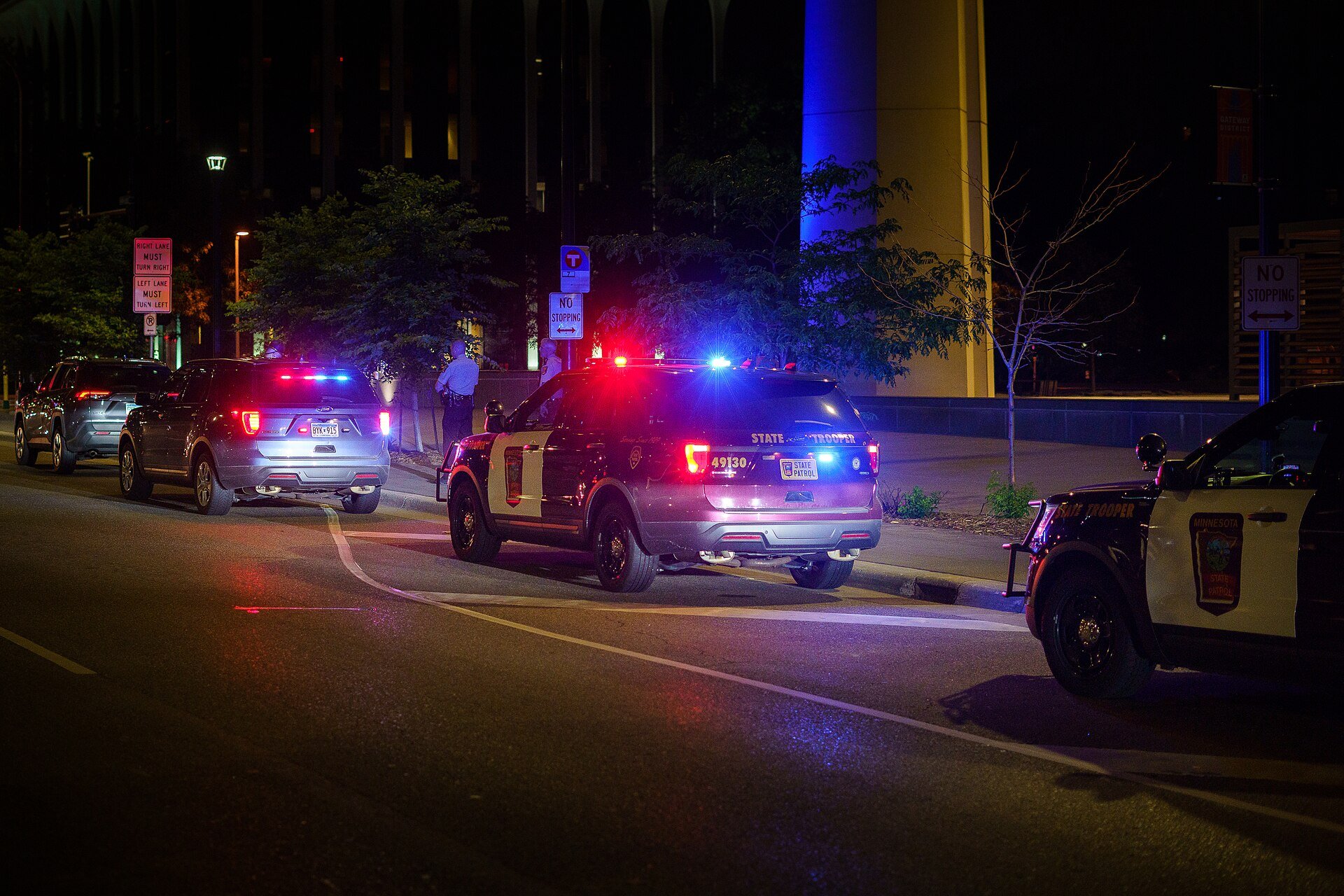
At 12:50 on the morning of 6 August, a Tempe police officer found a black Dodge Charger sitting empty near Priest Drive and Baseline Road. The engine was overheating, the driver’s window was smashed, and the air smelled of burning rubber, according to KTAR’s account of the Tempe report. The officer asked dispatch which agency had been chasing or stopping the car. Twice, the answer was none. When he traced the owners, they told him a story so violent that he wrote that he suspected men posing as police were trying to carjack them.
They were not impersonators. Prosecutors say they were two sworn Phoenix officers, Luis Vasquez Jr. and Antonio Felix, on duty in a Phoenix police vehicle. More than three months later, the case raises a question Phoenix has faced since the U.S. Justice Department accused its police of a pattern of excessive force: after years of reform, what stops an officer from simply switching the reforms off? The trial has moved to May 2027, the county attorney is still reviewing other cases the two men touched, and The Field could not find any published result of the audit of their precinct. Both men have pleaded not guilty, and everything below is an allegation until a court rules.
What the allegations say, and what they leave behind
According to court paperwork, the officers followed the Charger through several turns in an unmarked Tahoe, flicking their emergency lights on and off. The Tahoe struck the Charger’s rear bumper. The couple told Tempe police the vehicle was instead a white SUV with “POLICE” lettering. Phoenix police placed the stop near 19th Avenue and Broadway Road when they announced the arrests, while the court paperwork puts it near 15th Avenue and Broadway Road. On 23 November, Phoenix police said the officers were in a marked vehicle and made the stop at 15th Avenue and Baseline Road. The officers threatened to break a window if the couple did not get out, and Phoenix police say the window was broken. Vasquez is accused of punching the driver repeatedly, pulling his hair, and drawing his gun and counting down from three. Felix is accused of tasing the woman and holding a stun gun to the driver’s arm and ribs. The driver escaped. The woman was released and told, by the couple’s account, that officers knew where she lived. When Chief Matt Giordano announced the arrests, the charges he listed included aggravated robbery. The county attorney’s complaint and the grand jury’s indictment, as reported, do not list it. Phoenix police said on 23 November that detectives later decided different charges were more appropriate.
Then the officers drove away, and the department, by its own account, knew nothing. The department said the stop was not reported and no body camera was switched on. That should have been the end of the evidence. It was not, because a real stop leaves traces that an officer cannot turn off. A download of the log from Felix’s Taser showed 29 times it was fired during the encounter, and investigators also used location data from the patrol vehicles. The record the officers tried to avoid making was made anyway, by their own equipment.
Why the reforms did not see it
Phoenix did not ignore its problems. In June 2024 the Justice Department concluded that the department had a pattern of using excessive force and that supervisors failed to scrutinize it. The city asked to reform itself without federal oversight, and the department required body cameras for public-facing officers and began building a system to check every vehicle and pedestrian stop. In May 2025, the Justice Department dropped the case and withdrew its findings. The chief says an internal Organizational Integrity Bureau now does the checking that outsiders once did.
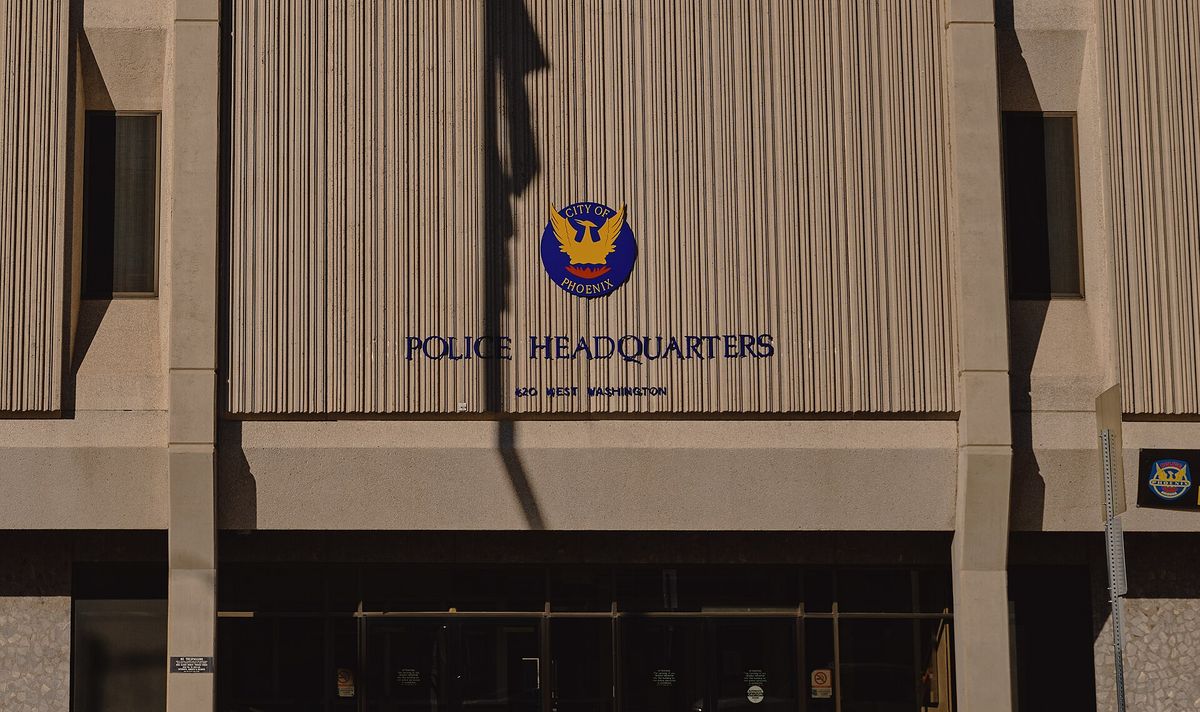
Here is the weakness, and it is structural. Almost every one of these tools checks only what was recorded. A body-camera rule can punish an officer who forgets to record, but it cannot see an officer who never starts. A review of randomly chosen videos cannot include a video that was never made. The city’s own auditor found in 2024 that sergeants had no standard method for judging whether officers used their cameras properly in monthly spot checks, and that 17,190 videos in 2023 had never been labeled by type. KTAR reported that Chief Matt Giordano believes the stop would have been found through strong auditing. The public record shows otherwise: it surfaced because the victims’ car turned up in Tempe, and a Tempe officer did not assume the couple were lying.
The warning signs were in the files
The chief said that when he reviewed the personnel files, no red flags stood out. The records the city later released tell a more uncomfortable story. In 2025, Vasquez received a written reprimand after he failed to thoroughly investigate a collision and failed to properly activate his body camera, the same failure that sits at the center of the criminal case. Supervisors counseled both men for repeatedly missing court, and Felix twice failed to complete incident reports. Supervisors had also written positive evaluations less than a week before the stop.
Taken one by one, these are small. Together they describe two officers whose lapses in documenting their own work were handled as coaching problems. Each time, the system treated a missing record as a clerical failure. The allegation here goes further: that the missing records were deliberate. Vasquez told investigators, according to prosecutors, that he skipped the camera and the report out of fear of the consequences of the many policy violations the stop involved.
The week nobody asked why
The gaps in the investigation are as telling as the gaps in the system. Phoenix dispatchers noticed that the two officers had run the Charger’s plate and asked about it. Both officers denied making any stop. Then, according to Phoenix police, when Tempe asked Phoenix to contact the registered owner, both officers learned about the call and took it, reporting that no contact had been made at the home. The people suspected of the crime answered the inquiry about the crime. The reporting does not say when dispatchers asked about the plate check or how the call came to be assigned to them, and both are questions the department owes the public.
The officers were not placed on leave until 13 August, a week after Tempe found the car, and the leave was paid. Detectives interviewed them for the first time on 22 August, nine days later, the day they were fired and arrested. When reporters asked at the press conference why detectives did not move sooner, the chief answered that complex cases take time and that putting the men on leave meant they could do no more harm. That is a fair answer for a case that had to survive trial. It leaves open what access the two men still had to records, radios and colleagues in the 17 days between the stop and the interview, and whether anyone checked.
Other questions remain. The victims’ lawyer says his clients do not drink, and both officers told investigators they believed they were stopping a drunk driver. What actually led them to the car is unexplained, and the chief said he was still looking into motive. The same lawyer has said he does not think Phoenix police should lead the investigation. The department’s own oversight bureaus are auditing the precinct, which means the institution is examining itself. Phoenix police say it will be made public when complete. And ABC15 reported that insiders say officers in South Phoenix are known for ghost stops, meaning contacts with no call, camera or report, and that officers sometimes use radio channels dispatch does not monitor. Phoenix police did not deny that ghost stops happen. They called them unacceptable, and said separate talk channels exist for efficiency and safety. The chief said he had no indication that anyone else knew about this stop. Neither claim can be tested until the audit publishes its findings. The Field sent the Phoenix Police Department nine written questions on 21 November and asked for answers by 30 November. The department acknowledged the request on 22 November and had not answered the questions when this piece was published.
Can a driver trust the lights?
For people in South Phoenix, the damage is concrete. The victims’ attorney says they are afraid to leave their homes. Phoenix’s vice mayor called the episode a significant step back for community trust.
A driver who doubts police lights faces a logical trap. Red and blue lights are the only proof of authority a driver gets in the first seconds. The couple in the Charger obeyed them. Even the Tempe officer, a trained cop, concluded the lights might have belonged to impostors. The city’s advice for a driver who doubts an officer’s identity is to call 911 in real time, and it says officers must identify themselves and wear identifying markings. That advice does not answer the hard case: what is the driver’s safest move at night, on a dark road, when the car behind may be a real patrol car? The Tempe report says the couple were afraid to call Phoenix police at all because they feared being arrested for driving away. Phoenix police said on 23 November that anyone who doubts an officer may ask for the commission card or a supervisor, or call 911, and that this will not be held against them. The city has not said what a driver may safely do on a dark road while waiting.
The fair counterargument
Phoenix has a real case. The chief moved quickly once he had the facts, and community leaders praised his response even as they called the underlying events unbelievable. A Tempe officer did exactly what a good officer should, and a Phoenix investigation took the allegations seriously enough to arrest its own. Both men had commendations, and the city says it wants to show the conduct is not widespread. The police union said it was deeply troubled by the allegations and that misconduct warrants accountability. And the system did produce the evidence in the end: the Taser log and the GPS data exist because of reforms that insisted on recording equipment.
None of that answers the central problem. The case surfaced because the victims escaped, survived and found a different police department. A system that depends on that sequence will miss every case where the person is too frightened to report, or does not survive. Fairness to the officers matters too. They are presumed innocent, their statements are described only through prosecutors’ paperwork, and a jury will hear the defense in May 2027.
The test the reforms have not yet faced
The department’s audit of the precinct is the first test, and the victims’ lawyer has a point about who should read it: a department finds only what its paperwork shows, and here the paperwork showed nothing. Phoenix police say it will be made public when complete, but not who else will read it. The second test is whether the Taser log, the lights and the plate checks are ever set against dispatch calls, because that is where this evidence came from. The third is whether a driver who cannot tell if a police car is real ever gets a plain answer.
The Phoenix police chief said, on the night of the arrests, that there was no excuse for what these officers did. He is right, and his words cut further than he may have meant. The reforms were built to catch the officer who forgets the camera. They were not built for the officer who does not forget, who simply decides that this stop will not exist. That officer is the real test of whether trust can be rebuilt, and in Phoenix the test is still running.
Comments
Every comment is read by a person before it appears, so yours will not show straight away. We publish comments that are civil and on the subject. To report a mistake in the piece, use the corrections page, so it is fixed in the piece itself.