
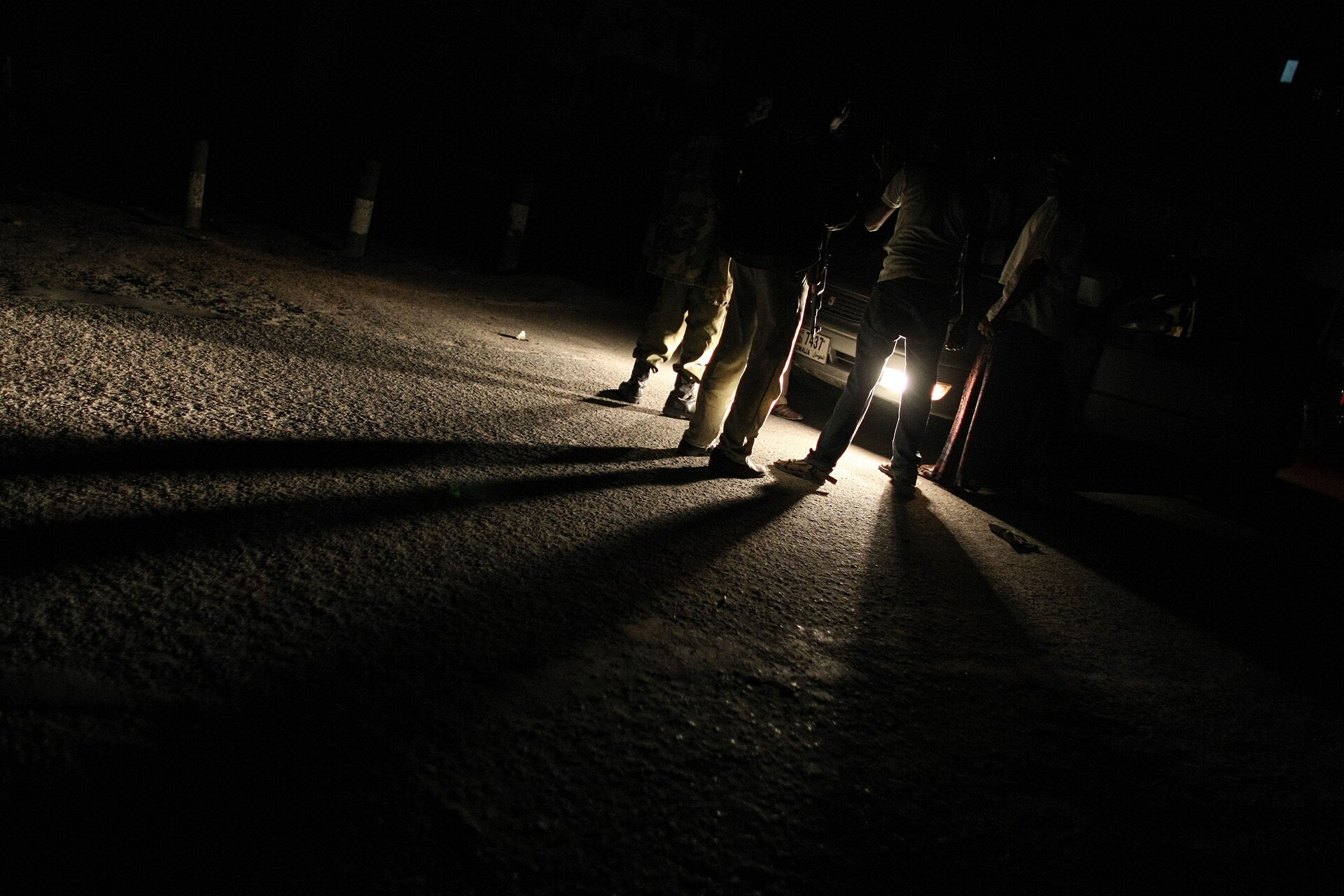
At about eight one morning, two men waited by a road in Kaxda, on the outskirts of Mogadishu, beside the house of a NISA officer. A spotter was to ring when the officer left and describe what he was wearing. That is the account a wounded man gave on Somali National Television, which presented him as a member of the Amniyat, Al-Shabaab’s intelligence and enforcement wing. He said he had been shown the officer’s house about ten days earlier, and that at about 4 a.m. that day he was called and told it was the day of the mission. When the officer left, the spotter rang, and the two men followed him. The officer sensed them and stepped aside to let them pass. When they turned and drew their pistols, he drew his own and fired. One attacker was shot in the leg and captured, the man said, and the other escaped.
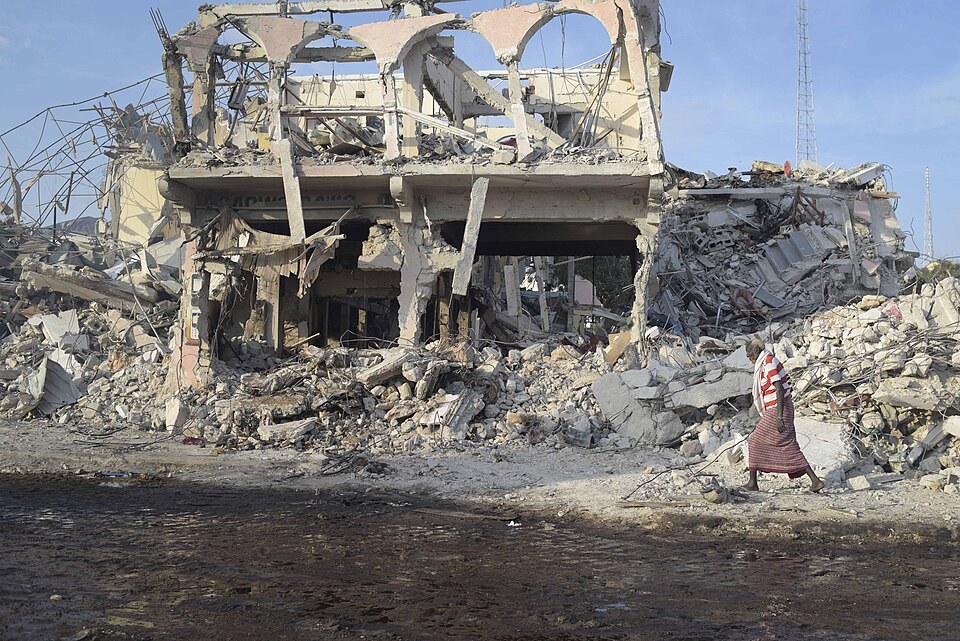
That officer survived. The failures on record are larger. On October 4, 2025, seven Al-Shabaab fighters hit the Godka Jilow prison complex in Mogadishu, which also houses the headquarters of NISA, the National Intelligence and Security Agency, whose job is to stop exactly this. Al Jazeera reported that vehicles painted to look like intelligence vehicles got through the checkpoints, and that the Ministry of Internal Security said military vehicles are not formally searched. A United Nations panel said the attack came as several city checkpoints were being removed. The attackers did not beat the system by hiding. They got through by looking like NISA.
A year on, the government says Mogadishu is far safer, and on October 6 NISA announced it had killed a former chief of the Amniyat. Many people I interviewed agree that it is. What they disagree about is why. The people I interviewed did not credit the plainclothes units that are supposed to be the answer.
The Nabad Sugid are NISA’s plainclothes officers in Mogadishu. According to my interviews, they are young, mostly between 21 and 35, they carry pistols, and they have no vehicles and no radios, because they are meant to act as spies. Their job is to find the Amniyat.
I report on how the units treat residents in a separate article.
How much safer, and who says so
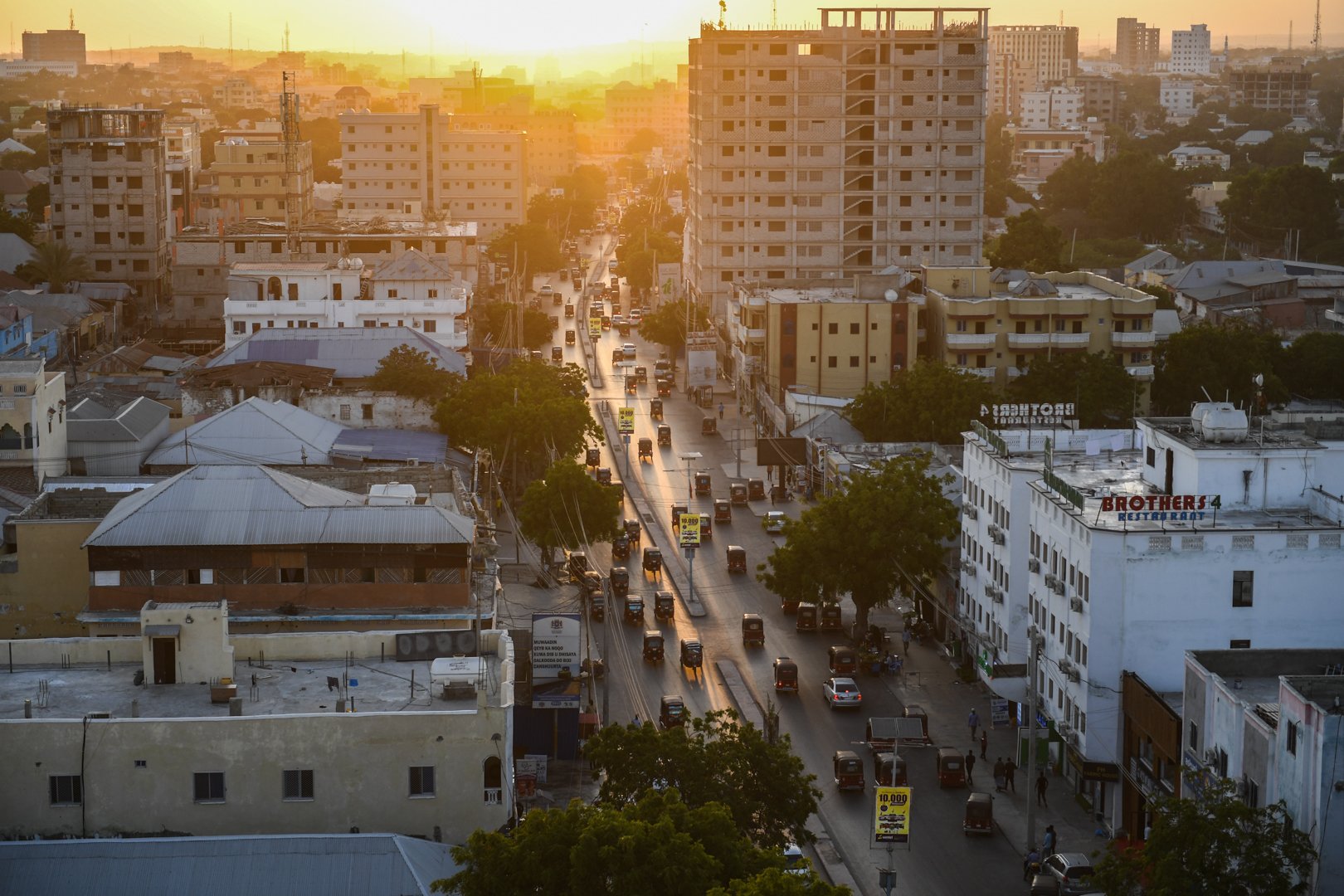
The government says attacks in Mogadishu have fallen about 87 percent since 2023, Defence Minister Ahmed Moallim Fiqi said on Saturday, September 26. Prime Minister Hamza Abdi Barre gave a slightly different figure at the same ceremony: an 86.06 percent fall in “security incidents” in Mogadishu between 2023 and 2026, Shabelle Media reported. Neither report says what counts as an attack or an incident, and the government has not published its data, so I cannot check either number. But independent data points the same way. Dawan reported that data from the Armed Conflict Location & Event Data Project (ACLED), cited by The Economist in August, show attacks in Mogadishu falling from 144 in the third quarter of 2022 to five in the second quarter of 2026. I have seen only that summary, not The Economist’s own article.
I am not saying the Nabad Sugid failed to make a difference to those numbers. I am saying that the people I interviewed, who deal with them every day, do not credit them, and that I found no published evidence either way of what the plainclothes units contributed.
The quiet is also not total. Critical Threats, a research project that tracks the conflict, reported, citing ACLED data, that Al-Shabaab carried out more attacks in Mogadishu from August 1 to 7 than in any whole month since January 2026, in its August 13 report. NISA announced on August 7 that it had arrested nine suspected Al-Shabaab members plotting attacks in the city; the report passes that on as NISA’s announcement, not as something it verified. I have not found reports that name the August attacks.
My interviewees described the contrast on the street. They said the Nabad Sugid play cards in quiet corners of districts, chew khat and use drugs, while Amniyat members stay focused and disciplined and do not use them. I cannot verify what Amniyat members do. I am reporting what people who deal with both told me.
They also said the Amniyat has the upper hand in some districts and has killed many Nabad Sugid operatives, and that the Nabad Sugid have failed to infiltrate the Amniyat. I cannot confirm either claim independently.
What residents say is working: cameras and checkpoints
My interviewees credit two things. The first is checkpoints. I was told that at the main checkpoints several security agencies now work side by side, with cameras and a senior officer watching the screens. I could not confirm that arrangement independently, and a United Nations panel reported that some government checkpoints inside Mogadishu were removed in late 2025. The second is cameras on private buildings. Eastleigh Voice, citing Reuters, reported in October 2024 that thousands of cameras had gone up under a city programme.
The street cameras came first. The government put cameras on the city’s main intersections, and I was told it gave each camera, or each block of cameras, to a NISA officer to watch. allAfrica reported that NISA installed them, at sites including the Dabka junction, KM4, Maka Al-Mukarama, the coast zones, Villa Somalia, the presidential palace, and the airport.
The cameras were attacked, and Al-Shabaab was blamed. On January 30, 2020, explosions hit four of the new cameras, three near Dabka and KM4 and one near the Maka Al-Mukarama Hotel, Garowe Online reported. Nobody was hurt, and no one claimed it. On March 19, 2020, another blast hit a camera near the Wehluye Hotel on Dabka Road, a police source said.
This counts against NISA. I was told that each camera had an officer assigned to guard it, and that the Amniyat still found a way to bomb cameras, and did so more than once. I could not establish when the guards were posted, so I cannot say how many of the blasts came after.
The attacks then moved to the shops that were told to put cameras up. ACLED recorded its first attack on a business over a camera in November 2023 and ten more between October and late November 2024. ACLED counted at least 37 deaths in 23 events involving civilians in the capital in that period, and about 39 percent of those events were tied to the cameras.
What I was told about shops matches that account. Some owners took their cameras down under pressure from Al-Shabaab. Others kept them up, and officers can collect the recording from a shop when something happens on a street.
The scene that opens this piece comes from Somali National Television, which on August 31, 2026 broadcast camera footage of an attempt on a NISA officer’s life in Kaxda, on the outskirts of Mogadishu. I watched the footage and the interview that came with it. Somali National Television’s Facebook page carries the interview with the wounded man. I do not know the exact date of the shooting itself, only the date of the broadcast.
I found no written report of this incident, so the broadcast is my source, and I could not confirm the officer’s identity. NISA’s August 7 announcement of nine arrests, including in Kaxda, did not mention a shooting.
The man’s account describes how the Amniyat works: weeks of watching, a call on the morning, and a spotter. If it is accurate, it also suggests that an alert officer with a pistol can beat it.
The failures that were not on the street
The failures I could document in 2025 were not plainclothes officers on corners. They were at checkpoints and bases, and the worst of them hit NISA itself.
A United Nations panel of experts, in a report to the Security Council in November 2025, described a bomb attack on the president’s motorcade on March 18, a suicide bomber at the Damaanyo base in Hodan on May 18 that killed 22 people, and another at an army academy on July 9 that killed four soldiers. It said the Amniyat’s emir, or leader, had changed in early 2025 and that sources linked the new emir to both the March attack and the prison assault in October.
In July 2025 a senior NISA officer, Abukar Sadiq, who was leading the investigation into the March bombing, was shot dead in Sigale while his unit tried to arrest a suspect, the Somali Guardian reported. The paper cited Caasimada Online saying intelligence sources suggested colleagues might have targeted him. The Guardian said several officers who were with him were detained, that the suggestion was unconfirmed, and, in September, that NISA had released no findings.
In November there was a report of a different kind. On November 8 the Somali Guardian reported, citing unnamed Somali media, that a NISA commander known as Luqman, who led the Duufaan unit, had defected to Al-Shabaab and taken laptops, communications equipment and files. Sahan Research analyst Rashid Abdi told the paper that NISA was severely compromised and that Al-Shabaab might now hold the names and addresses of informants. Kaab TV and Somali Dispatch reported on November 10 that he had left Mogadishu through Dayniile and reached Middle Juba, and described him as a former deputy commander. All three rest on unnamed sources and differ on his rank. I found no statement from NISA, the government or Al-Shabaab, and I could not confirm it. If it is true, it is a failure that cameras and checkpoints cannot make up for.
What NISA says it has achieved
NISA does claim results against the Amniyat. Each claim below rests on NISA’s own word, and I use each source’s spelling of the names.
In a statement dated October 6, it said it killed Bashir Ahmed Haji Nunow in Jilib on October 1. It calls him a former head of the Amniyat, in the post from 2016 to 2024, and says he was involved in attacks including the October 2017 bombing at the Zoobe junction. NISA says it carried out the operation with international partners. Horn Observer and Shabelle relay the statement. Neither reports a body, photographs, the partners’ identity or an Al-Shabaab response, and the Long War Journal reported on October 9 that the United States had not confirmed an airstrike there. FTL Somalia reported that no one has independently confirmed it, and that the name and alias “Geescadde” have appeared in earlier records for a different man. In 2022 the US State Department designated Yusuf Ahmed Hajji Nurow, also known as Gees Ade, as chief of Al-Shabaab’s intelligence wing. NISA’s statement gives a different first name, Bashir, and does not explain the difference. Whether they are one man or two, the records I could open do not say, and I have not found his name in a UN sanctions entry.
NISA has made such claims before. In January 2026 it said it and partner forces had killed Abdullahi Osman, known as “Engineer Ismail,” whom Somali media describe as the emir the UN panel referred to, and his deputy near Jilib on December 10, 2025. The Long War Journal’s Caleb Weiss noted that neither the US nor Turkey reported a strike, and listed earlier NISA claims that were never confirmed or were later contradicted. One was a commander NISA said was dead in December 2023 and a UN report said was alive in July 2024.
If the October claim is true, it is a real blow. It also comes from NISA’s operations far from Mogadishu, in Middle Juba. It says nothing about what the Nabad Sugid do in the city.
What I do not know
I do not know how many cameras were hit after guards were posted at them, or when the guards were posted. I do not know whether the checkpoint arrangement my interviewees describe still holds, given the UN panel’s report that some checkpoints were removed in late 2025, or what the government’s 87 percent figure is based on, since it has not published its data. I found no report that names the attacks of early August 2026. I cannot say whether the reported November defection is true or what was taken, whether NISA’s accounts of the Jilib operations are accurate, or how many Nabad Sugid operatives the Amniyat has killed.
Who Gets the Credit Depends on Data Nobody Has Published
NISA should publish how it assigns and checks the officers guarding the cameras, and say how many have been attacked. The government should release the data behind its attack figures so they can be tested. Partners who work with NISA on counter-terrorism can ask for both. Until then, the claim that the plainclothes units made Mogadishu safer cannot be tested, and the people who deal with them every day do not make it.
Comments
Every comment is read by a person before it appears, so yours will not show straight away. We publish comments that are civil and on the subject. To report a mistake in the piece, use the corrections page, so it is fixed in the piece itself.