
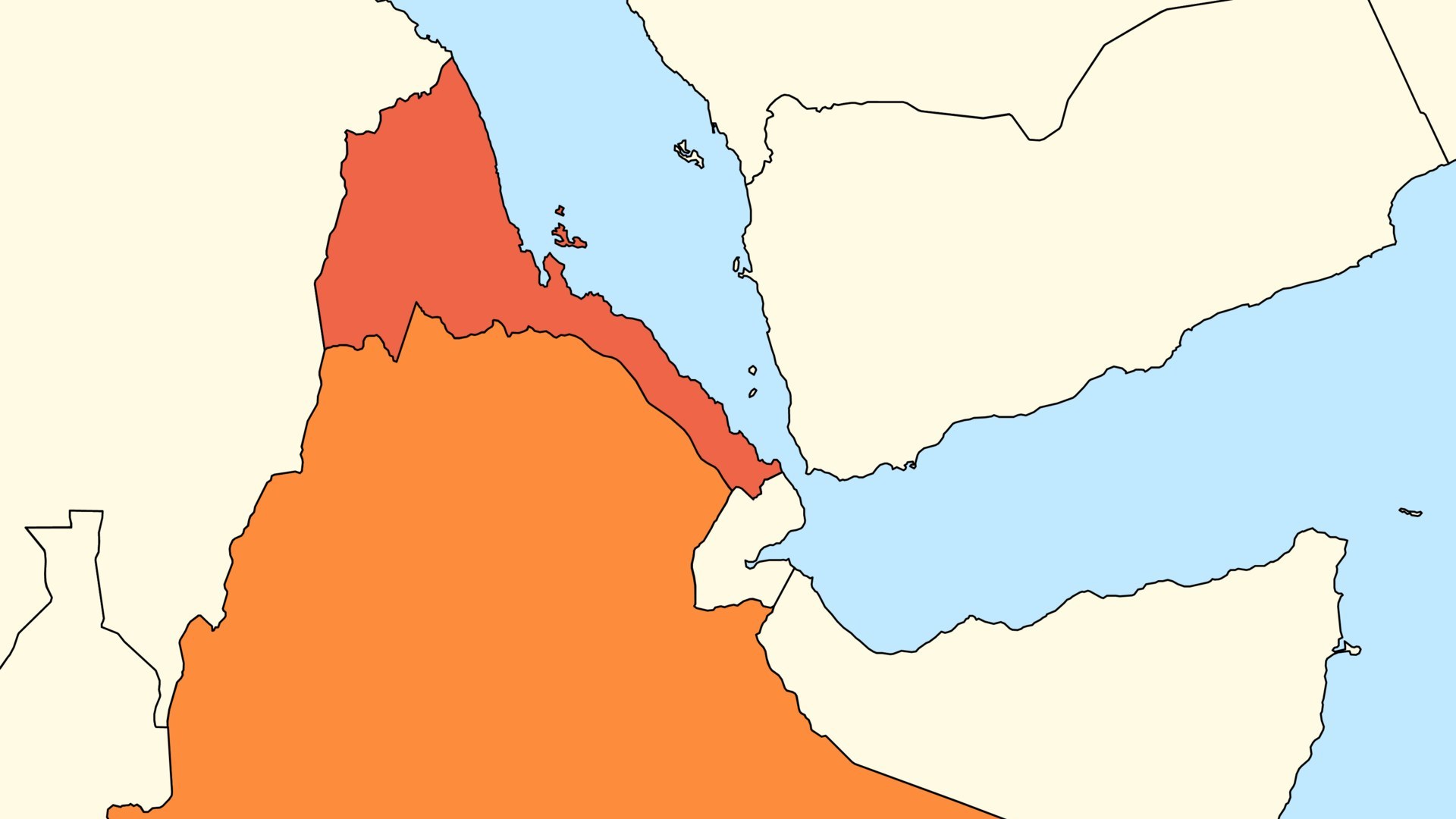
On Wednesday, October 7, at least two residents of Adigrat, in northern Tigray, told Reuters they saw dozens of soldiers pass through town in two trucks. They said the men were Eritrean, judging by their off-white camouflage uniforms. Reuters said it could not verify what they saw. Al Jazeera carried the Reuters text.
I first wrote this on October 7, before anyone had confirmed it, because if it is true it changes the war. I updated it on October 12 with what has come out since. The evidence is thicker now, but it is still witnesses, government claims and analysts reading video. No neutral body has confirmed it.
What we know now (updated October 12)
Ethiopia’s claim. On October 8 Foreign Minister Gedion Timothewos wrote to France’s foreign minister, and a senior official said other Security Council members got the letter too. It accuses Eritrea of an “all-out invasion” that reached up to 60 km into Tigray and says Ethiopia has the right to defend itself, Reuters reports. Reuters did not verify the depth, and I have found no imagery or documents from the government. A foreign security source told AFP, without being named, that 5,000 to 8,000 Eritrean soldiers are in Tigray. That is one anonymous estimate.
What partly backs it. The conflict monitor ACLED says Eritrean forces crossed near Zalambessa and came under Ethiopian drone attack on the road toward Idaga Hamus, and that more strikes hit them near Adigrat on October 7 and 8 as they pulled back, ACLED told Reuters. Its expert comment sets out the first crossing. Analysts at Critical Threats and the Institute for the Study of War placed a video of a destroyed truck on Adigrat’s southern edge and matched it to satellite imagery, which shows Ethiopia struck vehicles there. They could not confirm the people and vehicles in other pictures were Eritrean military, and they call any incursion “likely limited” and possibly already abandoned. They also note that most outlets rely on the same few sources, their review says.
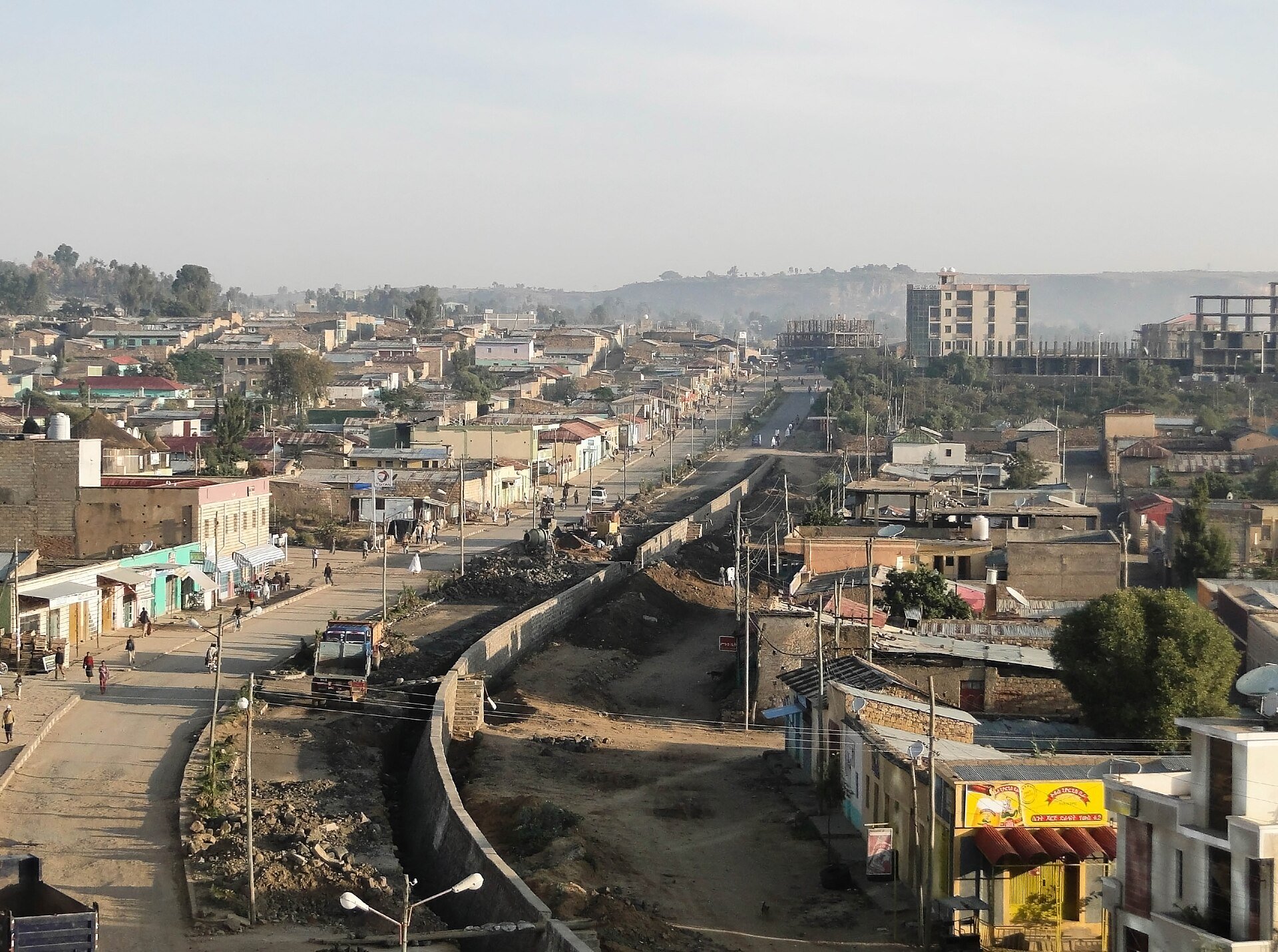
Others who say it. Tigray Peace Force commanders, who fight on the government’s side, say Eritrean soldiers entered Adigrat and Idaga Hamus. Al Jazeera could not verify that, and they are a party to the war. Ethiopia’s communications minister said Eritrean forces must leave, per Horn Review. The US embassy in Addis Ababa warned on October 7 of possible long-range attacks on Ethiopian military sites and said nothing about Eritrean troops.
Eritrea’s reply. Information Minister Yemane Gebremeskel says Ethiopia is waging an “unprovoked war of aggression” and wants the port of Assab. Eritrea denies backing the TPLF. Reuters and AP do not attribute to him an explicit denial that soldiers crossed. On October 10, Foreign Minister Osman Saleh asked the Security Council to condemn what he called Ethiopia’s “declaration of war” and take “deterrent measures,” Al Jazeera reports. I found no council action.
On the ground. Ethiopian forces took Mekelle after the TPLF left on October 3. Government-allied forces entered Adigrat on October 10, and three residents confirmed it to Reuters, according to the same report.
What is not known
- Whether Eritrean soldiers are inside Tigray now, how many, and where.
- Whether Eritrea denies the crossing. Its ministers reject Ethiopia’s framing and deny backing the TPLF, but the statements reported so far do not say plainly that no soldier crossed.
- Casualties. The only claim is Ethiopia’s, and no evidence comes with it.
- Anything from a neutral body: the UN, the African Union, or an international news crew on the ground. I looked again on October 12 and found none.
An earlier claim sits in the same category. On October 1, Afar’s regional chief administrator told Al Jazeera that Eritrean soldiers had crossed into Afar to join the opposition offensive. Reuters did not verify that either.
How two allies got here
1998 to 2002. Ethiopia and Eritrea fought a border war over places like Badme that killed about 100,000 people, according to Crisis Group. The Algiers Agreement of December 2000 sent the border to a commission whose ruling both sides called final and binding. When it ruled in April 2002, Ethiopia objected, and the border was never demarcated.
2018 and 2019. Prime Minister Abiy Ahmed accepted the ruling in June 2018. On July 9, he and President Isaias Afwerki signed a declaration that the state of war had ended.
2020 to 2022. Eritrean soldiers fought beside Ethiopia’s army against the TPLF in the Tigray war. In March 2021, Abiy told parliament that Eritrean troops had crossed the border and that atrocities had been committed. Amnesty International found that Eritrean troops killed hundreds of civilians in Axum on November 28 and 29, 2020. The US sanctioned the Eritrean army in November 2021.
November 2022. Ethiopia and the TPLF signed the Pretoria peace agreement on November 2. Eritrea was not a party. Eritrean troops began pulling out of some towns afterward, the Nation reported.
2023 to 2026. Abiy began saying publicly that Ethiopia, which has no coast, needs access to the Red Sea. Eritrea owns the port of Assab. In February 2026, Ethiopia’s foreign minister wrote to Eritrea demanding that it withdraw its troops from Ethiopian territory and stop working with rebel groups. Eritrea said the accusations were “patently false and fabricated.” The BBC noted that Ethiopia presented no independent evidence.
October 1, 2026. After more than a week of fighting between the federal government and the TPLF-led alliance, Ethiopia closed its embassy in Asmara and ordered ten Eritrean diplomats out. Eritrea then cut all ties. That much both governments confirmed.
The flip
This is what makes the story strange. In the last war, Eritrea fought on the federal government’s side against the TPLF, and Axum is the name Tigrayans carry from it. If Eritrean troops are in Tigray again, the claim is that they are on the other side, with the TPLF-led alliance against Abiy’s government. The same Tigray also has Tigrayans on the government’s side now: the Tigray Peace Force is made up of former TPLF fighters who broke with the party.
What changed since 2022
I can only tell you what analysts and the parties themselves say. I have sorted it by how solid it is.
Pretoria left Eritrea out. The 2022 deal was signed by the federal government and the TPLF alone. Crisis Group says Asmara felt it had not been properly consulted and believed the deal gave too much to the TPLF.
The Red Sea push. Abiy has said since 2023 that Ethiopia needs a port. Crisis Group says many in Asmara fear a limited seizure of a port, most likely Assab, and that the push moved Eritrea closer to Tigray. Abiy denies that seizing a port is his aim.
The TPLF split. After the party’s August 2024 congress, Getachew Reda’s faction was expelled and he went to Addis Ababa, where he is now Abiy’s adviser. The TPLF’s hardliners, led by Debretsion, took control. The Rift Valley Institute reports first Eritrea-Tigray contacts in Dubai in March 2024, called an enemy-of-my-enemy arrangement, and borders reopening in mid-2025. Ethiopia accuses Eritrea and a hardline TPLF faction of plotting war. The TPLF has called that entirely unfounded, in an October 2025 letter to the UN, and Eritrea denies it. I could not find documents, imagery or captured weapons showing Eritrean supply to the TPLF or to Fano.
Washington’s move. On September 18 the US Treasury removed the Eritrean Defense Forces, the ruling party and other Eritrean targets from its sanctions list, after the 2021 emergency order expired and was not renewed. The State Department said the move was to advance US regional interests. The alliance against Abiy was announced two days later, and the offensive began on September 22 or 23. That is the order of events. I found no source that shows one caused the other.
Egypt. On October 4, the leaders of Egypt, Eritrea, Sudan and Somalia issued a joint declaration that Red Sea control should stay with coastal states and warned against unilateral measures on the Nile. Al Jazeera says it appears aimed at Ethiopia. Field Marshal Birhanu Jula, Ethiopia’s army chief, accused Eritrea of raising money for the TPLF and implied that Sudan and Egypt were involved, without giving evidence, according to the Associated Press. I found no documented Egyptian support for the alliance.
Reasons to doubt it
Axum is the first. Amnesty recorded more than 240 civilians killed there by Eritrean troops in November 2020, and Tigrayans have no reason to forget it. Some analysts say whatever exists is tactical. Analyst William Davison calls it opportunistic enemy-of-my-enemy politics, and Connor Trumpold of Control Risks says he is not sure it can be called a formal alliance. Chatham House’s reading is that Eritrea’s first priority is to keep the war away from its own territory, so it acts for itself, not for the TPLF.
Crisis Group also says responsibility for the September escalation lies mainly with the TPLF, while the TPLF calls its action defensive. That dispute is separate from the Eritrea question, and I am not settling it here.
What would confirm it
Reuters or the Associated Press seeing it themselves. Satellite images or video that can be placed and dated and tied to Eritrean units. Eritrea’s own statement. A finding from the UN or the African Union. Any one of those would let me say it plainly. Until then, I will treat it as an allegation, and I will update this piece as soon as that changes.
For the wider war, see my earlier piece and the live Ethiopia tracker.
Comments
Every comment is read by a person before it appears, so yours will not show straight away. We publish comments that are civil and on the subject. To report a mistake in the piece, use the corrections page, so it is fixed in the piece itself.