In seven months, from November 2024 to June 2025, Chad’s president named three of his brothers to senior posts at the presidency. One has since been replaced. I could not confirm the other two in 2026. The presidency should publish who holds each senior post at the palace, which of them are the president’s relatives, and why they were chosen. That is my argument, and the evidence follows.
This is the second country in First Families, a weekly series that sets out which relatives of ruling families hold which posts. Last week, on October 4, it covered Tanzania. The aim is to cover all 54 African countries, one a week.
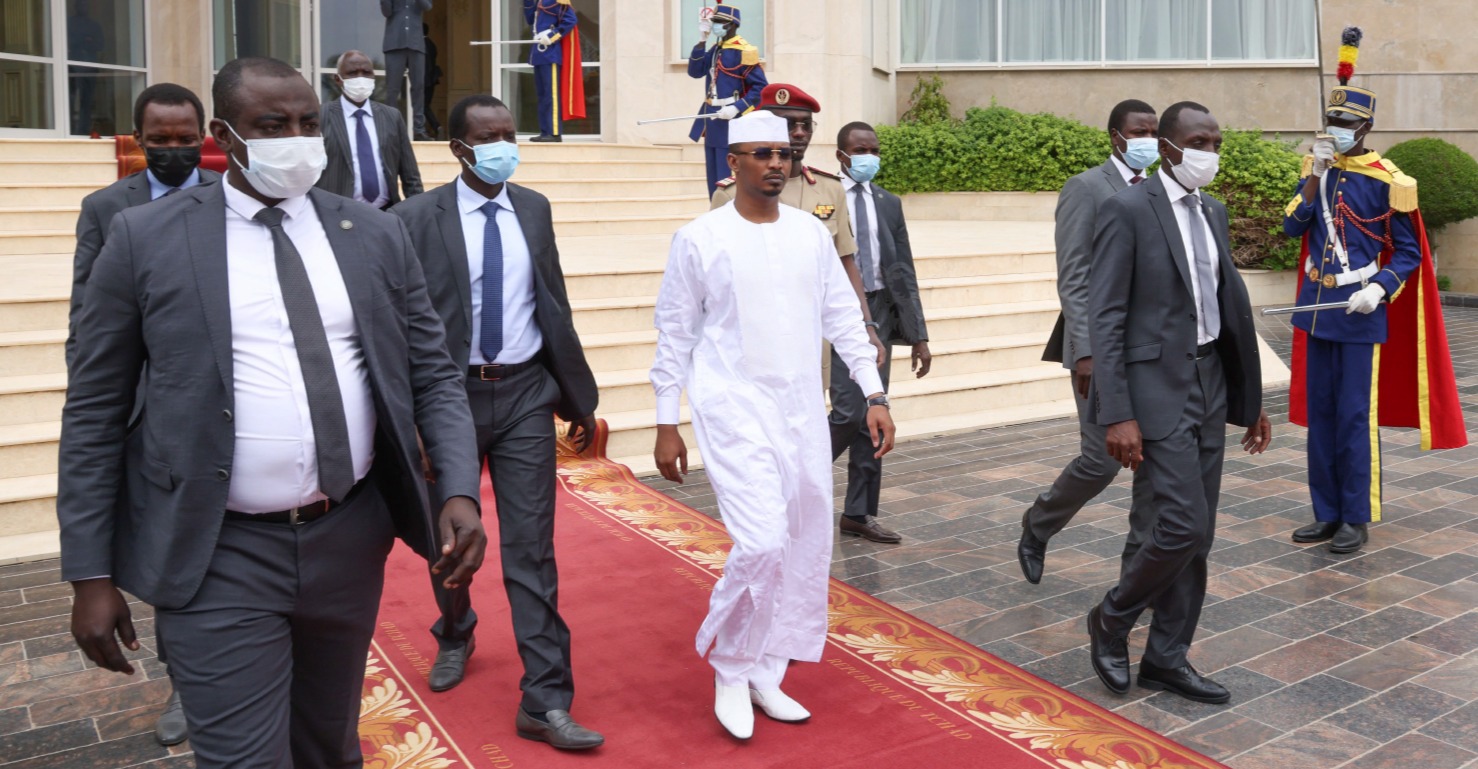
The story began on April 20, 2021, when the army announced that the president of thirty years, Idriss Déby Itno, had died fighting rebels, and named his son, General Mahamat Idriss Déby Itno, head of a military council. In May 2024 the son was credited with 61 percent of the vote, after international rights groups had said the election would be neither credible nor fair, Al Jazeera reported. The government has not, as far as we found, answered the criticism that followed the brothers’ appointments. My recommendations come after the evidence.
Who holds which post
- Daoussa Idriss Déby Itno, the president’s younger brother. Named Minister and Particular Secretary of the President, the French term for a president’s personal secretary, by a decree of March 19, 2025, replacing Ahmed Kogri. RFI reported that he was about thirty and had been made a general when his brother took power.
- Zakaria Idriss Déby Itno, another brother and a son of the late president. Jeune Afrique reports that a decree of June 10, 2025 named him adviser to the presidency with the rank of minister. It adds that he had been kept away from N’Djamena for a time, and that his ambitions may have caused discord inside the presidential family.
- Abdelkerim Idriss Déby, another brother. Named adviser for African and International Affairs at the presidency by a decree of November 15, 2024, Tchadinfos reports. It says he trained at the US Military Academy at West Point and calls him the president’s half-brother. A decree of July 14, 2025 replaced him in that post with General Ahmat Kogri. We found no report of his current role. Sources differ on whether he is older or younger than the president, so we do not say.
- Ousman Adam Dicki, the president’s cousin and brother-in-law. The Africa Report, in an October 14, 2024 profile by Jeune Afrique’s Mathieu Olivier, says his mother, Aïcha Déby, is the late president’s younger sister, and that he is married to one of the president’s sisters. It describes him as head of the Rapid Intervention Force, created in 2023 and meant, it says, to offset the older presidential guard, “with a large budget and massive recruitment.” Alwihda Info reported that a decree in May 2021 made him the president’s principal aide-de-camp, the officer who serves him directly. Le Pays described him as the force’s current commander when a decree of May 26, 2026 promoted him to general. We found no 2026 figures on its budget or size.
- Not a relative: Ismaël Souleymane Lony. He was director-general of the National State Security Agency when he was made a minister on the same day as Daoussa. RFI describes him as the president’s friend. President Déby publicly renewed his confidence in him in August 2025 after a leaked audio recording of remarks attributed to him.
We found no 2026 decree or report removing Daoussa or Zakaria from their posts, and none confirming them in post. On August 19, 2026, a decree named Idriss Ahmed Idriss Secretary General of the Presidency, replacing Moustapha Mahamat Masri. It does not concern the Particular Secretary post.
What critics say, and what the government has said
Opposition leader Avocksouma Djona Atchénémou told RFI that Chad has lived for more than thirty years in a “dynastic system” in which decrees are used to appoint relatives of the ruling family, and that the late president did the same: “Déby père lui aussi privilégiait la famille” (our translation: the elder Déby also favoured family). Afrik.com described the March 2025 appointment as strengthening the family’s footprint on the way the country is governed.
We found no statement from the presidency or the government answering that criticism. The preamble of Chad’s constitution, as published online, says earlier regimes created and sustained nepotism, and affirms the citizens’ total opposition to any regime founded on nepotism and clanism.
The record also shows the president removing relatives. In April 2025 he demoted and struck off ten senior officers for “serious misconduct”, including his cousin, General Abdelrahim Bahar Mahamat Itno, Jeune Afrique reports. It says the general had called on the Zaghawa community, the ethnic group the president comes from, to rise against the head of state.
The politics around the appointments
On October 3, 2025, parliament voted 236 to none among 257 lawmakers for seven-year presidential terms with no limit on re-election, AFP reported. CIVICUS says the government presented the changes as technical revisions needed to modernise institutions. We found no source that links the term-limit change to the family appointments, and we do not suggest a link.
On August 9, 2025, a court sentenced opposition leader Succès Masra to 20 years for spreading racist and xenophobic messages and complicity in murder tied to inter-communal conflict, Human Rights Watch reports. HRW calls the trial “based on politically motivated charges”, and his lawyer called the case a misuse of the courts. The president pardoned him and eight other opposition leaders on August 14, 2026, ACAT-France reported. Human Rights Watch says the 65 people convicted alongside Masra remain in prison.
Corruption and accountability
Chad’s anti-corruption authority, the AILC, was created in 2023. The US State Department reports that, according to an AILC report, it conducted 19 investigations into government ministries in its first 100 days of 2025, recovering 63 billion CFA francs (about $113 million).
On August 12, 2026, the AILC said agents of the National State Security Agency handcuffed and detained its inspectors while they audited crude oil sales by the state oil company, SHT. In the AILC’s account the inspectors were also hooded and assaulted. SHT disputed that account: it said it had cooperated, and said the mission held its commercial director in her office for nearly five hours. A decree of August 14, 2026 replaced the AILC’s controller general and his deputy and gave no reason. ISS Africa reports that the AILC’s office was also searched and its records confiscated.
The former controller general, Ousmane Abderaman Djougourou, says the audit found significant gaps between Chad’s crude sale prices and international reference prices, and says he asked to leave. He has published no figures or documents, saying he holds documents that could be made public “when the time comes.” We found no public response from the presidency, the security agency or the oil company to his claims.
We found no source that connects the family appointments to corruption, and nothing here says they are connected.
What analysts say it could mean
These are analysts’ judgments, not findings.
ISS Africa argues that the crackdown on the opposition threatens a return to one-party rule. CIVICUS says the constitutional changes consolidate authoritarian rule. The government’s position, as CIVICUS reports it, is that the changes were technical revisions needed to modernise institutions.
What I recommend
This section is my argument. The facts above are sourced; what follows is what I conclude from them.
- The presidency should publish a current list of the senior posts at the palace and in the security services, with the decree for each, who holds it, and whether the holder is related to the president. Today a reader cannot confirm from public records who holds the posts given to the president’s brothers in 2025. The decrees we found were published by news sites, and we found no official, searchable record of them.
- The presidency should say what criteria it used. Chad’s constitution condemns nepotism in its preamble, and the opposition says decrees are used to appoint relatives. The presidency has the means to answer both, with the qualifications and the reason for each appointment.
- The African Union and Chad’s foreign partners should ask for the list and the criteria in their regular talks with the government, and say publicly what they asked and what they were told.
What would show it worked: a published list that matches the decrees, an answer to the questions The Field sent on October 5, and a way for anyone to check a new appointment against it.
The strongest objection is that a president in a country at the centre of a regional crisis needs people he trusts, and that trust is easiest to find in his own family. Some of the people named may be well qualified, and the record shows him removing relatives as well as appointing them. I do not ask him to stop appointing anyone. I ask him to say who holds which post and why. If the appointments are sound, the list helps him.
Why I can write this. I am an independent investigative journalist with seven years of field research, and I hold an MA in International Law and Human Rights from UPEACE. From 2019 to 2021 I was Somalia’s Youth Representative to the African Union, which I name because the African Union is one of the bodies this piece asks to act. I co-founded and chair the Organization for Prisoners’ Rights in Mogadishu. I have no financial or personal tie to the people or governments named here.
What we do not know
- Whether Daoussa and Zakaria Idriss Déby still hold their 2025 posts, and what Abdelkerim Idriss Déby has done since July 2025.
- Whether anything has changed for Ousman Adam Dicki since his May 2026 promotion.
- Why these appointments were made, and what criteria the president used.
- Whether other relatives of the president hold senior posts in the army, security services, customs, mining or oil sector that we have not found. One example we could not settle: The Africa Report describes a nephew of the late president, Mahamat Charfadine Abdelkerim, as a former deputy head of intelligence who took over the customs service in 2019. Alwihda Info reported in 2023 that a general named Abdelkerim Charfadine Mahamat, a former customs director-general and outgoing deputy head of the state security agency, was named head of the state mining company SONEMIC, and Tchadinfos showed him still in the post in November 2025. The careers match, but we found no source that says they are the same person, so we do not say so.
- Whether the presidency will answer the criticism, or the questions we sent it.
- Whether the audit that was cut short in August 2026 would have found wrongdoing.