
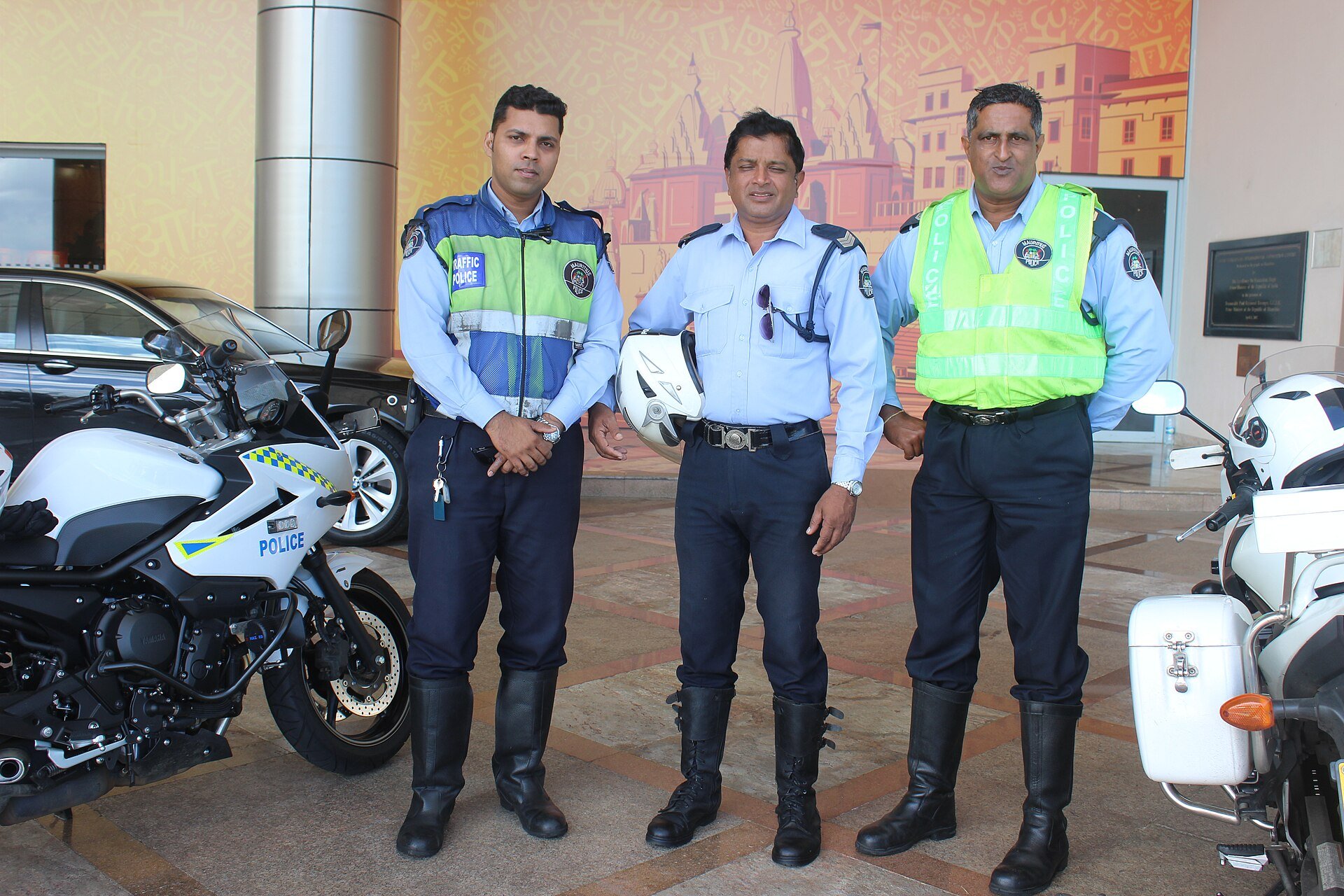
Mauritius is under a night curfew after days of protests and rioting that began over water shortages and prices and grew after a police officer shot a woman. I argue that the government should hold to the order it has set itself: investigate the shooting fully and openly, stop short of lowering the age at which children can be prosecuted, and publish what it is doing as it does it. The rest of this piece sets out why, and what Kenya, Mozambique and Madagascar suggest about the cost of doing otherwise.
What happened
Prime Minister Navin Ramgoolam announced the curfew on Tuesday, October 13, Reuters reported. It now runs through the nights of Wednesday and Thursday and ends on Friday morning, according to the Associated Press. The hours were first 8:30 pm to 6 am, and after a special Cabinet meeting on Wednesday they became 8:30 pm to 5 am.
The Associated Press says protests over water shortages and rising prices began the week before and grew on Friday, October 9. That evening, in Camp-Levieux, a residential area about 15 kilometres south of the capital, Port Louis, a police officer shot and wounded a 27-year-old woman, Élodie Thomas. Reuters says she was travelling home from work in a van and that the Health Ministry said she had surgery to remove the bullet and that it went well. The Rio Times reported on October 10 that she was in intensive care in a critical condition. That report is older than the Health Ministry’s account, and I give it so that the difference is on the record.
The police said the van was driving on a road blocked with objects when a shot was fired in its direction, and they did not say what prompted it, according to the Rio Times. The sergeant was arrested and first provisionally charged with possessing a firearm with the intent to endanger life, a first step that can change as an inquiry goes on. Newsmoris says that charge has since been replaced by two others: using a firearm to intimidate the van’s driver, and wounding Ms Thomas through imprudence, which means carelessness rather than intent. It adds that the Director of Public Prosecutions looked at attempted manslaughter and found that the evidence did not yet support a more serious charge, and that four officers have been suspended. I found this in one outlet only and have not seen the prosecutors’ own statement.
After the shooting, protesters burned tyres and blocked roads on Monday, October 12, and police were deployed, Reuters reports. Citing a police report given to the Cabinet, the Associated Press says 94 people were arrested up to Tuesday, among them 16 minors and one police officer, and 26 more during Wednesday night’s operations. Roads were reported clear on Thursday morning. The Africa Brief newsletter’s headline puts the first figure at 93; I could not open that article to see why it differs.
The state’s answer so far
The Associated Press says people arrested could be charged under the Prevention of Terrorism Act where it applies, and that a faster court process has been set up after talks with judicial and police officials. Because children were among those arrested, the Cabinet said it would consider changing the Children’s Act to lower the age at which a child can be held and prosecuted from 14 to 12. The Cabinet’s statement said police “will act firmly, as appropriate, to contain further escalation of violence.”
The Education Ministry cancelled classes on Thursday and Friday and postponed some primary and secondary exams, while international exams go ahead. The Commerce Ministry has restricted the sale of fuel in portable containers, according to the Associated Press, citing a statement reported by L’Express. Police are also watching social media for hate speech and calls to violence.
The anger behind the protests was there before the shooting. On October 8 the government said the island’s reservoirs held 57.1 percent of their capacity, down from 87.4 percent a year earlier, and that the Mare aux Vacoas reservoir stood at 35.7 percent, the Associated Press reports. Statistics Mauritius put annual inflation in September at 4.1 percent, up from 3.4 percent a year before, partly because of higher petrol and food prices. The Associated Press also notes that Mauritius saw similar unrest in 1999, when the death in police custody of a popular musician led to days of rioting. According to one account that I could not check against the inquiry’s own report, a judicial inquiry afterwards found that three officers had used excessive force.
What Kenya, Mozambique and Madagascar show
The pattern in other countries is that the force comes quickly and the accountability comes slowly or not at all. In Kenya, Al Jazeera reported in June 2026 that tallies put the number killed in the 2024 protests at about 62, that only three of those deaths had reached court two years later, and that no police officer had been convicted. The country’s policing watchdog, the Independent Policing Oversight Authority, said in a June 22 statement that 46 of the cases were still under investigation. Kenya has since set up a compensation scheme, and the families say money does not answer their question of who was responsible.
In Mozambique, about 400 people were shot dead during the months of protests after the October 2024 election, according to civil society groups that Human Rights Watch cites. In July 2025 the Attorney General announced 31 criminal proceedings against police, and a former police commander was questioned. Human Rights Watch said in April 2025 that no arrests had been made. I did not find a later report on whether any of those proceedings has ended in a conviction.
In Madagascar, protests that began in September 2025 over electricity and water outages grew into anger at the whole government. The United Nations reported at least 22 people killed, which the government disputed. The president fled, and an army colonel took power. A year on, young activists say their basic demands have not been met, the new constitution has stalled, and the former president has not been prosecuted.
Mauritius is in a different position from all three. Its sergeant was charged within days, according to the reports above, and its police-complaints law already gives an independent body real powers. That is the reason to argue that it can choose a better path. The risk is the same one the other cases show: that the charges stay provisional, the investigation slows, and the public’s attention moves to the curfew and the arrests.
What I recommend
This section is my argument. The facts above are sourced; what follows is what I conclude from them.
The Cabinet should drop the idea of lowering the age of prosecution from 14 to 12. The United Nations Committee on the Rights of the Child says in its guidance on children in the justice system that countries should set the age at no lower than 14, and that countries already above 14 should not lower it, according to a summary of paragraph 33. Sixteen of the 94 people arrested through Tuesday were minors, which tells the government that children are in the streets. It does not tell it that younger children should face prosecution, and the change would be written into law long after the curfew has ended.
Parliament should also make sure that every police shooting that wounds someone is investigated by the Independent Police Complaints Commission, and that the Commission publishes its findings. As I read the Commission’s Act, section 4(b) gives it the duty to investigate deaths in custody and deaths resulting from police action, while other cases depend on a complaint. Ms Thomas survived, and her family has asked the Commission to act, so the Commission is involved here. The next family may not know to ask. I am not a Mauritian lawyer, and I could be wrong about how the Commission applies its duty in practice, which is a reason for it to say so publicly.
The government should publish, each day while the curfew lasts, the number of people arrested, held, charged and freed, with the charge for each case, and should say whether anyone has been charged under the Prevention of Terrorism Act. It should keep to the end date it announced, Friday morning, or explain in public why it is not. The fast court process should record every case, so that arrests during the curfew can be checked later against what was proved in court.
The water authority should publish the reservoir levels and the supply schedule for each district every week, not only when the situation has become a political crisis. People in Camp-Levieux were already angry about water before October 9. A published schedule would not fill the reservoirs, but it would let people plan and would take away a reason to believe nothing is being done.
Beyond Mauritius, the African Union and the Southern African Development Community, which Mauritius belongs to, should ask the government what the Commission finds and when, and say publicly what they asked and what they were told. The Kenyan and Mozambican cases suggest that when no outside body asks, the questions fade.
What would show it worked: a Commission report with a date, a final charge in court that matches the evidence, a published count of arrests by charge, and no change to the age of prosecution.
The strongest objection is that a government facing arson and looting cannot wait for an inquiry, and that harsh measures, including for the young people who are being drawn into the riots, are what restore order. That is a fair point, and I do not ask the government to lift the curfew early or to excuse anyone who burned or looted. People who commit crimes in a riot should face the law. My argument is that the speed of the state’s response to the shooting itself is what the public will judge, and that a law change made in a week of unrest is hard to undo.
Why I can write this. I am an independent investigative journalist with seven years of field research, and I hold an MA in International Law and Human Rights from UPEACE. From 2019 to 2021 I was Somalia’s Youth Representative to the African Union, which I name because the African Union is one of the bodies this piece asks to act. I co-founded and chair the Organization for Prisoners’ Rights in Mogadishu, which works on arbitrary detention. I have no financial or personal tie to the people or governments named here.
Where the reports do not match
Reuters’s text places the riots on Monday, while one photo caption in the same report says the shooting triggered unrest on Tuesday, and the report does not settle it. The Rio Times says the sergeant appeared before the Bail and Remand Court on Saturday, October 10, while Newsmoris puts his first appearance at the Rose-Hill District Court on Monday, October 12. I do not know which is right, or whether both are.
What I do not know
I do not know what led the sergeant to fire, and the police have not said. I have not found a published count of people hurt in the riots, including police officers, or of the damage done. Some accounts circulating online mention burned police stations and a long list of injured officers, but I found none of this in a named report, so I have left it out. I do not know whether the curfew will go beyond Friday morning, whether the Cabinet will go ahead with changing the Children’s Act, or whether the Prevention of Terrorism Act has been used against anyone. I also do not know how the Independent Police Complaints Commission has handled earlier police shootings, so I cannot say whether the gap I describe has caused harm before.
Comments
Every comment is read by a person before it appears, so yours will not show straight away. We publish comments that are civil and on the subject. To report a mistake in the piece, use the corrections page, so it is fixed in the piece itself.