
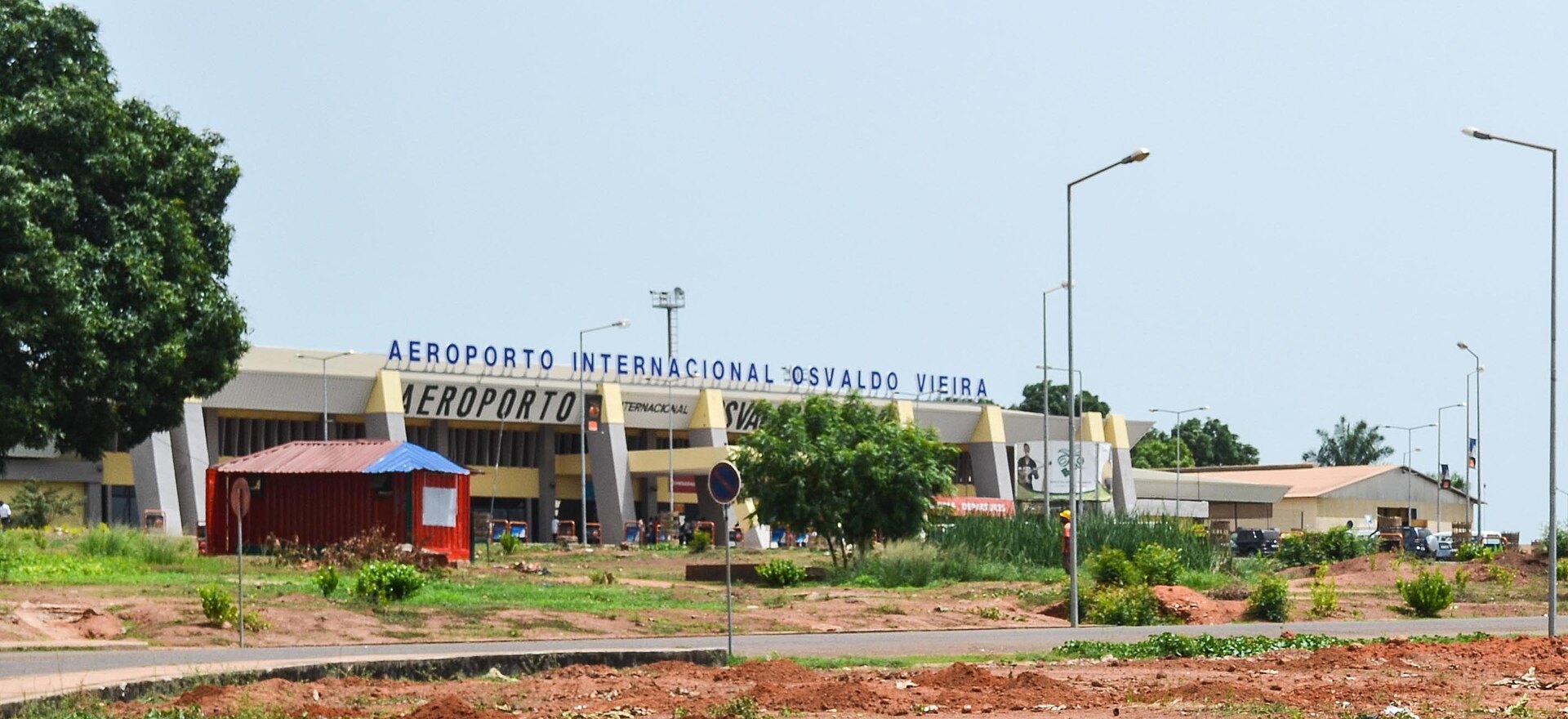
Guinea-Bissau’s military government said on Thursday that “the necessary security conditions” were not in place for exiled former president Umaro Sissoco Embaló to return home, days before the flight he had announced for Sunday, October 4. The decision was based on national security, public order and social stability, the military high command said. It also confirmed that the restrictions on political demonstrations and public gatherings remain in force.
Embaló, who has lived in Morocco since the army overthrew him in November 2025, told AFP and Jeune Afrique on September 28 that he would be a candidate in the presidential election scheduled for December 6. A source confirmed to Reuters that he planned to fly in on October 4. After the ban, he posted a message calling for calm and acknowledging that, in the circumstances, his return is prevented, Forbes África Lusófona reported.
What the military said, and what came before
The statement came after a mixed message from the military side. The National Transitional Council had said Embaló could return and seek the presidency if he met the legal requirements, People Daily reported. The transitional president, General Horta N’Tam, told a radio journalist last week that every Guinean is free to return, Morocco World News reported. N’Tam is barred from running under the transitional charter adopted in December 2025.
The decision also came amid reports of unrest inside the presidential guard earlier this week. The Portuguese outlet Observador reported, citing several sources, that soldiers loyal to Embaló in the Presidential Guard were disarmed and detained on Tuesday, September 29. We have not seen the military confirm or deny that. The junta also warned that any act of disobedience would draw a response, the Rio Times reported, citing Africanews.
Civil society groups welcomed the ban. A coalition of more than 50 organizations, including the Frente Popular, welcomed the disarmament and the ban in a joint statement on October 2. The groups also said Embaló should return to answer to the courts over his alleged responsibility in the killings of activist Vigário Luís Balanta and former presidential security officer Mamadu Tanu Bari, Observador reported. We found no response from Embaló to that demand. Residents of Bissau gave mixed reactions.
The residency rule
In a referendum on August 30, Guinea-Bissau approved a new constitution that expands presidential powers. The election commission reported about 70 percent in favour on a turnout of almost 60 percent. The main opposition party, the PAIGC, boycotted the vote, and a Reuters witness described polling stations in the capital as largely empty.
The new constitution also requires presidential candidates to have lived continuously in Guinea-Bissau for the preceding five years. The old constitution did not have that condition. Embaló has been abroad for about ten months. Reuters-sourced coverage said the rule could bar him from the ballot. We found no statement from the military or the election authorities on how the rule will apply to him, and no official candidate list yet exists.
Analysts question the legal ground
Political analyst Malam Cissé told AFP that “legally, nothing stands in the way” of Embaló’s return, noting that he did not sign a document renouncing power. The military’s statement cited national security, public order and stability. We found no published legal ruling on the ban.
How Guinea-Bissau got here
The army seized power on November 26, 2025, one day before electoral authorities were due to announce presidential results, and suspended the process. Embaló and the opposition candidate, Fernando Dias, both claimed victory. Guinea-Bissau has had five coups and many attempted takeovers since independence from Portugal in 1974, according to Voice of Nigeria. The national electoral commission later said armed men had destroyed most of the vote tallies, so no results were ever released, according to Wikipedia’s summary of the commission’s announcement. General Horta N’Tam was sworn in as transitional president for one year, and elections were set for December 6, Amani Africa reported. PAIGC leader Domingos Simões Pereira, detained after the coup, was freed early this year, the Rio Times reported.
The military says the December 6 elections, which combine the presidency and the legislature, are meant to restore civilian rule. It has not said whether the ban will change the timetable.
What we do not know
- Whether the ban is temporary. The military has not said when, or on what conditions, it would lift it.
- How the five-year residency rule will be applied to Embaló, and which authority will decide.
- Whether the reported disarming of guards loyal to Embaló is connected to the ban. The military has not said.
- Whether Embaló will try to travel anyway, or challenge the ban in court. The junta says any act of disobedience will draw a response.