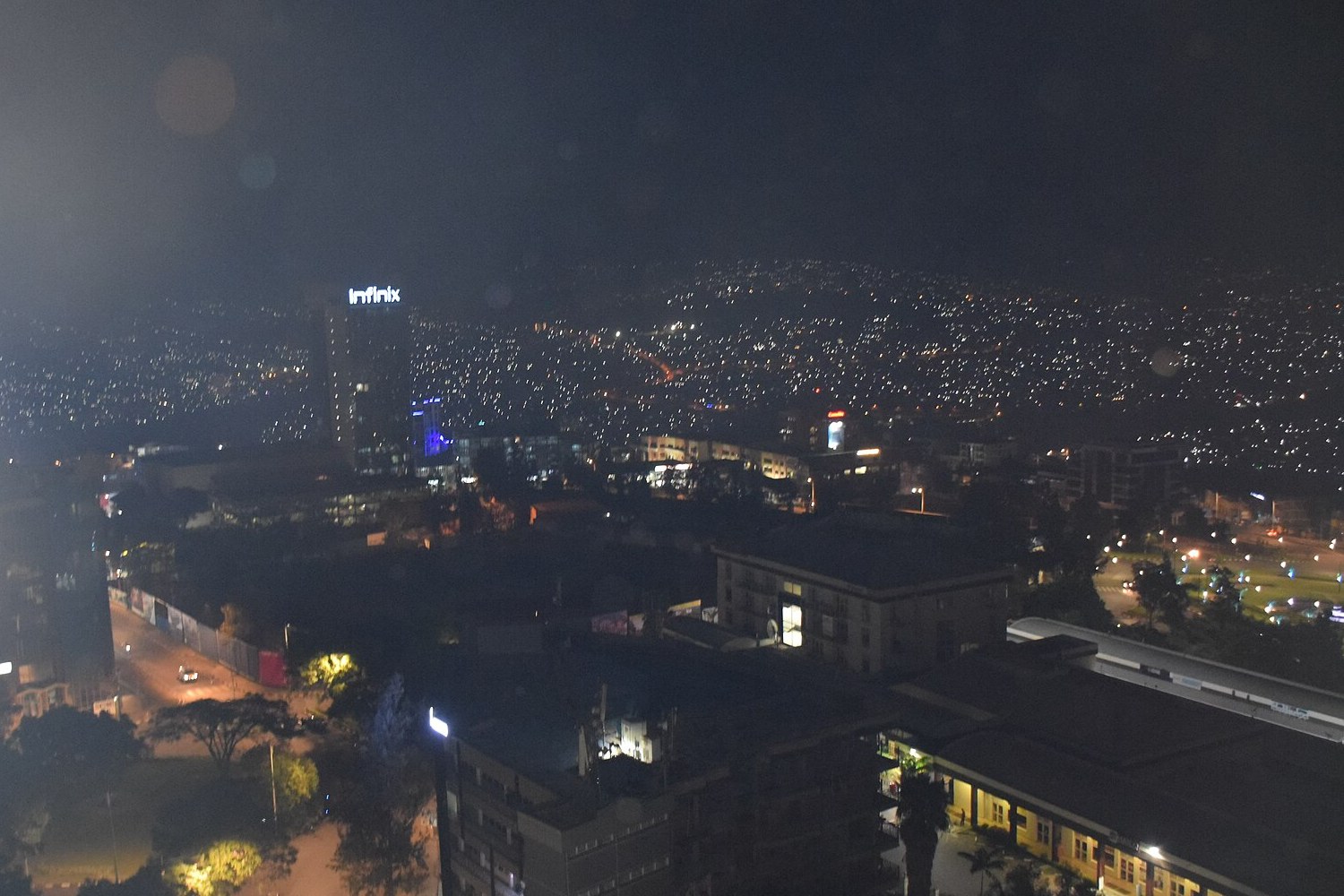
On Monday 16 November, in a conference hall in Vienna, five European interior ministers stood in a row with Rwanda’s interior minister, Vincent Biruta, and announced a plan. Austria, Denmark, Germany, Greece and the Netherlands were working with Rwanda to build a “return hub”, a place outside the European Union where people who must leave Europe could be sent, including people who are not Rwandan. Denmark’s prime minister, Mette Frederiksen, called it a game changer. Outside, demonstrators held up signs reading “Stop EU-Rwanda-deal”.
No agreement has been signed, and the governments have not said how many people they will send. Transfers are planned for 2027.
Most of the public argument is about whether the plan will work for Europe. We think a harder question comes first. Many of the people who would be sent are from countries in Africa and elsewhere whose governments they fled, or whose governments they say threatened them. Europe says their claims were rejected. A rejection is not a guarantee of safety. If these people are moved to a country that is neither Europe nor their own, who stands between them and the government they ran from? The five governments have not answered that, and what is known of Rwanda’s record, and of the last people sent there, gives reason for concern.
What happened to the last people sent
Rwanda has done this before. Between 2013 and 2018, Israel sent thousands of Eritrean and Sudanese asylum seekers to Rwanda and Uganda in what it called voluntary departures. Both African governments denied having any agreement with Israel, and neither gave refugee status to the people who arrived.
What followed is documented by researchers who interviewed those who were sent. Amnesty International reported that none of the Eritreans and Sudanese it and others interviewed, who had been deported to Rwanda and Uganda, were granted regular status on arrival, despite Israel’s promises of residence papers. A 2015 study by the International Refugee Rights Initiative, based on interviews with more than 20 people, found that most of those sent to Rwanda were smuggled out by land to Kampala within days of arriving, and lived without legal status, vulnerable to arrest and exploitation. One Eritrean said that of the 16 people on his flight, he was the only one still there. We do not claim that anyone was killed. The record shows something else: people sent to Rwanda with a promise of protection ended up with no papers, no rights, and a choice between hiding and moving on.
The EU plan is supposed to be different, and the governments say it will be in line with international law. That depends on the legal status of the people sent, which the answers below leave open.
What Rwanda does with the people it shelters
Rwanda hosts refugees, and says it treats them well. Biruta has said human rights are respected for everyone in Rwanda, refugees included.
In February 2018, hundreds of Congolese refugees from the Kiziba camp marched to the UN refugee agency’s office in Karongi to protest a cut in food rations. Police opened fire. The UN refugee agency said at least 11 refugees were shot dead, while the police said five had died. A year later Amnesty found that no one had investigated the police, while refugees who had protested faced prosecution. The episode shows how a protection arrangement can fail when the people it covers have no one to turn to outside the state that holds them.
The reach problem
The fear you hear from people in exile is that once they are in a place their own government can reach, they can be found and killed. We looked for evidence of that in Rwanda, and we did not find a documented case of the government a person had fled killing that person after they were sent there. We cannot rule it out either, because Rwanda is among the places where the facts are hardest to check. Dutch lawmaker Tineke Strik, who visited Kigali in September, told Al Jazeera she could not get information about the whereabouts of the people the United States has deported there. Rwanda says the first seven arrived in August and were vetted and would be resettled. That is all anyone outside has been told.
What is documented is Rwanda’s own reach. A 2023 Human Rights Watch report, based on more than 150 interviews, found killings, kidnappings and enforced disappearances of Rwandans abroad, in countries including Kenya, Mozambique, South Africa, Tanzania and Uganda, and the use of Interpol notices and extradition requests against critics. Freedom House calls Rwanda among the most prolific transnational repression actors worldwide, a term for governments that reach across borders to silence critics. That record concerns Rwandans, not the people Europe proposes to send, and we do not suggest Rwanda would harm them. It matters for another reason. A state with that kind of intelligence reach, and with ties of every kind to its neighbors and partners, is a place where information moves. The question for the hub is who controls the information about the people sent and whether it can reach the governments they fled.
The neighborhood Europe is choosing
Rwanda does not sit alone. The five governments are also negotiating with its neighbor. The Netherlands signed a letter of intent with Uganda on a transit center for rejected asylum seekers in 2025, and in August the Greek newspaper Kathimerini reported that Germany, Austria, the Netherlands, Denmark and Greece were in advanced talks on a center there for up to 10,000 people. The European Commission said it was not involved.
Look at what these countries do to people who disagree with their rulers. Freedom House’s 2026 report rates Rwanda 21 out of 100 and Not Free, and says the ruling party has governed without interruption since 1994 and repressed any opposition group that could challenge it. It rates Uganda 33 out of 100 and Not Free, where it says the ruling party holds power through patronage, intimidation and politicized prosecutions of opposition leaders, and where civil society and the media face harassment and state violence. President Yoweri Museveni has ruled since 1986. After the January election, which he won with 71.6 percent in a vote his main challenger calls fake, the opposition leader Bobi Wine fled the country in March after soldiers raided his home and the army chief posted threats against him. In Tanzania, the main opposition leader, Tundu Lissu, was cleared of treason on 6 November but sentenced to four years in prison for incitement, a charge his party says was not in the case. Mozambique, which Freedom House rates Partly Free, also ratified an extradition treaty with Rwanda in 2025 despite concerns that Kigali could use it against Rwandan refugees.
Two cautions belong here. Africa is not one place. Freedom House’s 2026 report notes the region includes some of the freest countries in the world, and Malawi moved up to Free this year after a peaceful transfer of power. The problem is not that the hubs are in Africa. It is which countries Europe has chosen, and the pattern that unites them. The second caution is that none of this proves harm to the people who would be sent. It shows the setting they would arrive in: a region where governments pursue their critics across borders, and where a person who has fled an authoritarian state may find that the state next door has friends there.
The incentive problem
There is a second risk, and it comes from Europe’s side. Today, a person whose claim is rejected but who cannot be sent home is a problem a government has to live with. Once a hub exists, that person becomes someone who can be moved. The International Rescue Committee argues that return hubs belong to a wider effort to deter people from seeking protection and make it harder for claims to succeed. The worry is simple. If officials know there is a place to send people whose claims fail, there is less cost to failing them.
We cannot show that this is happening, and it would be wrong to say it is. The hub does not exist yet, and we found no data showing that any government has changed how it decides claims because of it. What we can say is that the group the plan targets is the group where the risk is greatest. The plan covers people whose claims have failed and who cannot be deported to their own countries. A scholar writing for the University of London’s Refugee Law Initiative notes that for countries such as Somalia and Syria, European states have in effect accepted that people whose claims were rejected cannot be sent home because it is too dangerous. A hub offers a way to move exactly those people without sending them home. If Rwanda then sends them onward, as other receiving states have done, the person ends up back in the danger the European decision said did not exist. The Council of Europe’s human rights commissioner has warned that in past arrangements receiving states returned people to their countries of origin, exposing them to that risk.
The strongest case for the five governments
There is a serious case. Voters in most of these countries want enforcement, and a union that does not enforce its own decisions invites worse politics. Eurostat counted about 135,000 people returned to non-EU countries in 2025, and the share of people who actually leave after an order has hovered around 20 to 30 percent since the pandemic, according to the Vienna-based migration policy organization that hosted the 16 November conference. Many people ordered to leave cannot be sent home because their own governments will not take them, and for them the status quo is limbo. The plan, as described, covers only people whose claims have already failed, and organizers say the sites will be open, not detention centers. Rwanda has promised independent monitoring, and the Dutch deputy prime minister, Bart van den Brink, says it was chosen for its experience with large migrant groups and its work with the UN refugee agency and the International Organization for Migration. Rwanda took about 3,000 people from Libya in 2019 under an agreement with the UN refugee agency and the African Union. The elected European Parliament approved the new return rules, the Return Regulation, in June by 418 votes to 218.
Germany’s interior minister, Alexander Dobrindt, calls the EU plan incomparable with the British one, and there is something to that. The UK scheme covered people who had not had a hearing. The UK Supreme Court ruled it unlawful in 2023, finding a real risk of people being sent on to danger.
What Austria answered, and what nobody has
We put the six questions below to Austria’s interior ministry, Denmark’s immigration ministry and Rwanda’s interior ministry. Austria’s press spokesman replied; his answers follow each question. Denmark’s immigration ministry replied on 25 November that an interview with the minister “will not be possible,” and did not answer the questions. Rwanda had not replied, and we will add anything it sends. Austria’s full reply is available on request.
Start with the people. What legal status will they have when they land, and who will hold their identity documents? Austria says they will be offered a residence permit, received in an open, short-term welcome center, then moved to long-term housing, and free to leave Rwanda at any time. It does not say what kind of permit, for how long, or what happens to someone who refuses to be sent.
Then protection from the government they fled. Return hubs depend on identity papers and travel documents, and those often come from a person’s own government. Will any official contact that government about them? What will Rwanda do if it asks for them, or issues an Interpol notice? Who investigates if a person disappears? Austria did not answer. It said only that the model is for people who are in Europe illegally, have been ordered to leave, refuse to go, and cannot be sent home, for example because their own government will not cooperate.
Then the choice of country. Rwanda and Uganda are both rated Not Free. Why these two, and on what human rights assessment? Austria did not say, and did not promise to publish an assessment. It said no one will be sent where there is a real risk of inhuman or degrading treatment, and that the UN refugee agency is advising the five governments.
Then the law. The Return Regulation allows agreements only with countries that respect human rights and the rule against sending people to places where they risk persecution. Austria says those rules give the legal basis for its model, which it says will comply with EU and international law, and that it is in close talks with the European Commission. Human Rights Watch says the five governments have published no human rights assessment, and that the EU return rules would allow families with children to be sent. The Dutch government says only single men will go in the first phase. The Dutch Refugee Council says the Dutch immigration service has itself concluded that Rwanda cannot be classed as a safe third country, meaning one the EU treats as safe enough to send people to. Austria did not address these points. How does the Dutch government explain joining a plan its own agency’s reading appears to contradict?
Then the incentive. Will the governments publish, by nationality, how many claims they reject and how many of those people are sent to Rwanda, so that anyone can compare rejection rates for those nationalities before and after the hub? Austria points to the figures on rejected claims by nationality that it already publishes, and says the scope of the statistics “may be adjusted as necessary.” It did not say it will publish how many people are sent to Rwanda. Europe’s own figures show that about 45 percent of applications are approved on average. Will that share hold once there is somewhere to send the rest?
And finally the independence of any monitor. Rwanda has promised independent monitoring. The UN human rights chief, Volker Türk, has said his office has not seen the text of the proposal. Strik says no domestic organization in Rwanda will speak openly about conditions. Who will monitor, with what access to people who may be afraid to talk, and will their findings be published? Austria says an “entirely independent reporting mechanism” will report on how the arrangement is applied, and that it is still “looking into several possibilities.” It named no body and did not say whether findings will be published. Rwandan investigative journalist Samuel Baker Byansi, now in exile, says the deal buys silence about Rwanda’s own record. Four of the five European governments raised concerns about that record at the UN in January, according to Human Rights Watch. What changed between January and November?
Comments
Every comment is read by a person before it appears, so yours will not show straight away. We publish comments that are civil and on the subject. To report a mistake in the piece, use the corrections page, so it is fixed in the piece itself.