
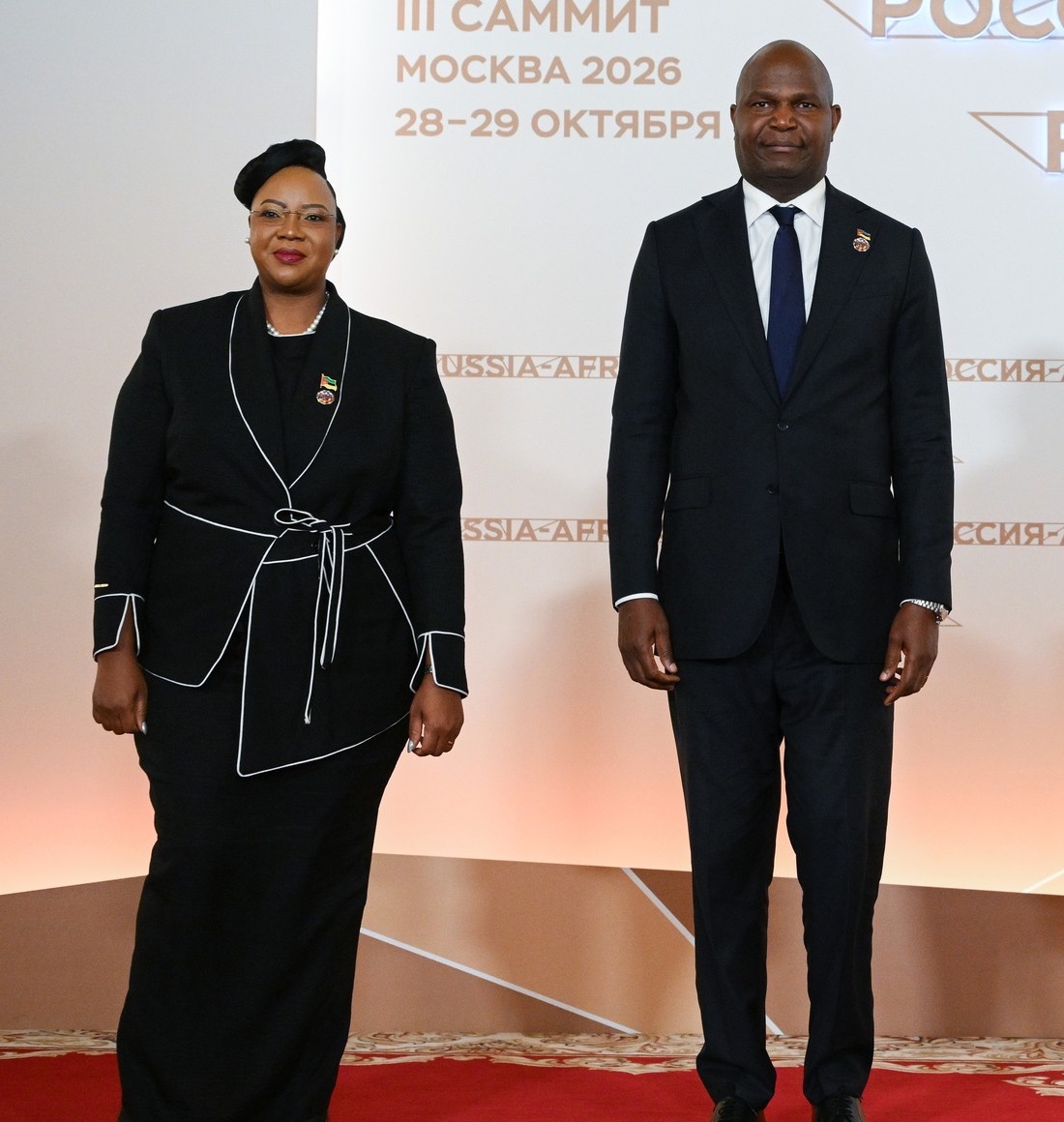
The hearing in Maputo ended early. On Tuesday 17 November, Venâncio Mondlane walked into the Supreme Court, greeted by supporters, and told reporters he came “calm and confident” in his lawyers, according to Al Jazeera. Inside, his defence handed up a 223-page written challenge to the indictment, and the session ended about an hour ahead of schedule, Lusa reported, with no copies available to the other parties. Mondlane said afterwards that the indictment should have fallen that day, and that he would take it apart slice by slice. The next morning the prosecutor’s office announced a case against one of his defence team, Shamir Mendes, for unauthorised practice of law, after he appeared in a lawyer’s gown.
On Tuesday 24 November the defence questioned Mondlane himself. He showed videos he says prove he called for protecting property from the start, and said some of the prosecution’s audio recordings and documents were fabricated, according to Club of Mozambique. His lawyers also asked the court to hear Graça Machel, Brazão Mazula, and the national police command on whether the protests were peaceful. The prosecution said the court had already refused that request on 20 October. The court’s answer, as reported by AIM, was partial: it would hear Machel only on the protests and not on the election result, said the former police commander-general Bernardino Rafael was already on its list of people to be heard, and agreed to hear Samanta Lemos by videoconference. I found no report of a decision on Brazão Mazula, who so far has appeared only in videos the defence showed. On Wednesday, the seventh day of the trial, the prosecution confronted Mondlane with a recorded conversation. He acknowledged it as his own but said he had spoken under pressure from the former prosecutor in charge of the investigation, according to AFREEQUE, citing AIM. Prosecutors read it as part of a plan to subvert state order. The court then postponed the prosecution’s witnesses to Friday 27 November and suspended Thursday’s hearing, Evidências reported.
Mondlane came second in the disputed October 2024 presidential election. He faces five charges, and the most serious, instigating “terrorism,” carries up to 24 years. He denies all of them.
He is the third opposition leader in East and Southern Africa to face a court in two years over the way he reacted to a contested election. On 6 November a Tanzanian court sentenced Tundu Lissu to four years. In Uganda, Kizza Besigye has been in custody for two years. The cases are usually told as one story, about governments silencing rivals. I think the more useful story is smaller and more exact. In each country the state chose a charge, and the charge decided what the court had to prove, how much was at stake, and what the accused could do about it. Each charge has been tested differently, and the tests show where each case is weakest. Mozambique’s is the only one of the three still being decided in open court, so it comes first.
Three charges, three tests
Mozambique comes first. Three things about it are easy to miss. The first is where he is being tried. After the Constitutional Court placed Mondlane second, he became a member of the Council of State, and members of that body can only be tried by the Supreme Court. Al Jazeera reported that the Council suspended his immunity on 10 June, which Mondlane has challenged, and a Mozambican legal commentator told Evidências that a convicted Mondlane would have only one appeal, to the full bench of the Supreme Court itself. The second is the timing. In March 2025, Mondlane and President Daniel Chapo met and agreed that the state would compensate families of those killed and grant amnesty to people arrested in the protests. Parliament then passed a dialogue law that includes pardons for convicted demonstrators. Prosecutors charged Mondlane in July 2025, four months after the agreement. Mondlane says Chapo never deposited an amnesty bill, that more than 2,700 people remain jailed over the protests, and that only 22 of 751 people released under a presidential pardon had been detained over the unrest, according to Club of Mozambique. I could not verify those figures independently. The third is the word. In February 2025, Amnesty noted, Chapo compared the protests to terrorism, five months before a prosecutor charged their leader with it.
The prosecution has staked its case on speech. The public prosecutor bases it on Mondlane’s Facebook livestreams during the protests and on his call for a march on Maputo on 7 November 2024, named “Victory Day,” which he projected would draw about four million people. The attorney-general says his calls for “revolution” and mass strikes triggered panic that is linked to more than 400 deaths, and cites videos, call records and witnesses. The defence answers that no direct link has been shown between his words and the violence, and that the charges rest on statements taken out of context. So the question is whether his words caused the violence, and the death toll shows why it matters. Civil society group Plataforma Decide counted 411 deaths in clashes with police. Amnesty, citing an earlier Decide count, found that security forces used force that was reckless and unnecessary, and so unlawful. Human Rights Watch reported in April 2025 that there had been no arrests over the post-election political killings. Among them were the murders on 18 and 19 October 2024 of Mondlane’s lawyer Elvino Dias and a Podemos election agent, Paulo Guambe. Two years later the attorney-general says two of three suspects questioned are detained, and the case is still being investigated before any trial. Police first suggested the two had been in an argument shortly before the shooting, and abandoned that account. The attorney-general has since pointed to another line of inquiry, linking Dias to an unrelated criminal case. So the state is asking a court to say who is to blame for the deaths, and has left unresolved who killed the lawyer who was drafting an election appeal for the Podemos party.
Tanzania shows how such a test can end. Lissu was arrested in April 2025 after a rally calling for electoral reform. His party, Chadema, was excluded from the October 2025 election after refusing to sign the electoral code of ethics, and he spent his trial representing himself, fighting the prosecution’s plan to use secret witnesses in an enclosed cell, as AP reported. He was tried for treason, which carries death. On 6 November a three-judge High Court panel acquitted him of treason, because the prosecution had not shown that he intended to threaten the government. Then it convicted him of incitement, a lesser offence, over his slogan “No Reforms, No Election,” which it said urged supporters to disrupt the vote. Lissu says incitement was never the charge. He told the judges they had created an offence that did not exist, in the words reported by the BBC. The court relied on a provision that lets it convict on a lesser offence when the main charge fails, as People Daily explained. So the court tested the charge that carries death, and it failed, yet the state still got a conviction, through a door the prosecution had not chosen to open. Lissu had by then spent about 19 months in custody.
Behind that verdict sits a larger fact that the trial did not touch. A government commission set up after the election reported 518 deaths, 197 of them from gunfire, and concluded that the violence was organised and financed. Rights groups say hundreds, possibly thousands, were shot dead, and the commission’s full report remains unpublished. A year on, no official has been criminally investigated over the use of force. The man who was sentenced was a politician who used a slogan.
Uganda tells a third story. Besigye was abducted in Nairobi on 16 November 2024 and brought before a military court. On 31 January 2025 the Supreme Court ruled that civilians cannot be tried by military courts and ordered such cases moved, and Africa Confidential reported that Museveni ignored an order to release him. Besigye’s treason trial now runs in the civilian High Court, before Justice Emmanuel Baguma. He asked that court to end the trial because of his abduction, and it declined, saying he had not shown credible evidence of illegal abduction and torture. Meanwhile four bail applications have been rejected and a fifth awaits a date. He collapsed in the dock in July, and in August the court continued parts of the trial while he was in hospital. His lead lawyer, Erias Lukwago, was himself arrested and charged with failing to report treason. In September the army chief, General Muhoozi Kainerugaba, wrote on X that the two men would never get bail, and this month he reportedly said nobody would release them without his permission. Bail belongs to a court, and the army chief has said how it will end. A verdict has not been needed for any of this to happen.
The strongest case for the state
The governments’ side deserves its full weight. People died, and not only at the hands of the police. In Mozambique, hundreds of businesses and public institutions were looted and vandalised during months of protest. According to the indictment, the opposition leader was calling people out by livestream, including to a march on the capital that he expected to draw millions. Any state may ask whether a man with that audience bears some responsibility for what his calls produced, and a court is the proper place to ask. In Tanzania, a government commission found the unrest was organised and financed, and a slogan telling people there would be no election without reforms, in a country where the protests that followed were deadly, is not obviously harmless speech. In Uganda, the High Court has heard Besigye’s abduction claim and ruled on it.
There is also evidence that the courts are not simply obeying. Tanzania’s judges threw out treason, the charge the state brought and the one that carried death. One analysis reads the Mozambican Supreme Court’s recent prosecutions of figures tied to the establishment, such as Fernando Tsucana, as a signal of impartiality, and the commentator Salomão Moyana points out that it is prosecutors who accuse and the court that decides. Uganda’s Supreme Court forced the move out of a military tribunal. A system that was only a tool of the state would not have bothered.
That argument runs out on process and proportion. A court that acquits on the charged offence and convicts on one the defendant says he never faced has found a path to a result. Four years for a slogan is out of step with an acquittal on intent. In Mozambique, a case against a defence lawyer for wearing a gown hands the accused a reason to doubt the process is neutral. In Uganda, an army chief announcing the outcome of bail applications in advance, and a lead defence lawyer jailed on a related charge, leave little room for that doubt to be dismissed. These do not prove the courts are controlled by the state. They show how a defendant could reasonably conclude the state’s hand is on the scale at every step.
What nobody has answered
Several questions will decide how these cases are read. In Mozambique, can prosecutors show that Mondlane’s words, rather than the crowds’ anger and the conduct of the security forces, caused the violence, and will the former police commander-general, already on the court’s list of people to be heard, be asked about the security forces’ conduct? Why were charges filed four months after an agreement promising amnesty to arrested protesters, and who decided? Analysts quoted by Al Jazeera, including Esau Cossa, expect no prison term but warn a conviction could keep him from the 2029 race. I found no source that names the legal mechanism, and Mondlane says that is the aim. Who killed Dias and Guambe, and why has an unrelated case been put forward as a line of inquiry? In Tanzania, will an appeal court say whether a trial court may convict on a lesser offence the accused says he never faced, and who answers for the 518 dead the state itself has counted? In Uganda, how long can a treason trial run with the accused denied bail before the delay is itself a ruling?
And the question beneath them all. If a government can choose a charge heavy enough to hold a man, and a court can then find a lighter one that still convicts, where is the line between answering for violence and being punished for opposing? I do not claim these men are innocent of every allegation. I claim that the public has not been shown how the line was drawn, and that in each case the answer so far has come from the prosecution’s choice of charge, and from the state’s silence on its own killings, more than from the evidence.
Comments
Every comment is read by a person before it appears, so yours will not show straight away. We publish comments that are civil and on the subject. To report a mistake in the piece, use the corrections page, so it is fixed in the piece itself.